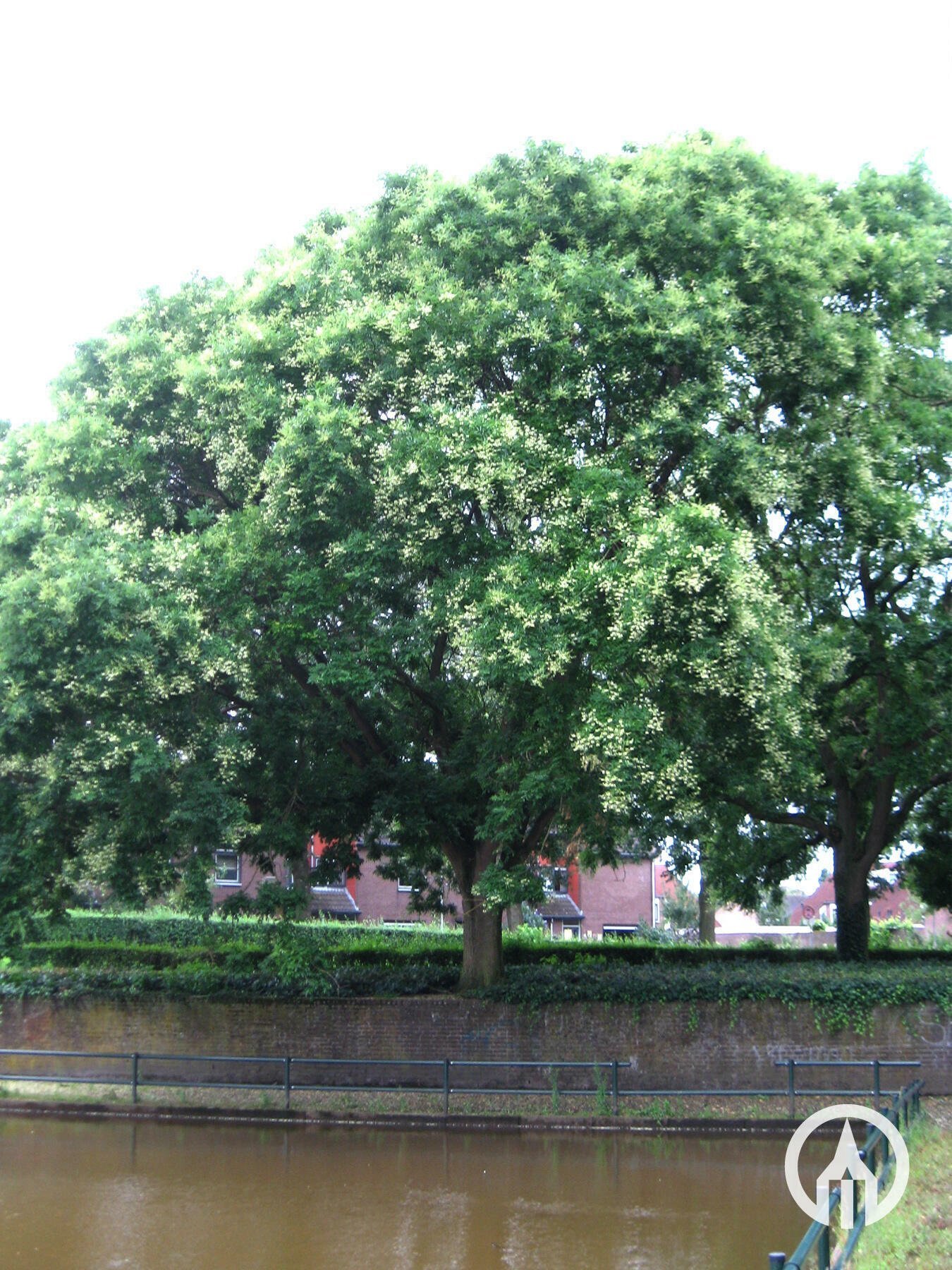
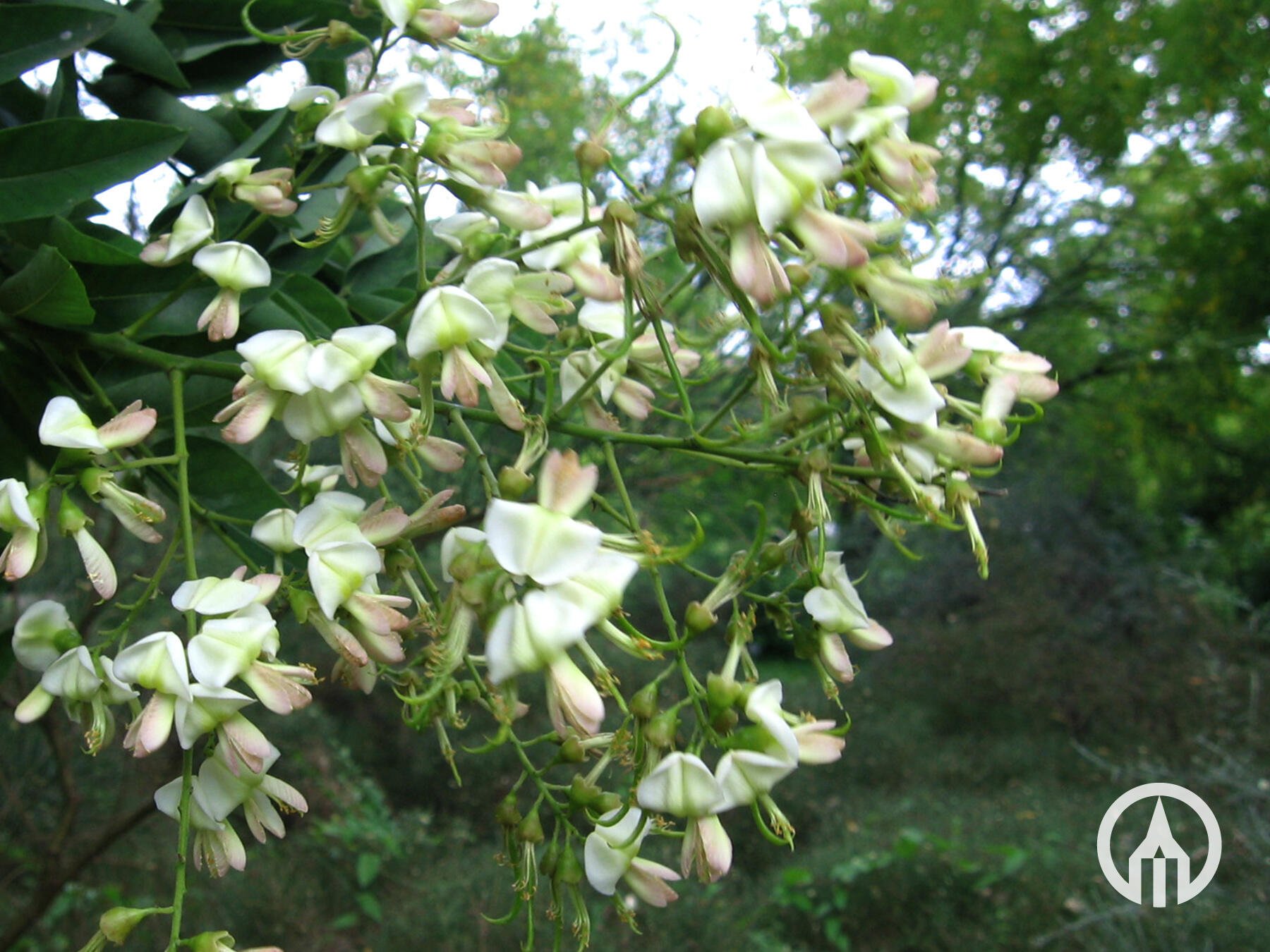
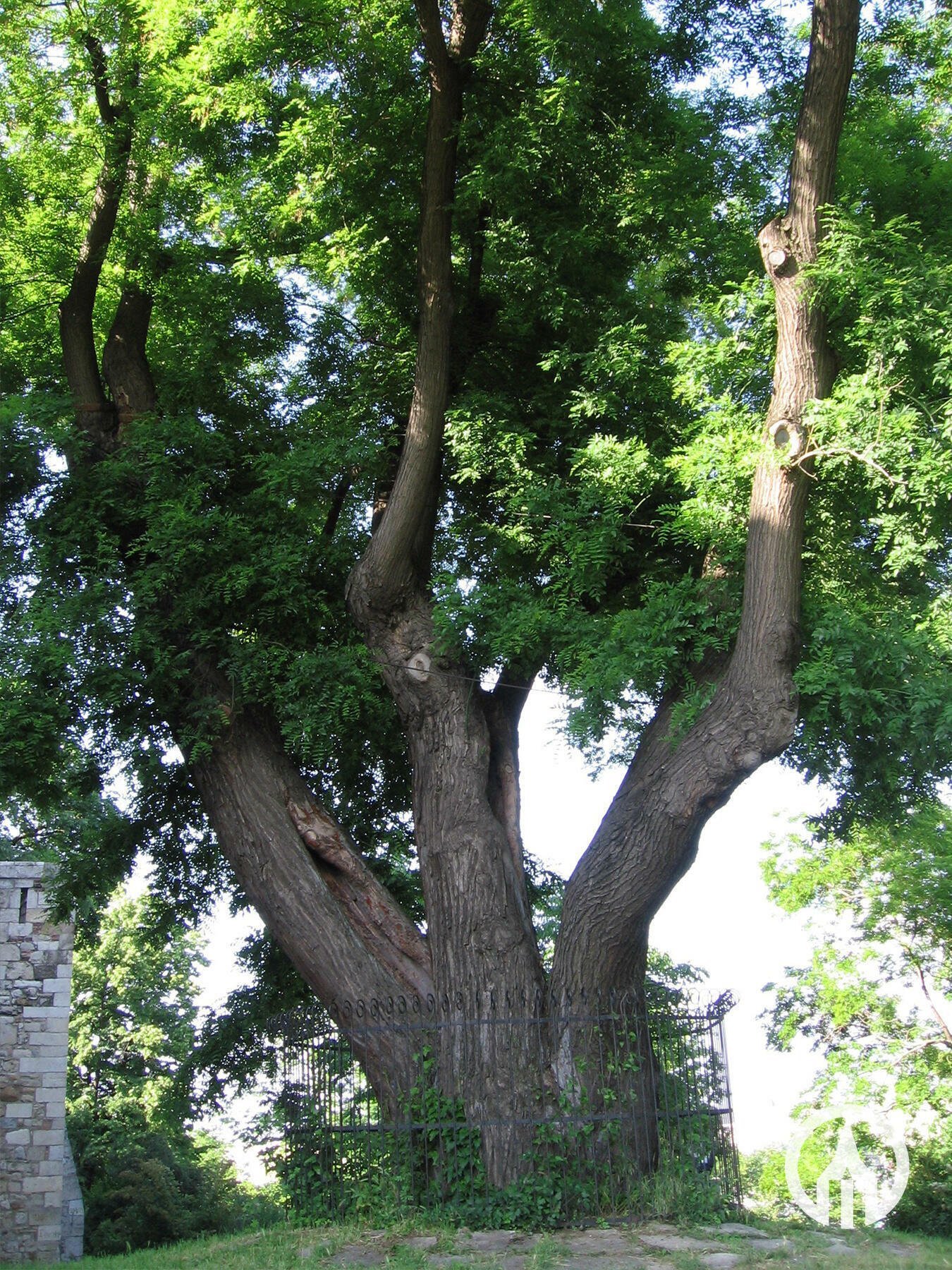
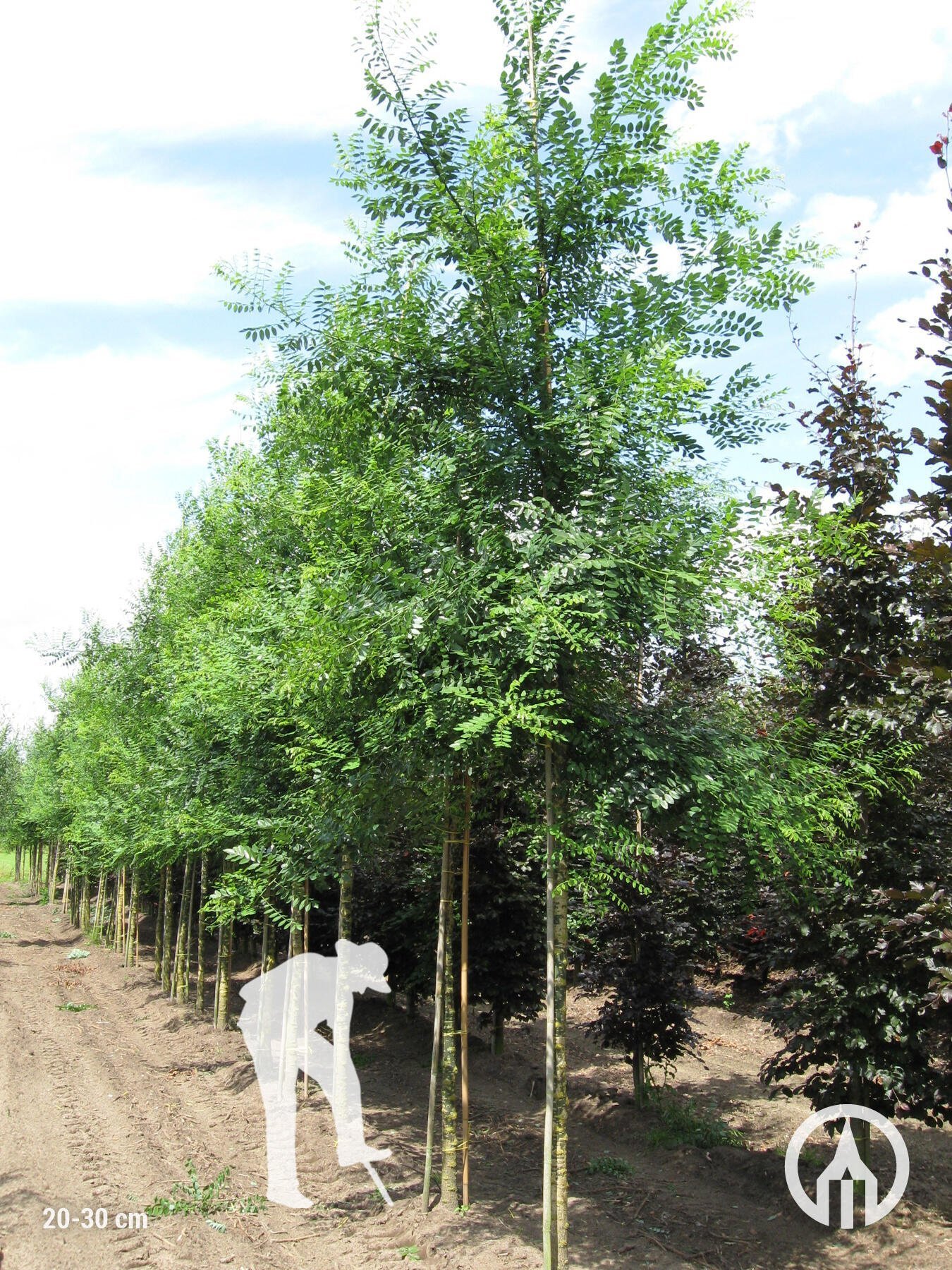
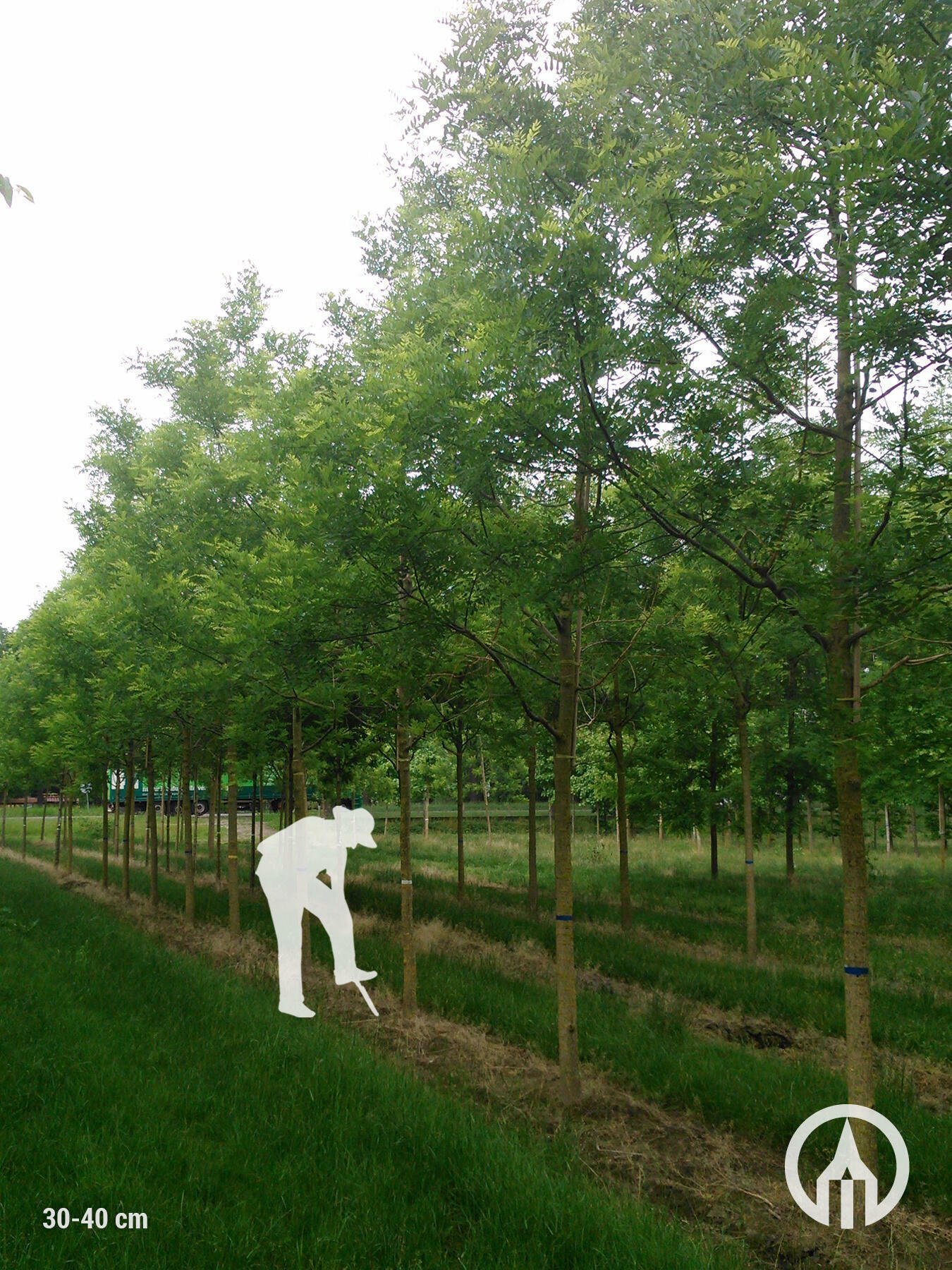
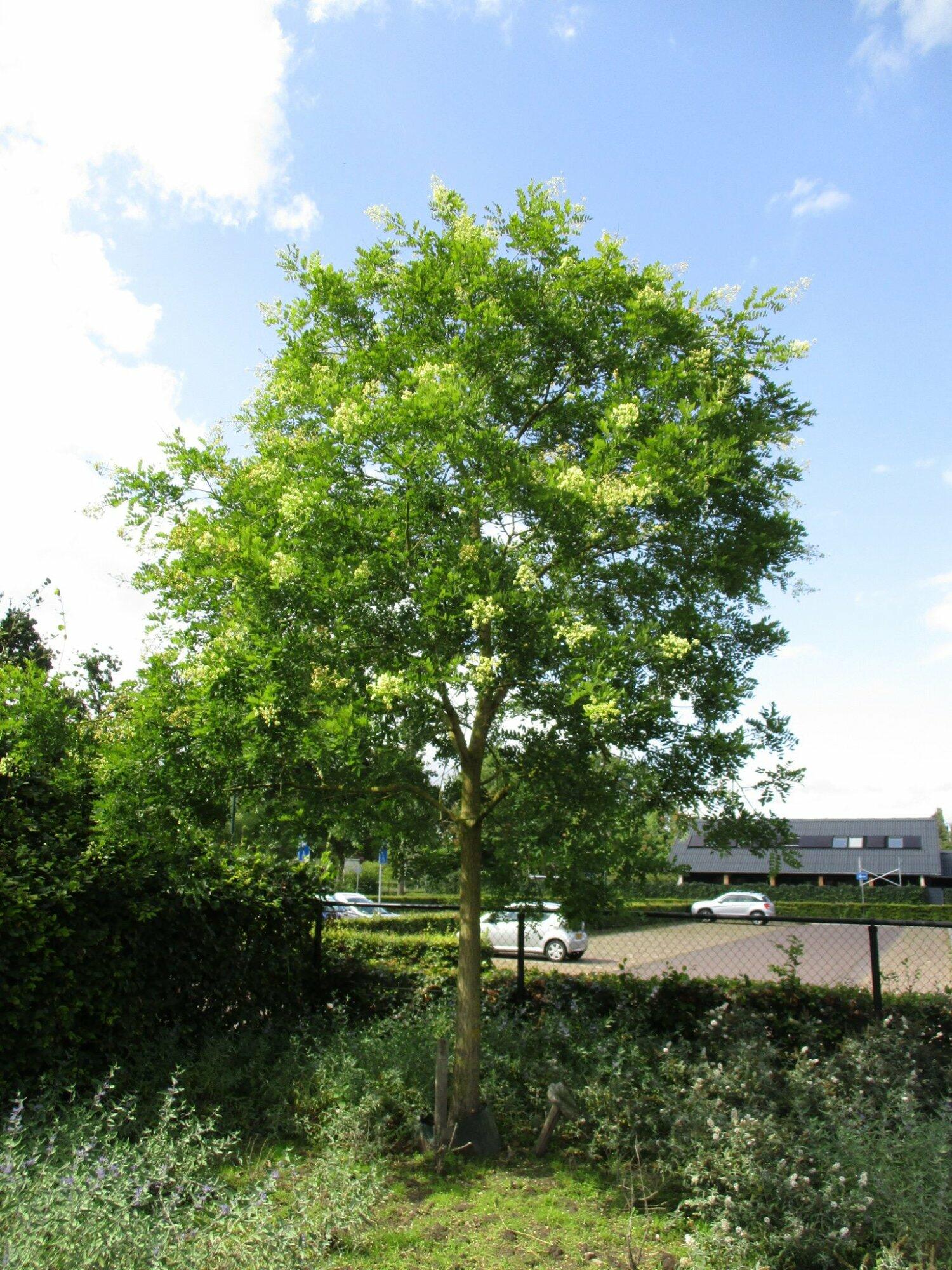
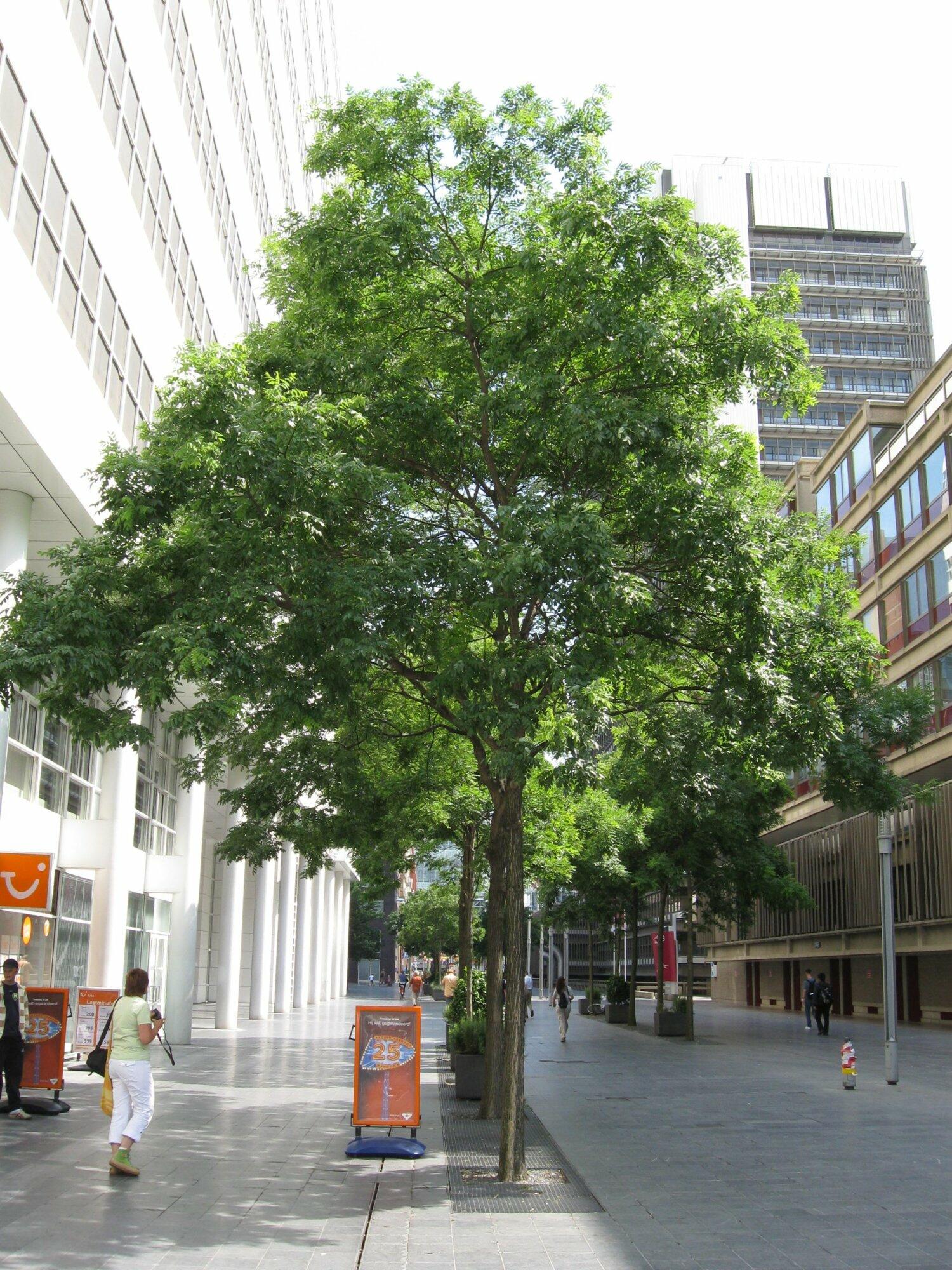
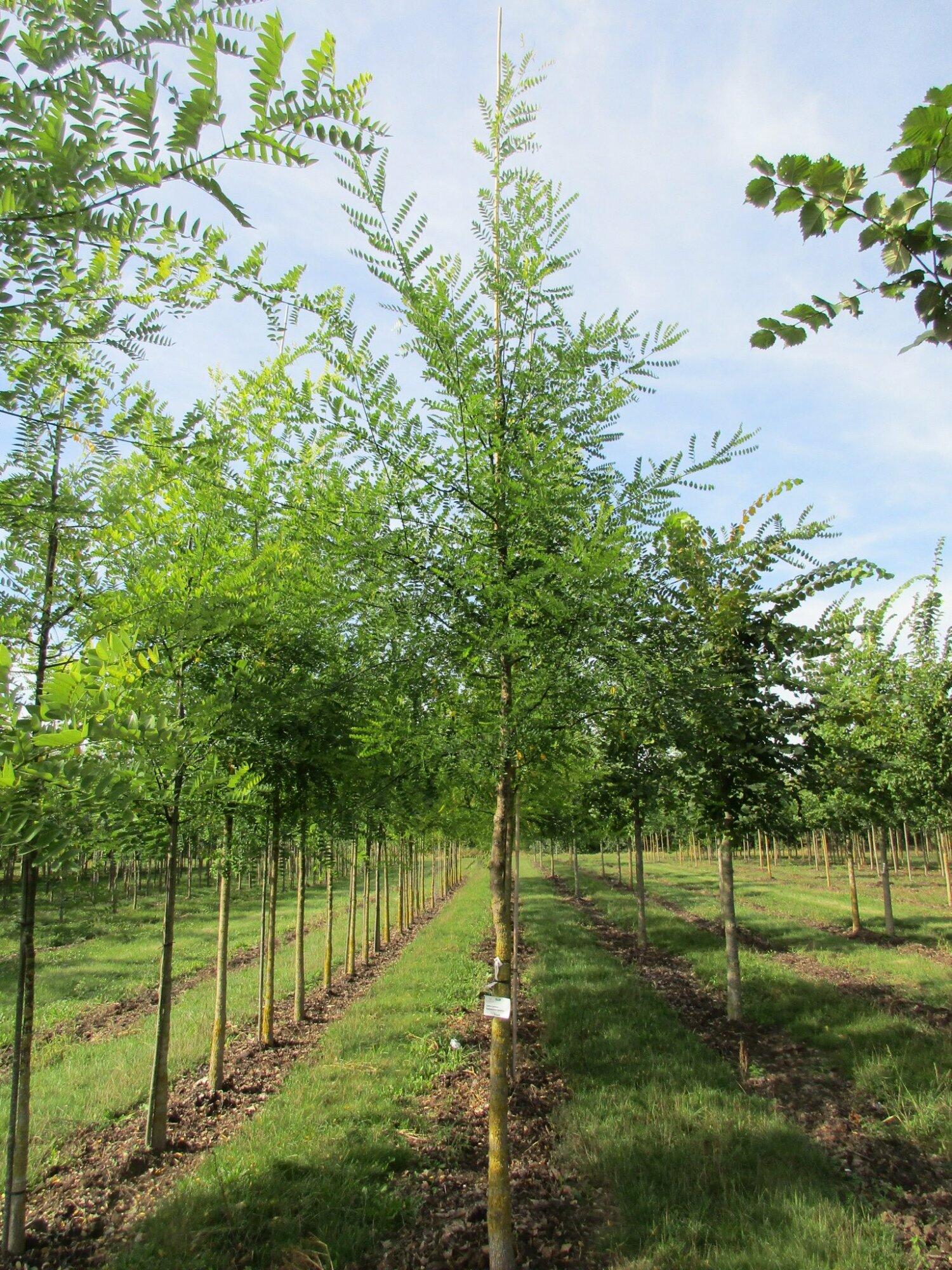
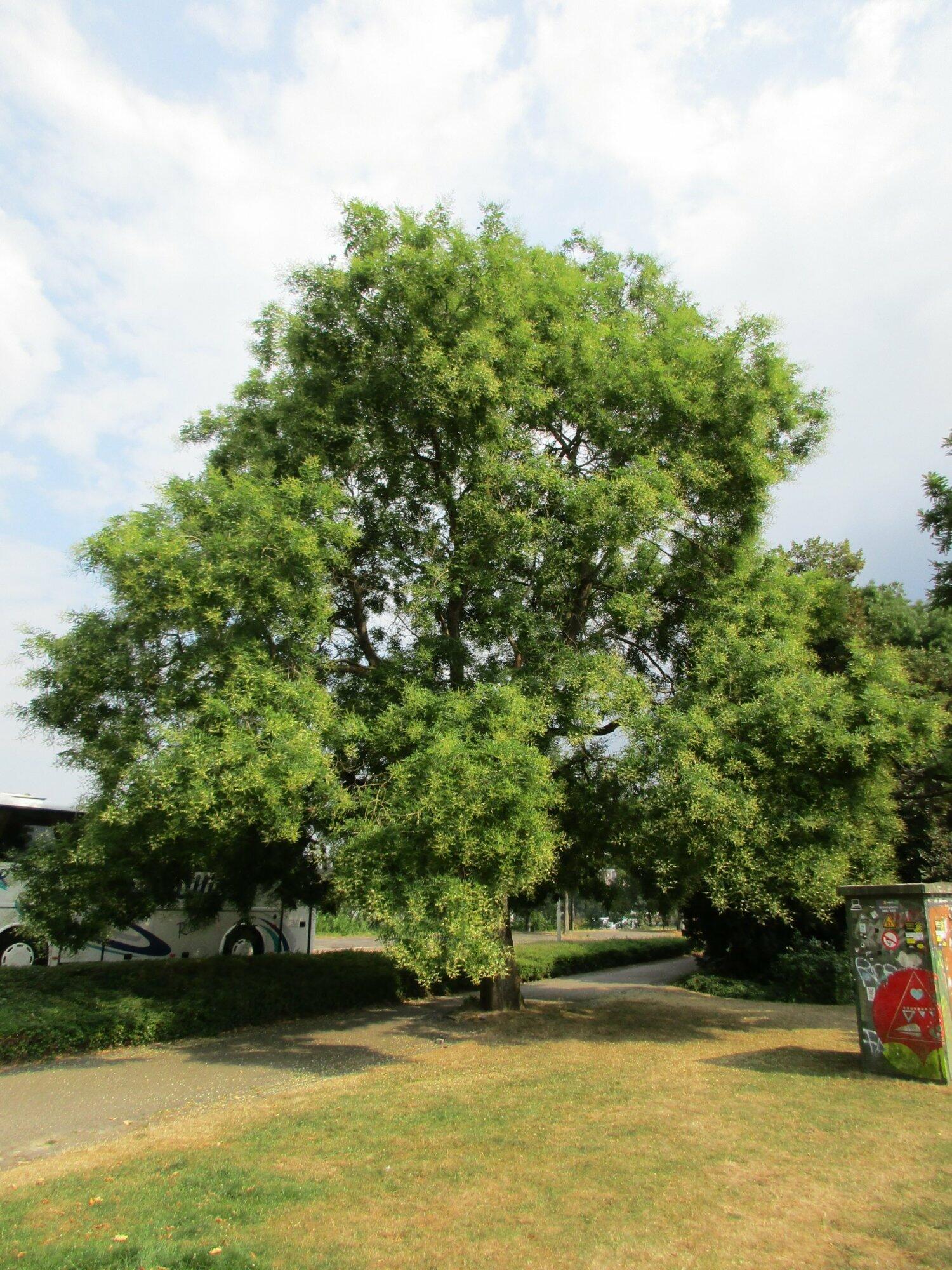
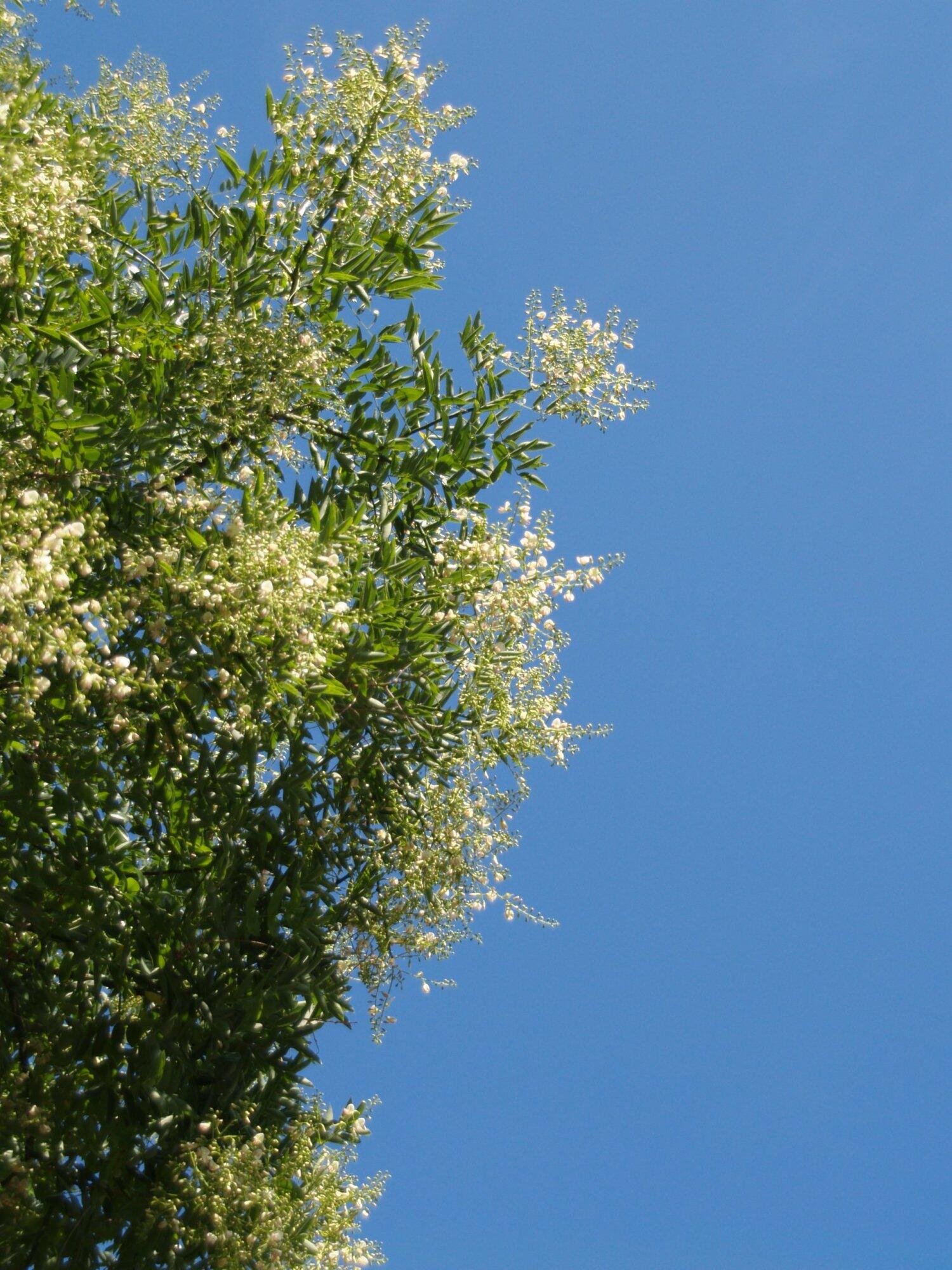
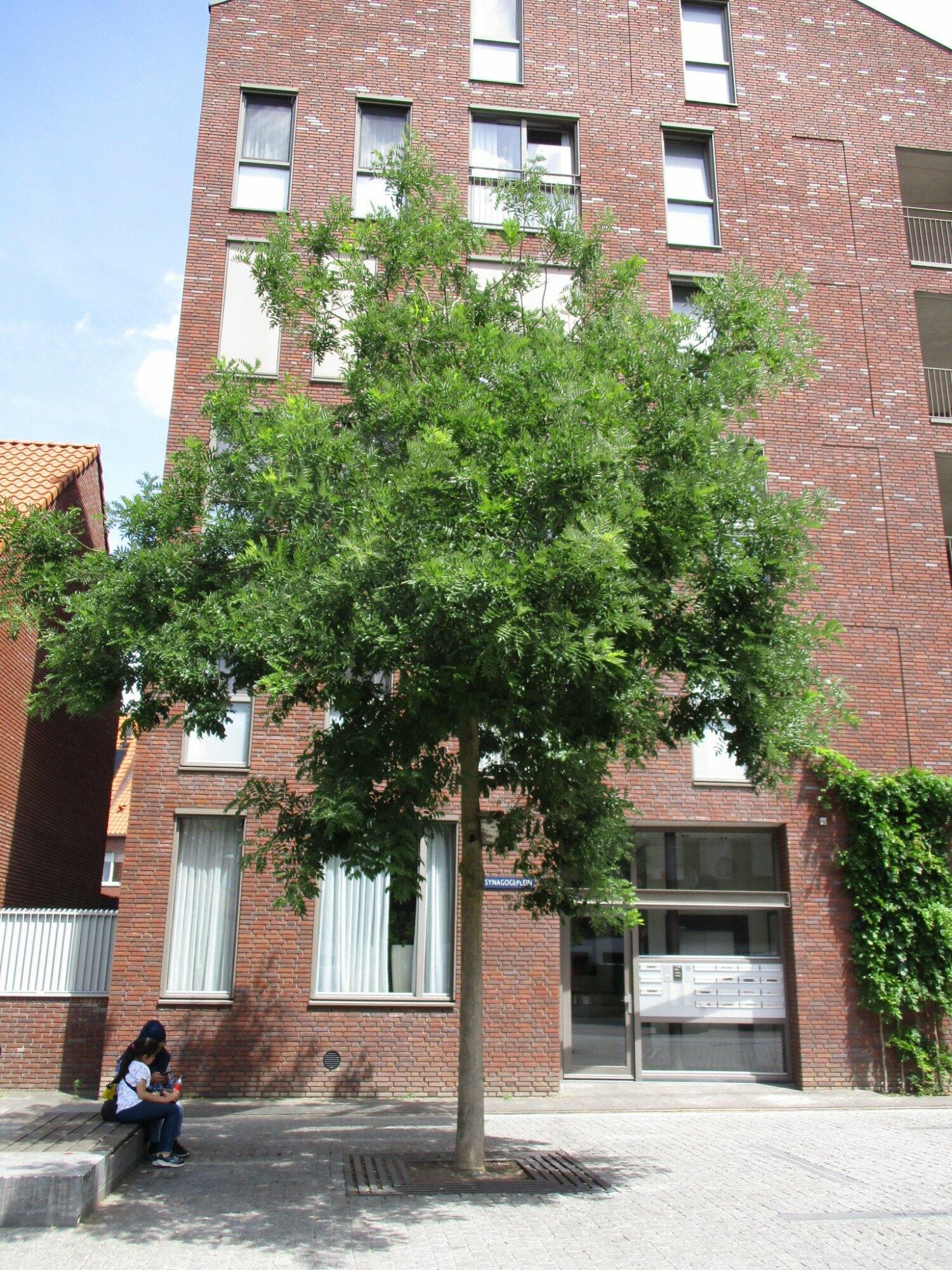
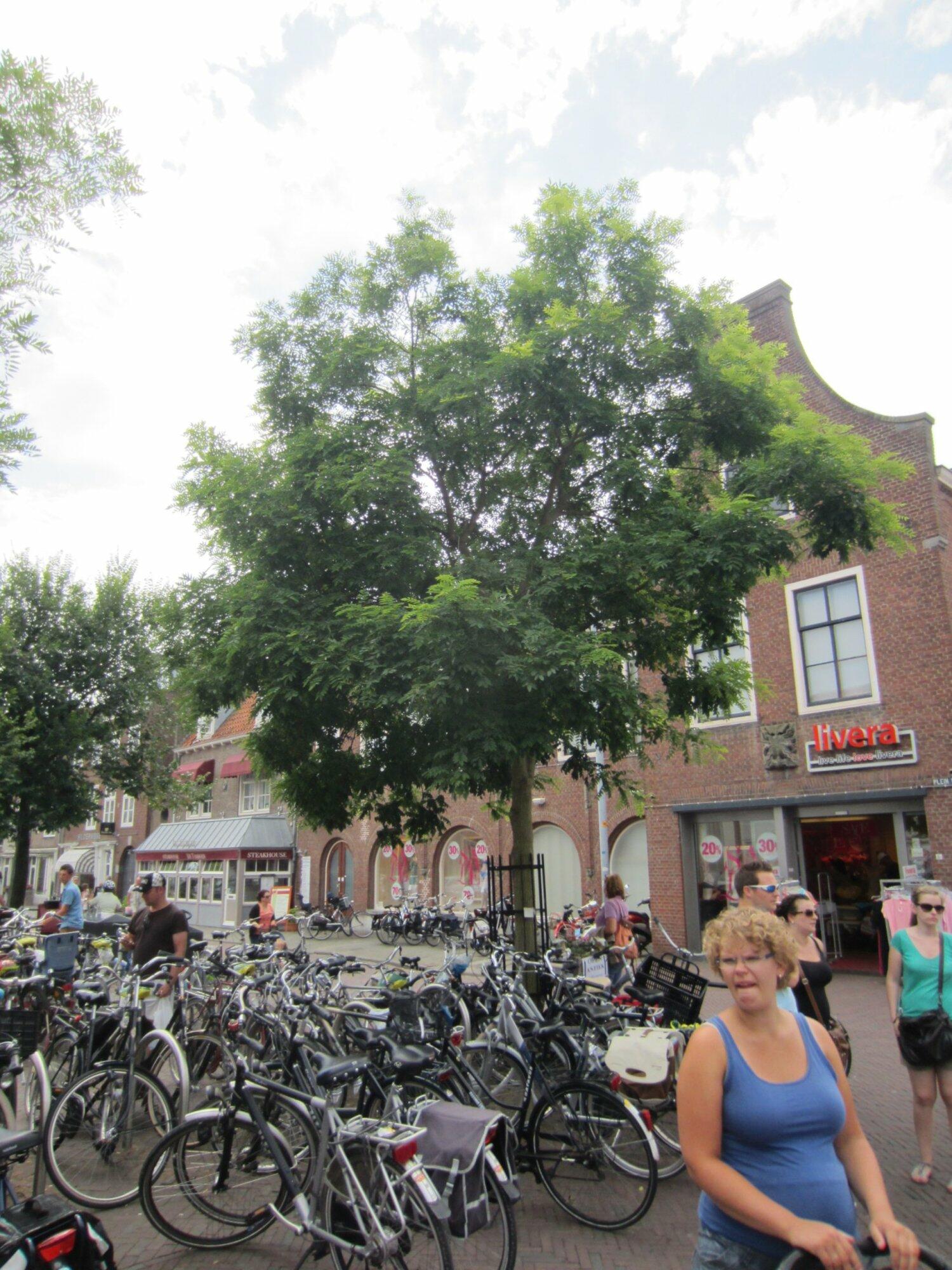
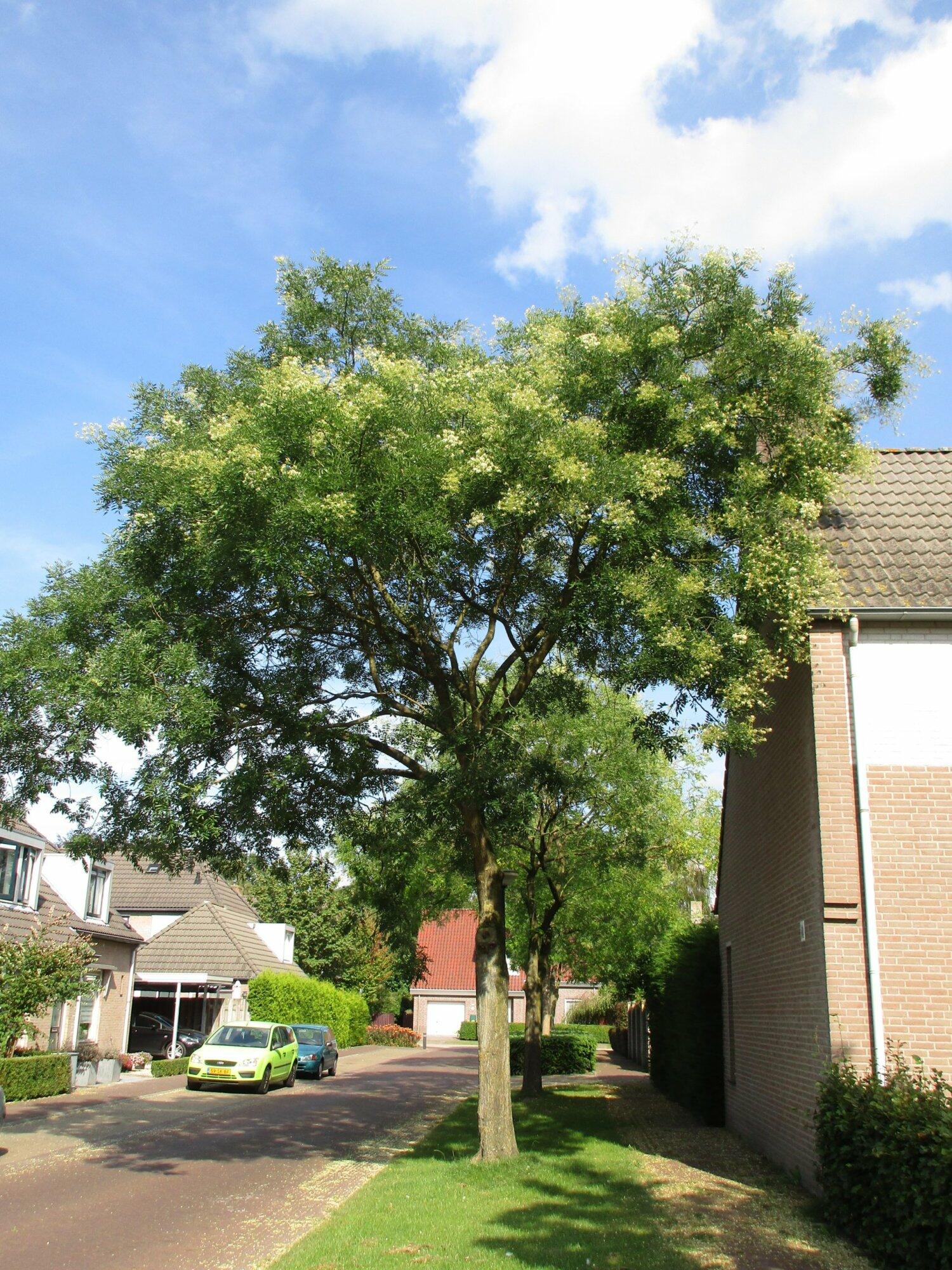
We describe Styphnolobium japonicum, the honey tree. During warm summers, older trees often bloom profusely with creamy-white clusters of flowers that are very popular with bees. The most beautiful blooms are usually visible from late July through August.
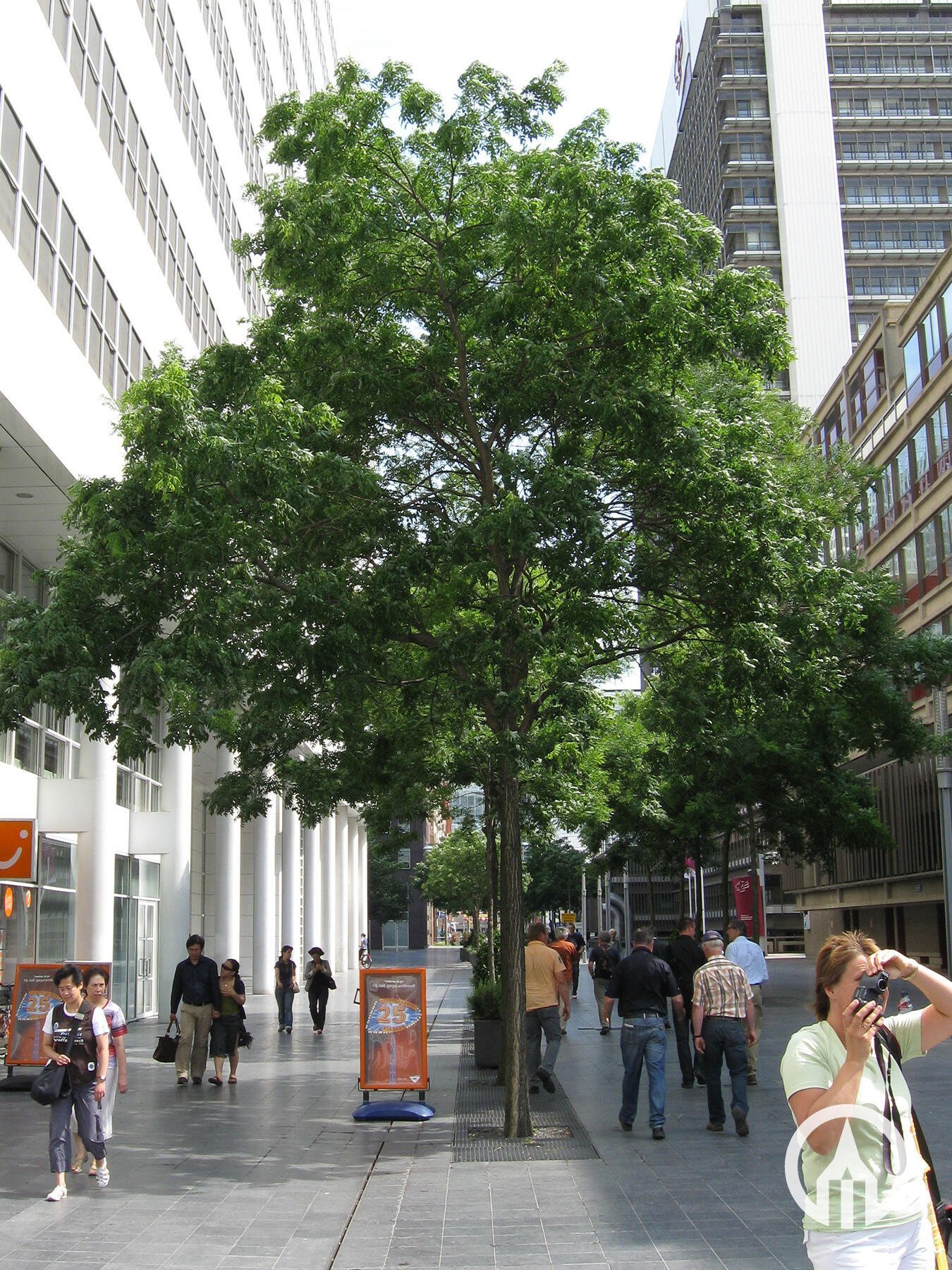
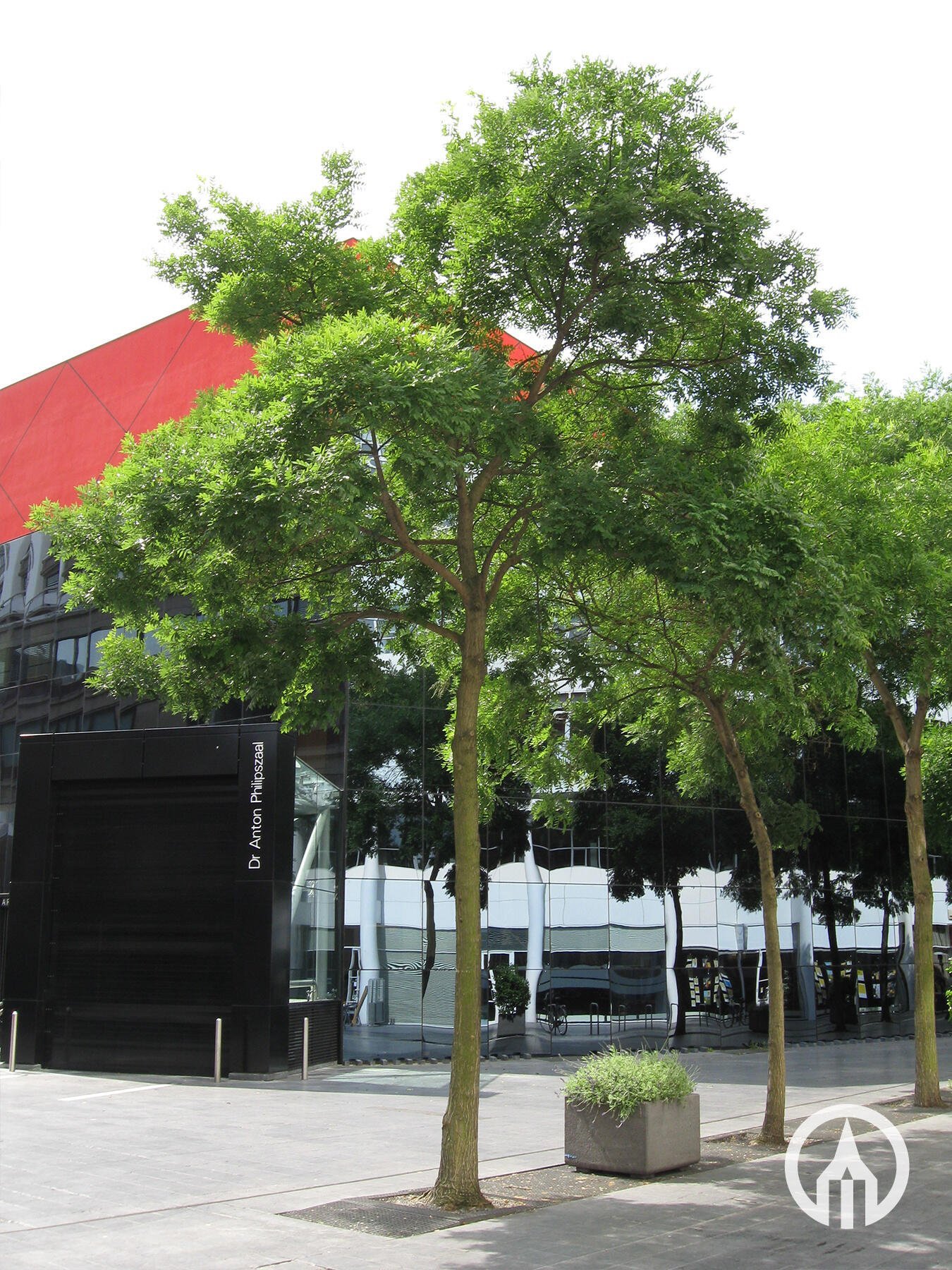
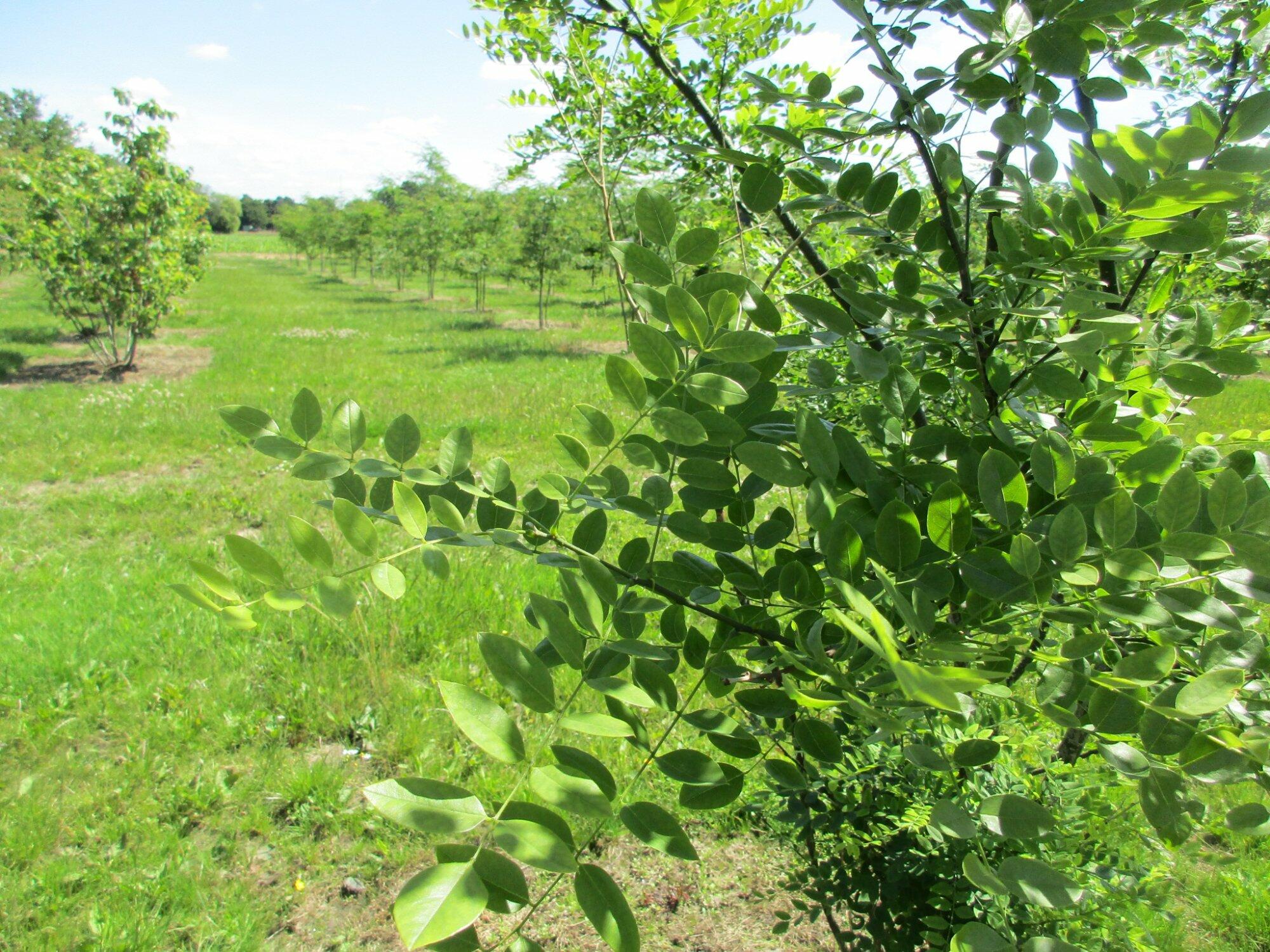
The tree grows relatively slowly and eventually forms a broad, rounded, and often somewhat open crown. Styphnolobium japonicum is well-suited for green belts, parks, and streets with a somewhat wider profile. It is a highly ornamental tree with fresh green compound leaves and a large number of small leaflets. The branches and twigs are strikingly green, with light-colored lenticels. The tree can be easily maintained in shape through summer pruning, though the tips of the branches may die back during the winter.
The tree is native to China and Korea. It is well-suited to the local climate and makes a beautiful addition to residential neighborhoods, parks, and city centers. Incidentally, the tree’s old and still widely used name is Sophora japonica.
A well-known American cultivar is Styphnolobium japonicum ‘Regent’. We grow Styphnolobium in both tree and shrub forms at our nursery.
Photo locations: The Hague, Paris, Middelburg, Venlo, Maastricht, Haaren, and our nursery