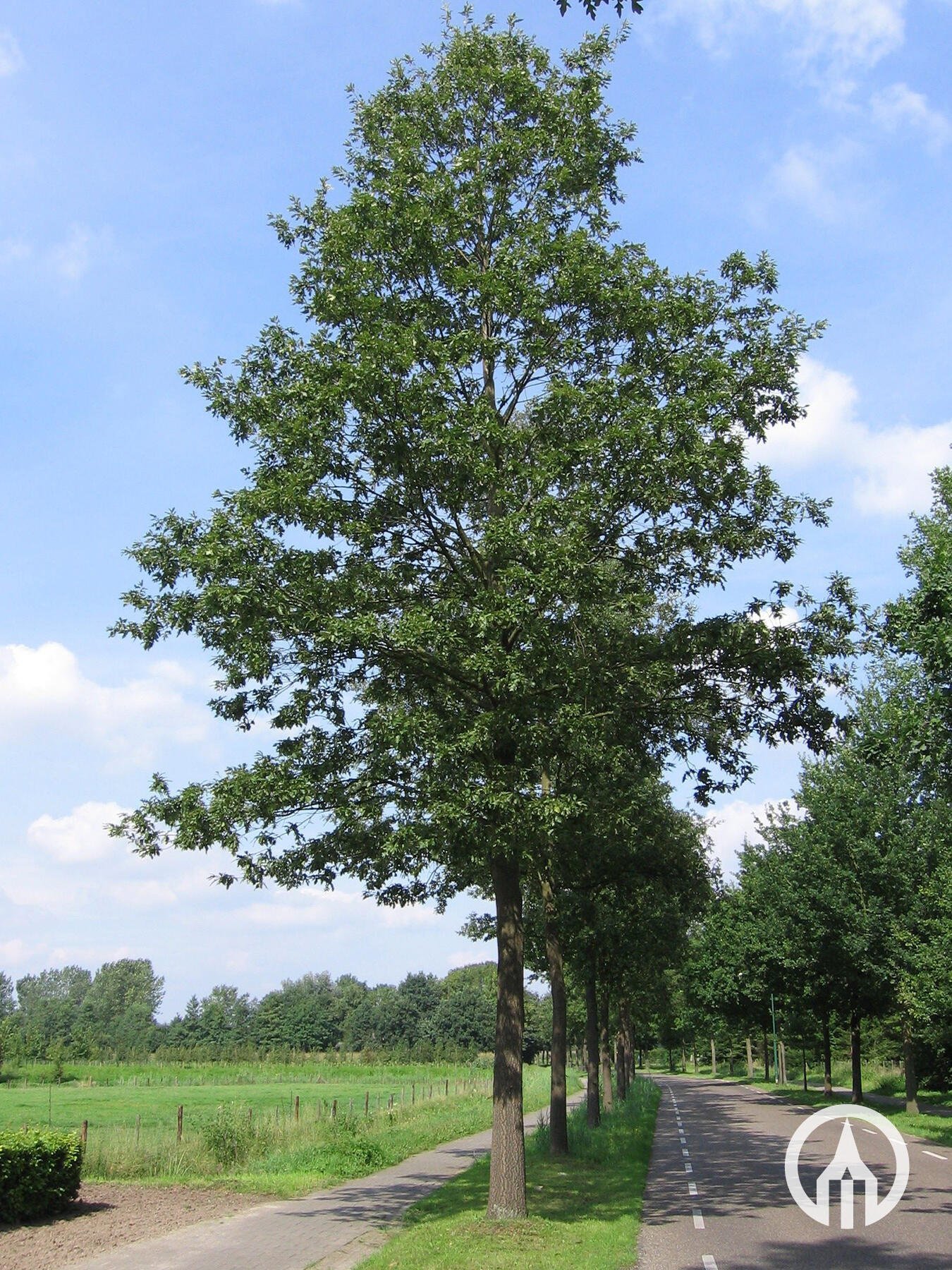
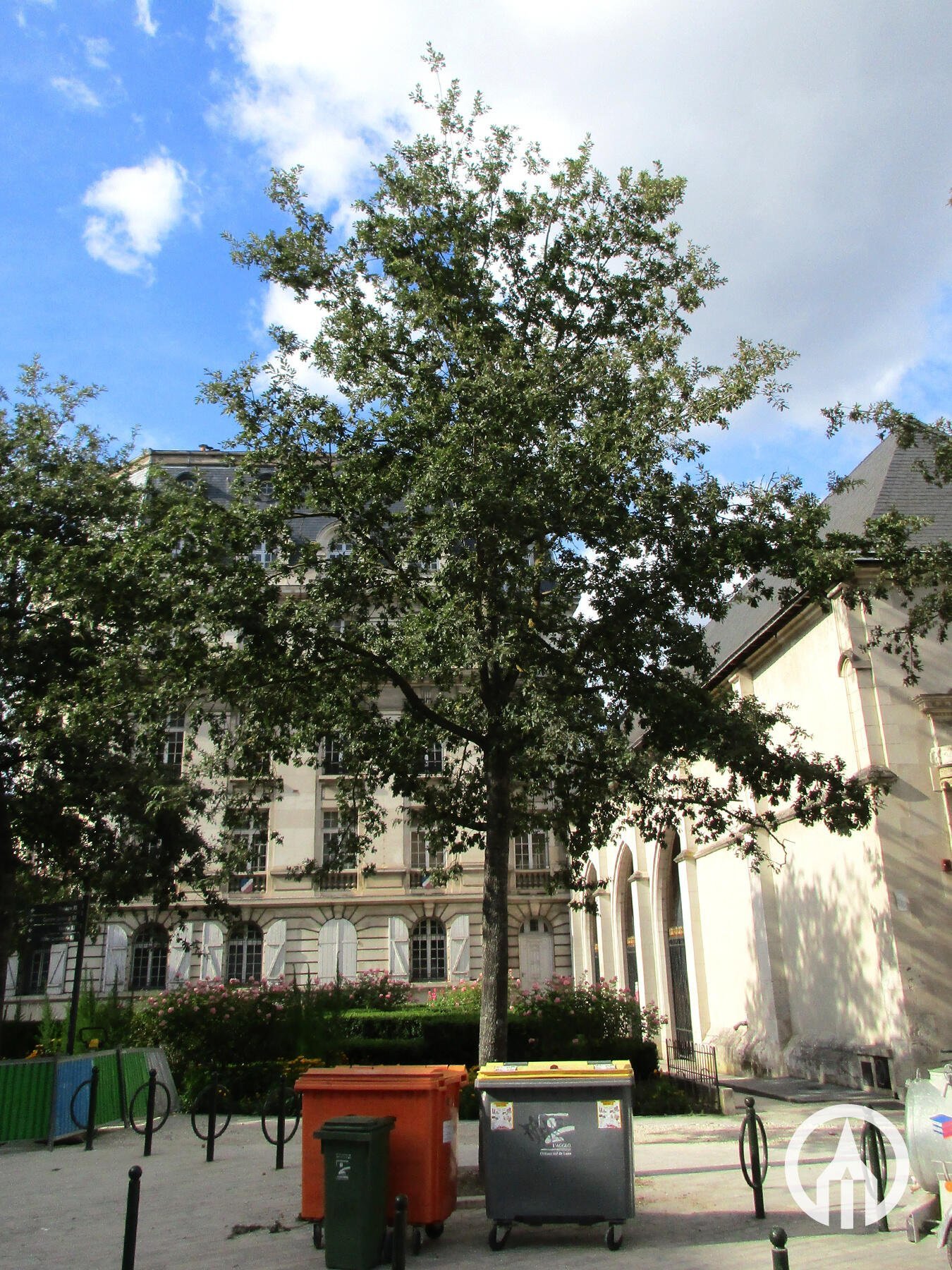
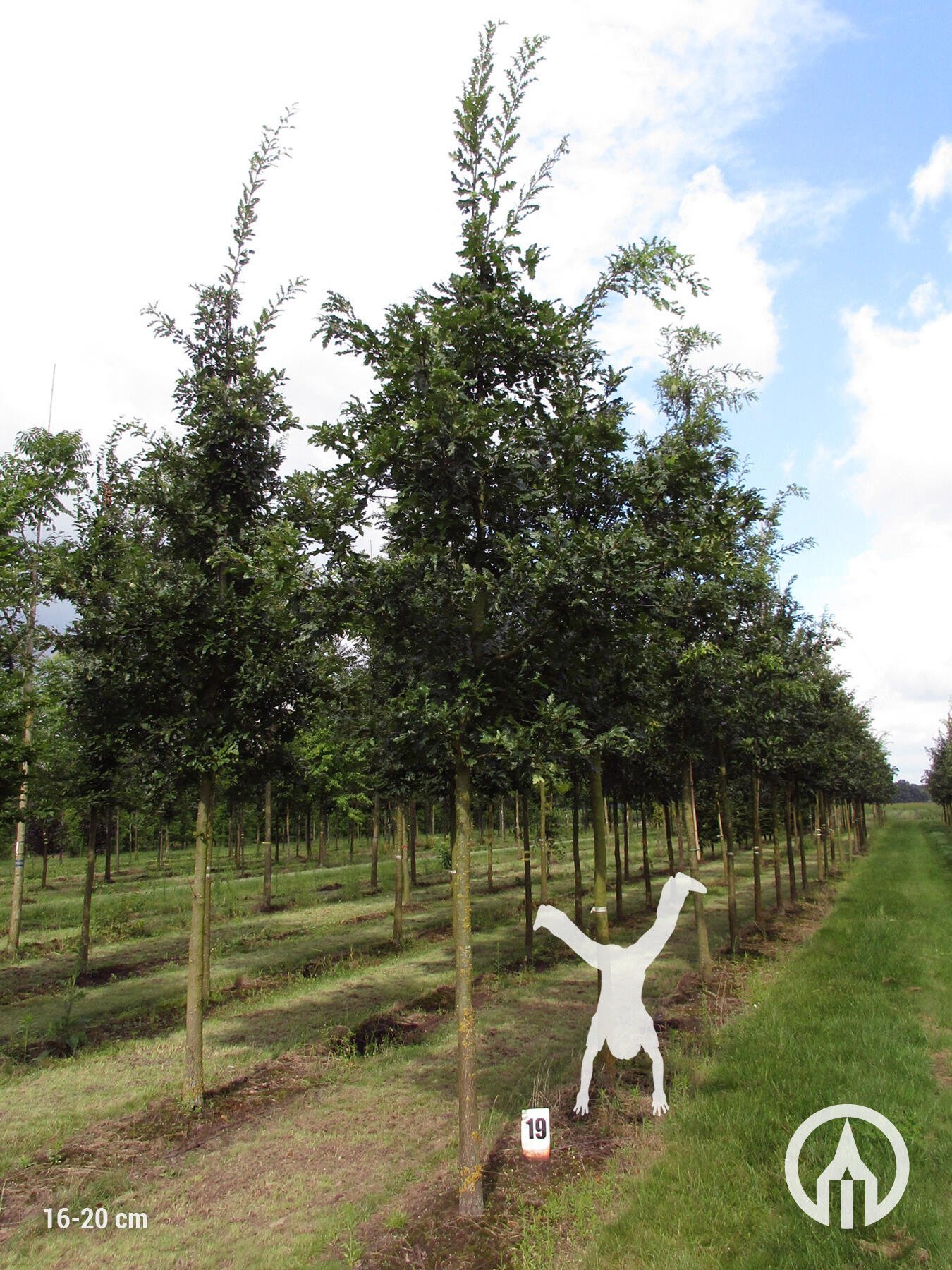
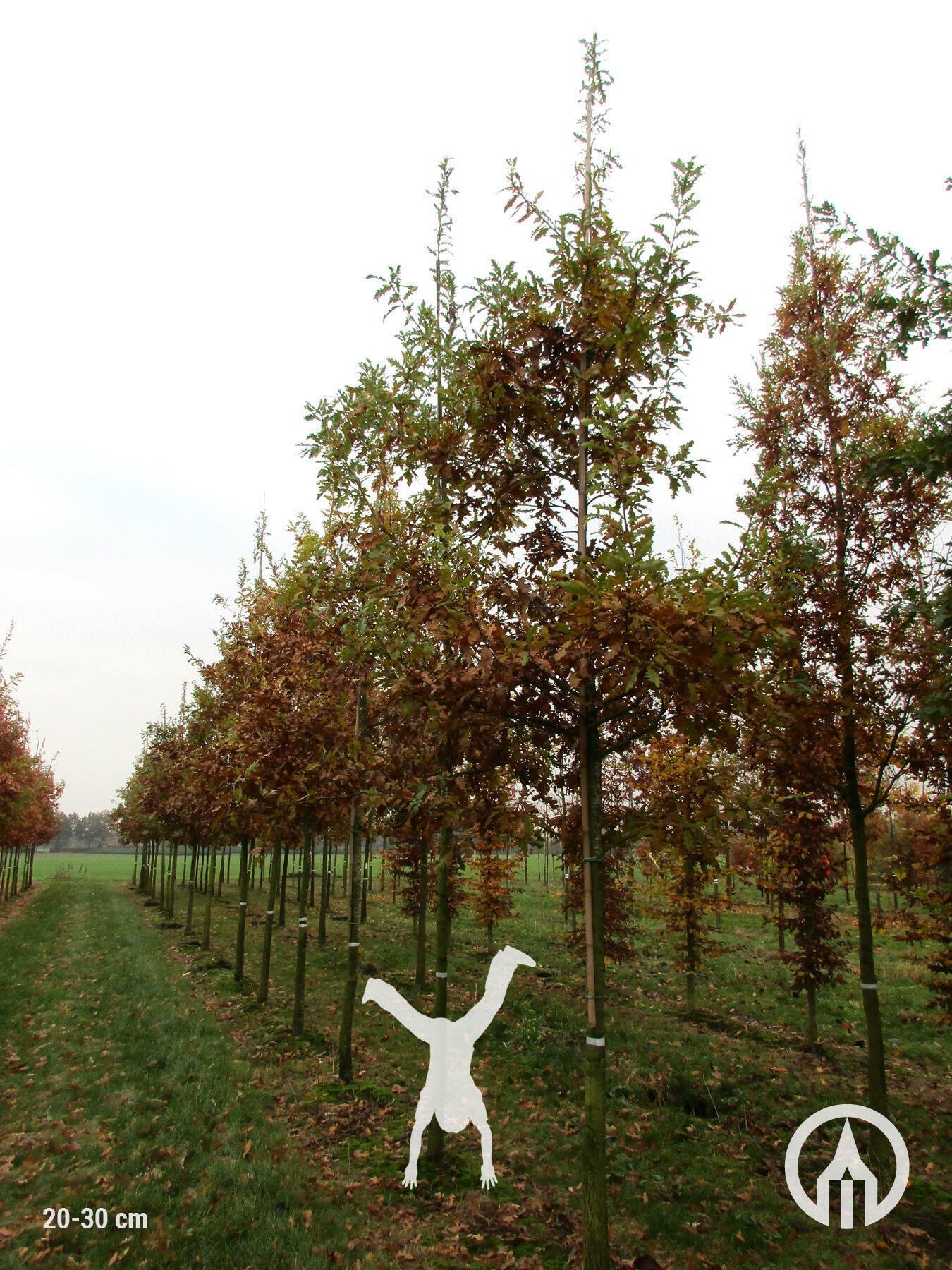
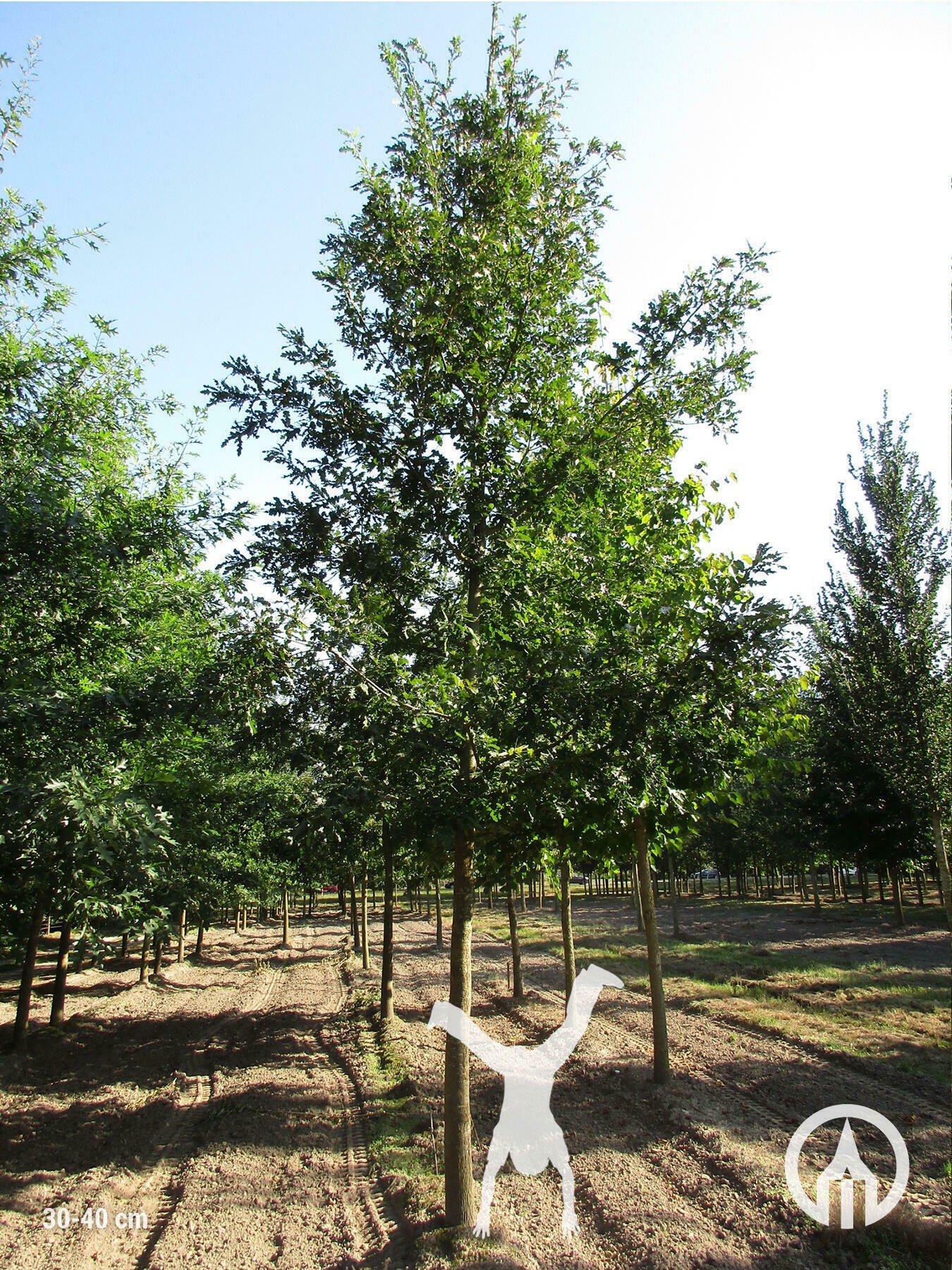
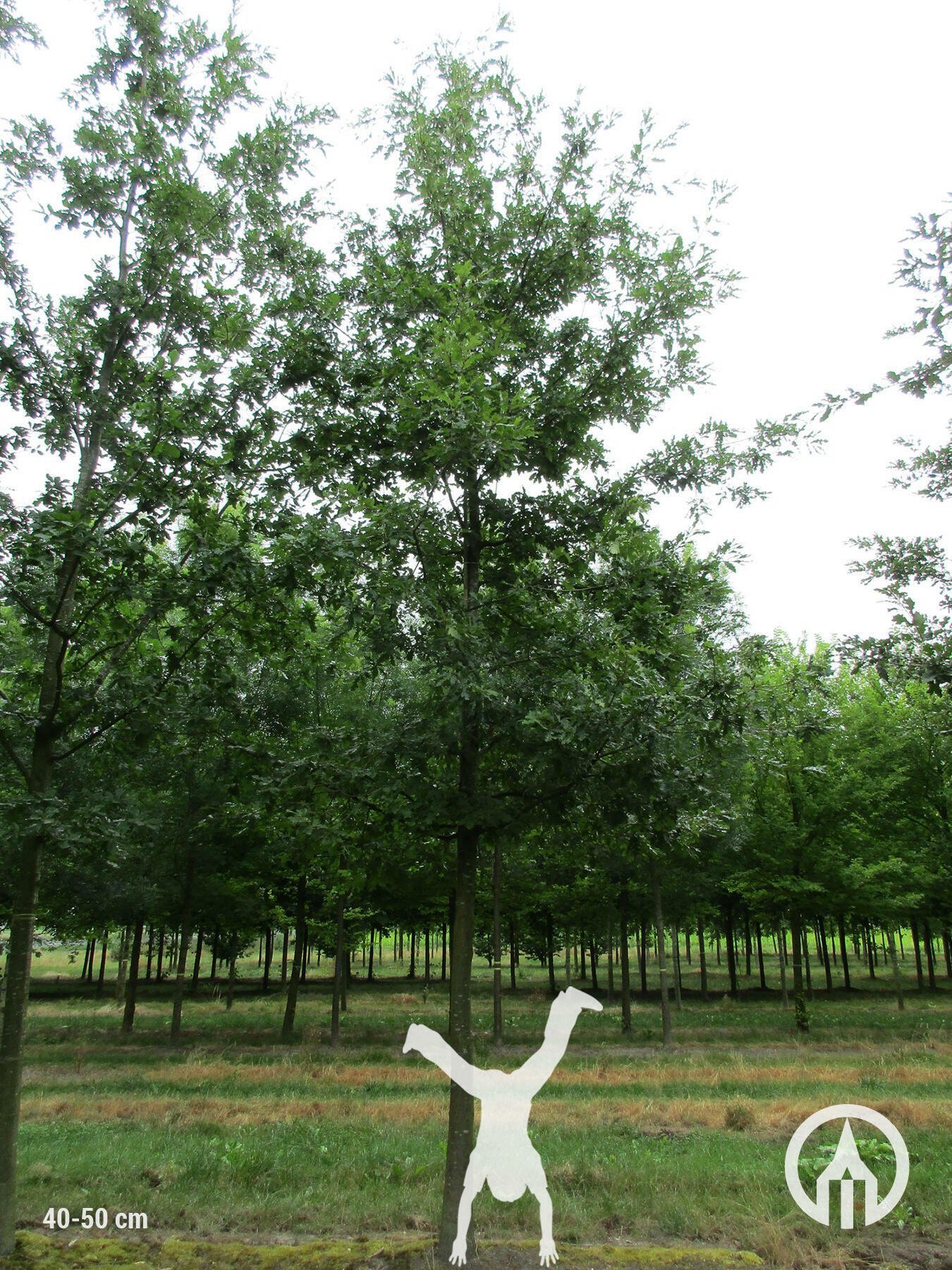
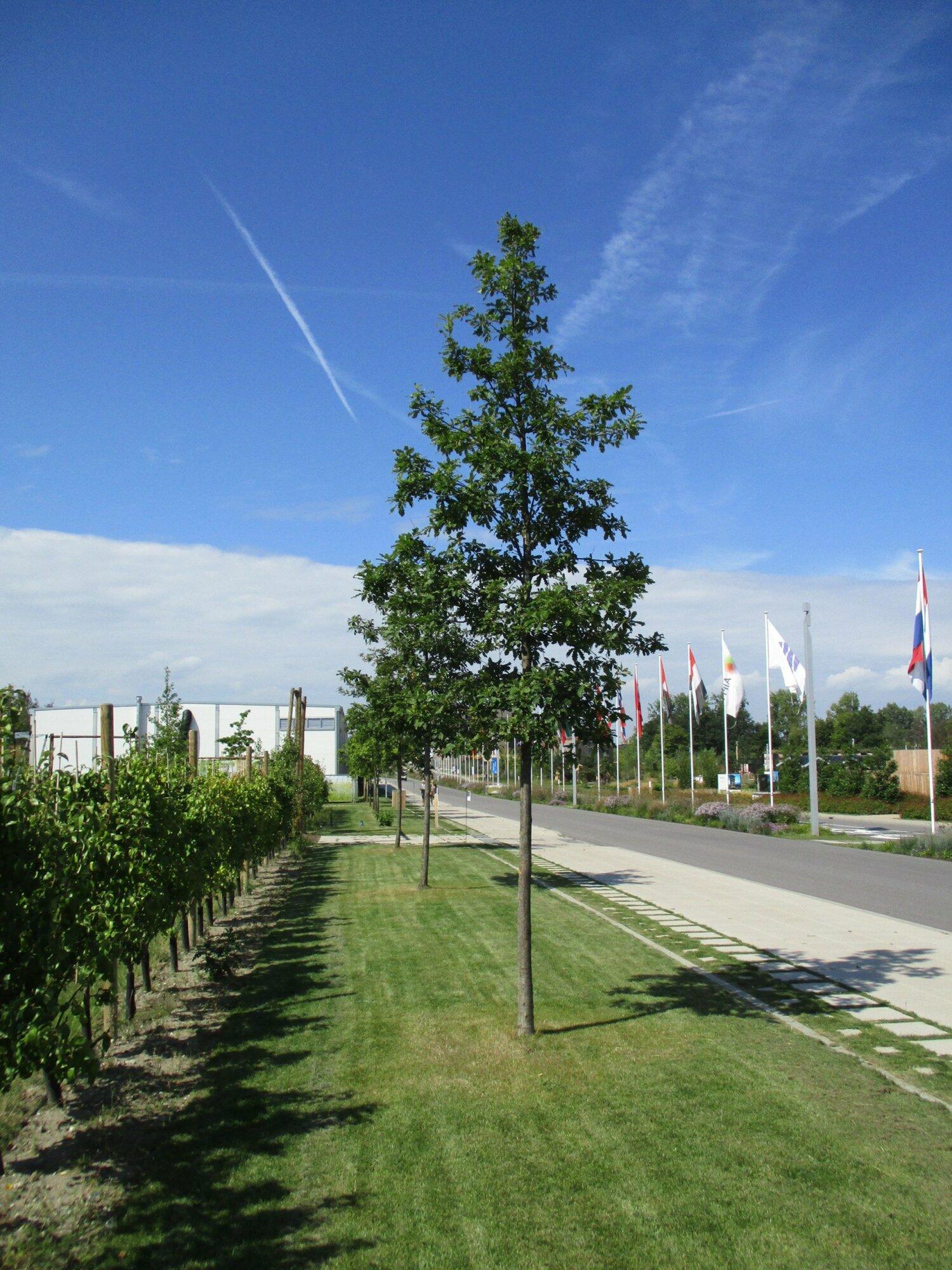
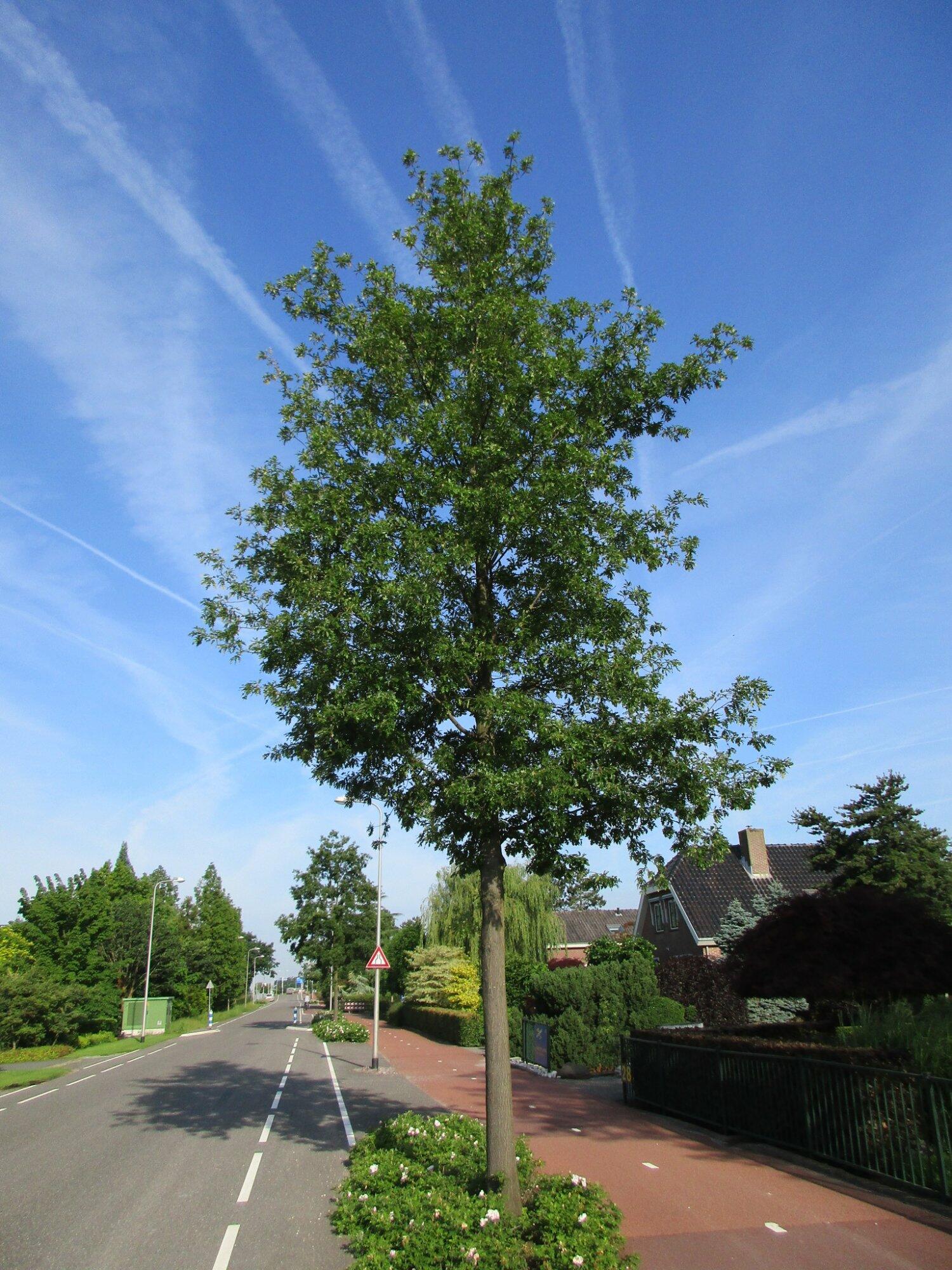
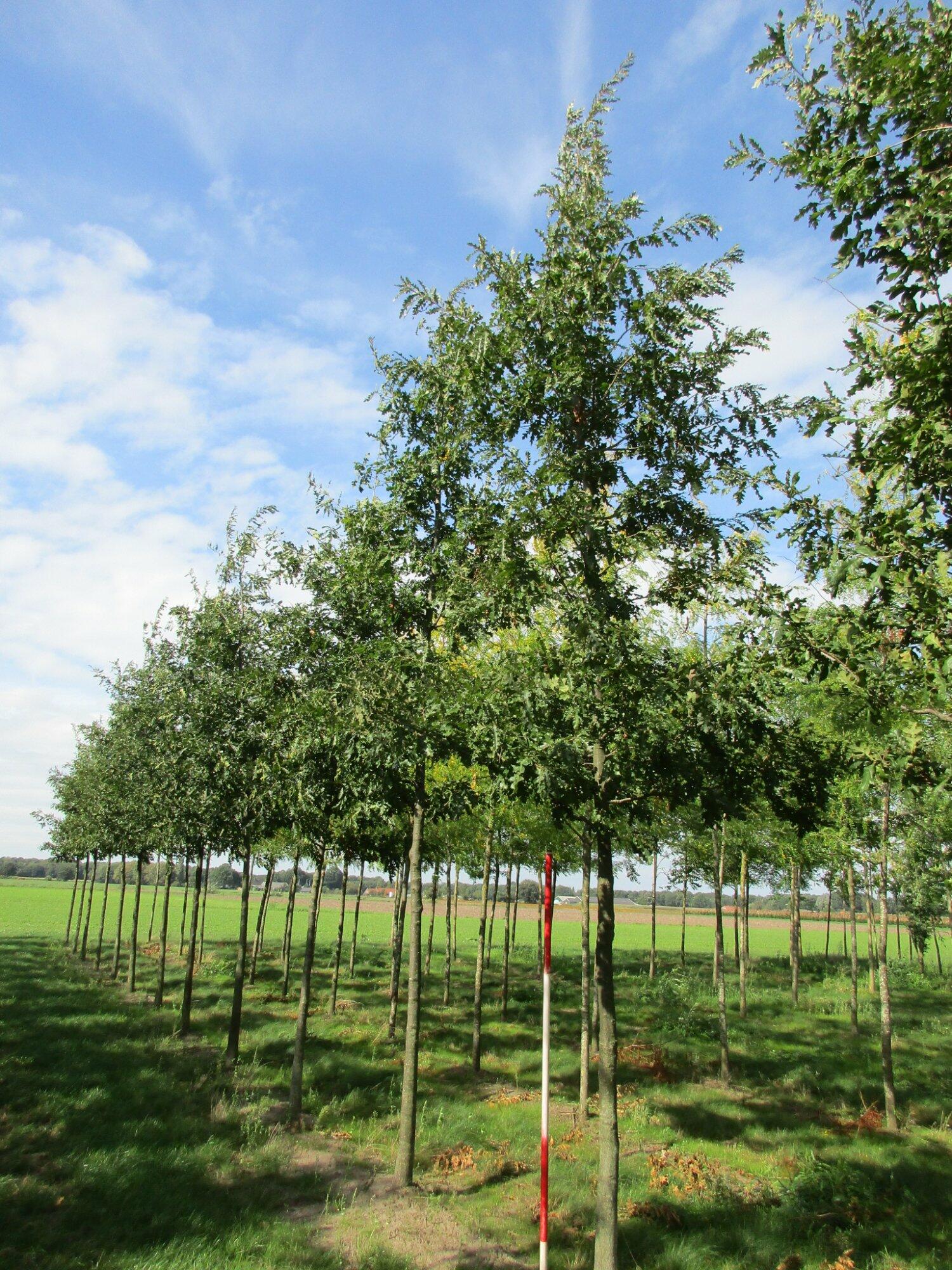
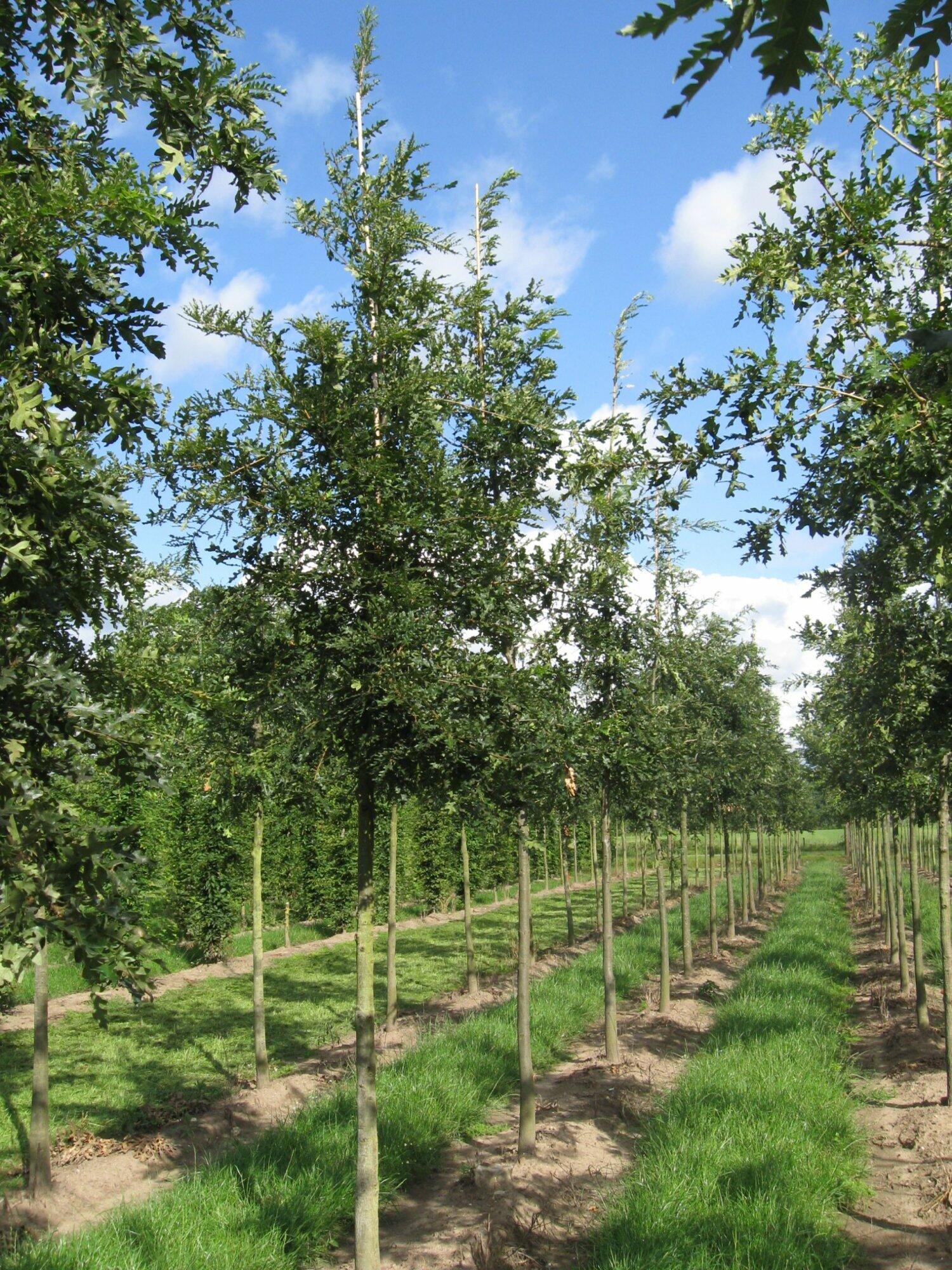
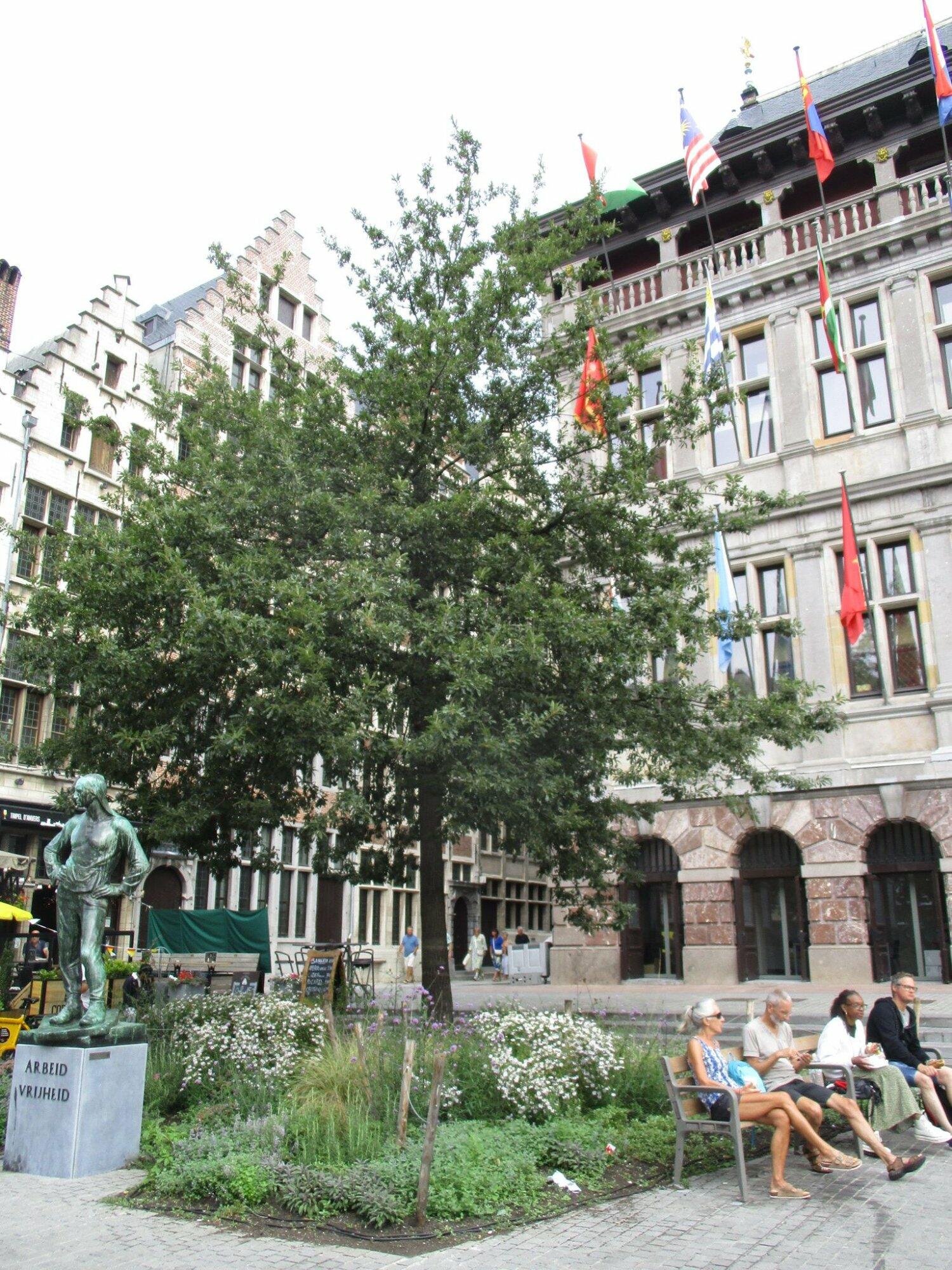
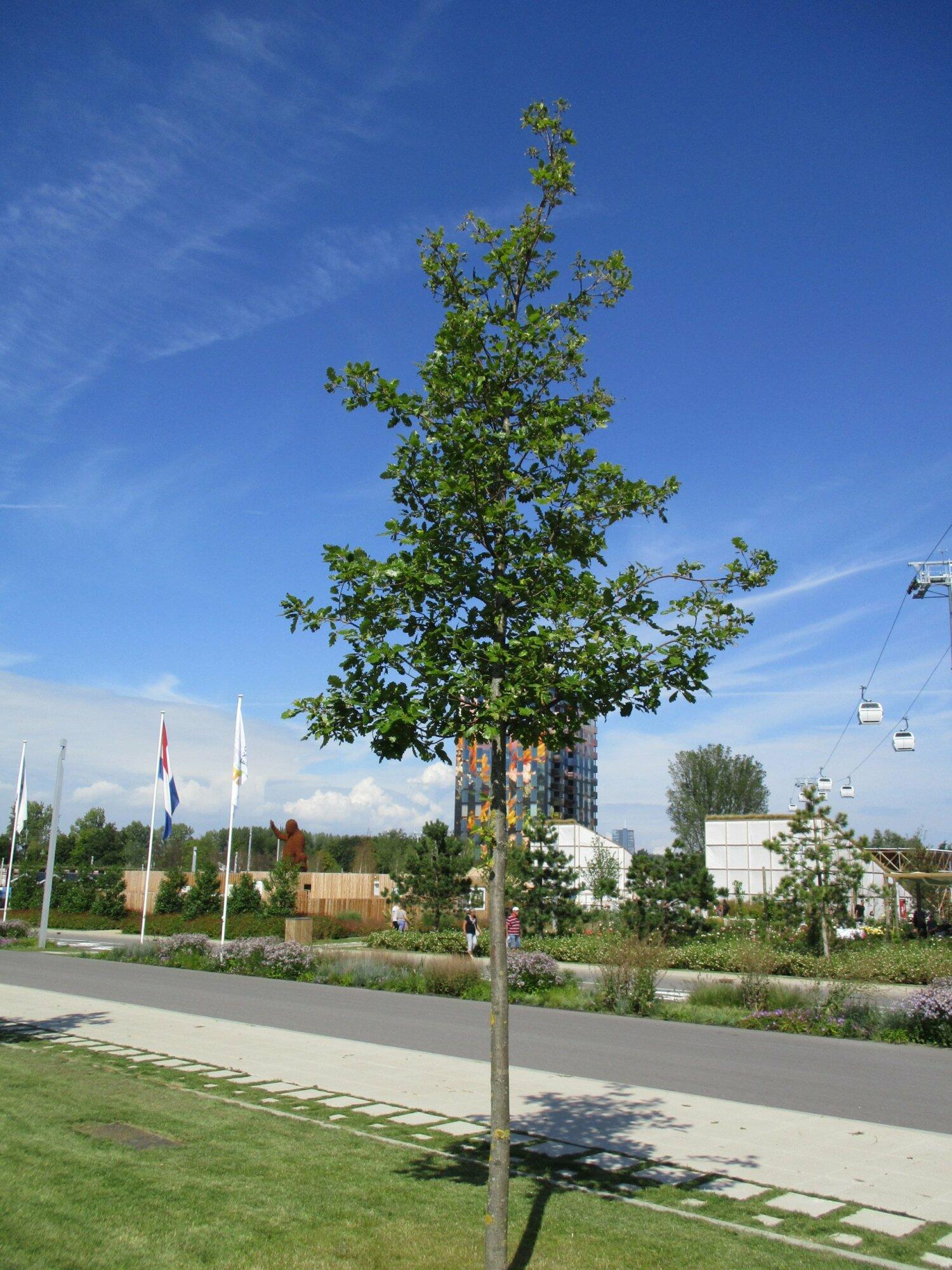
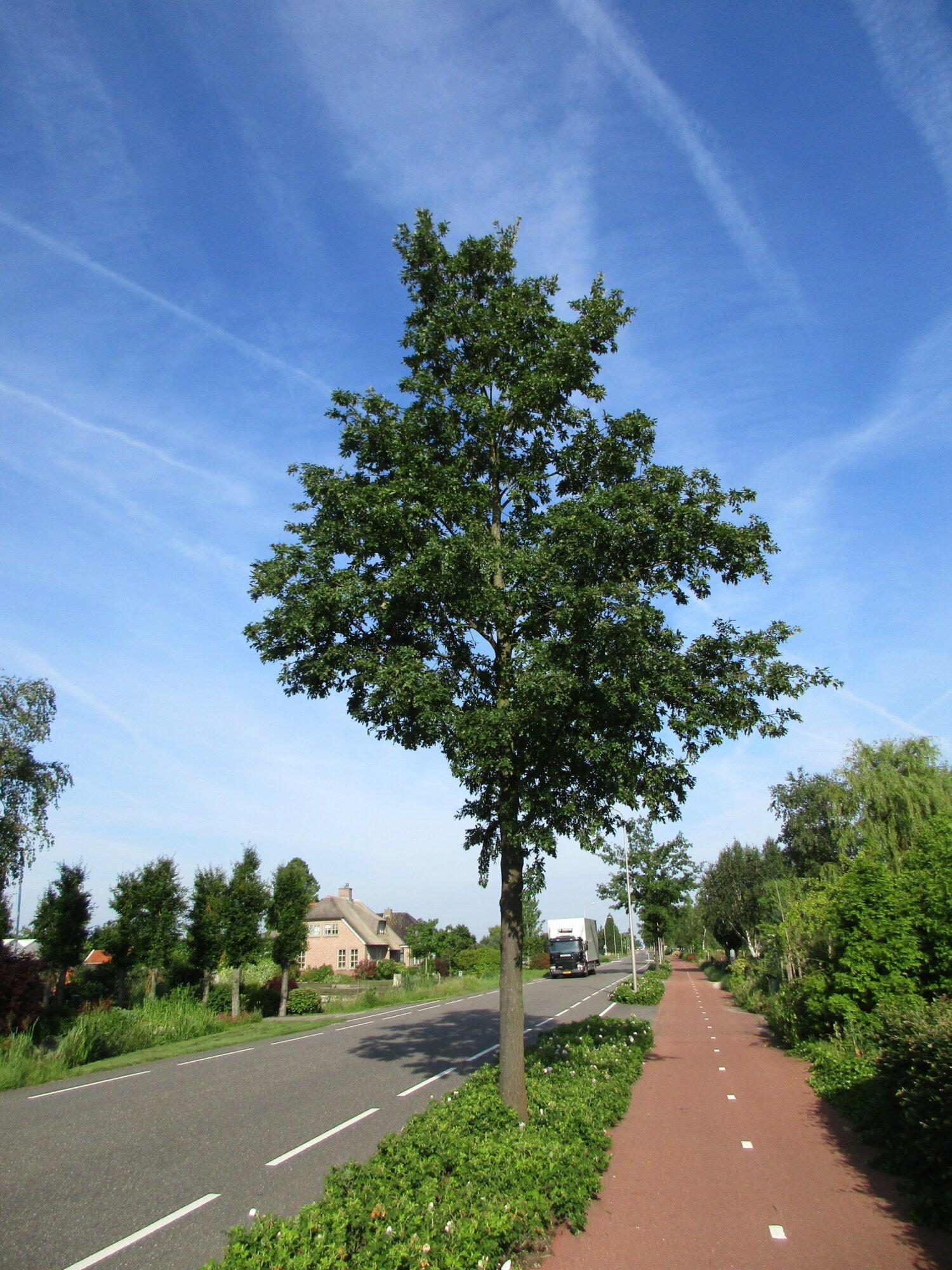
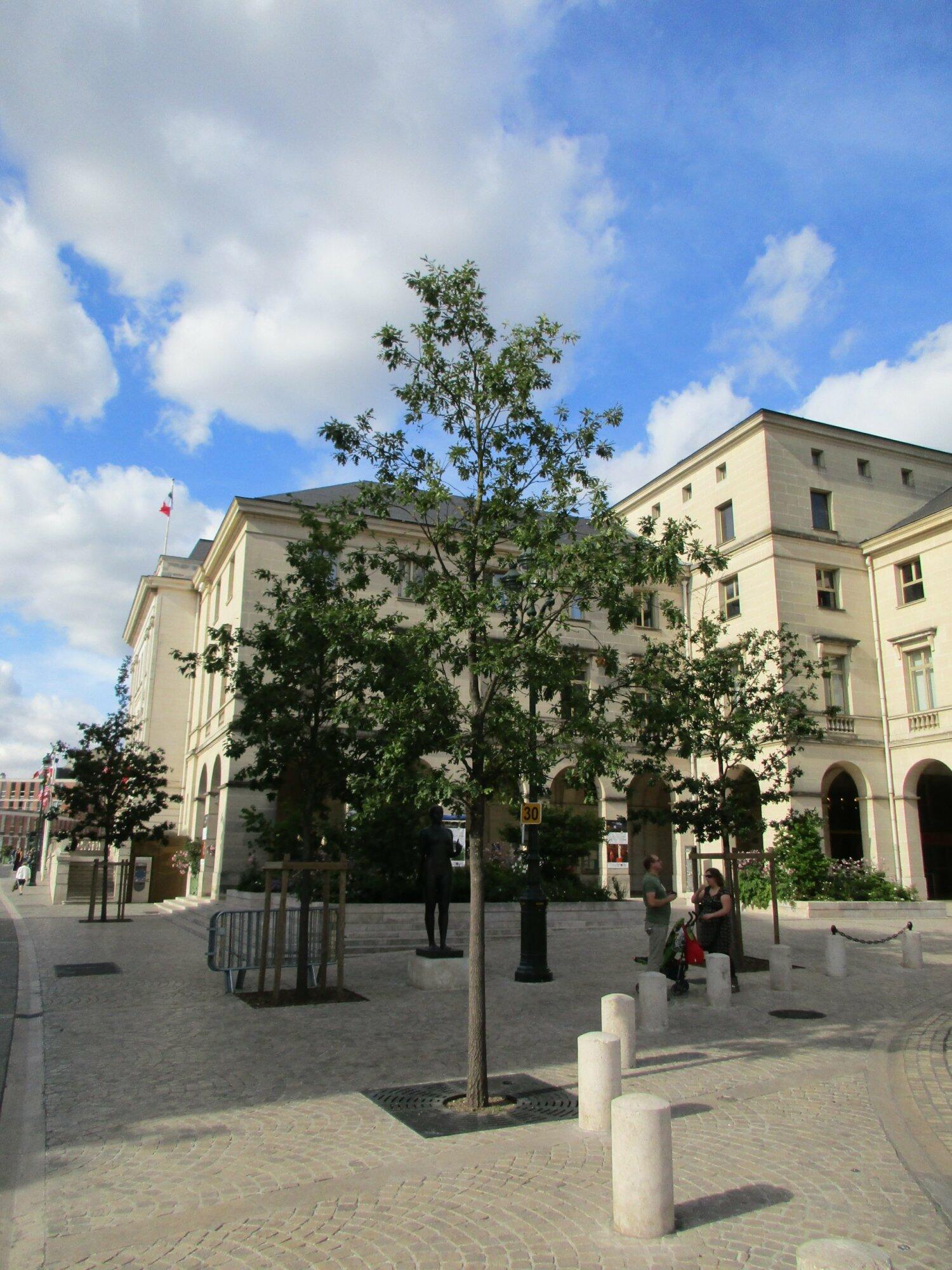
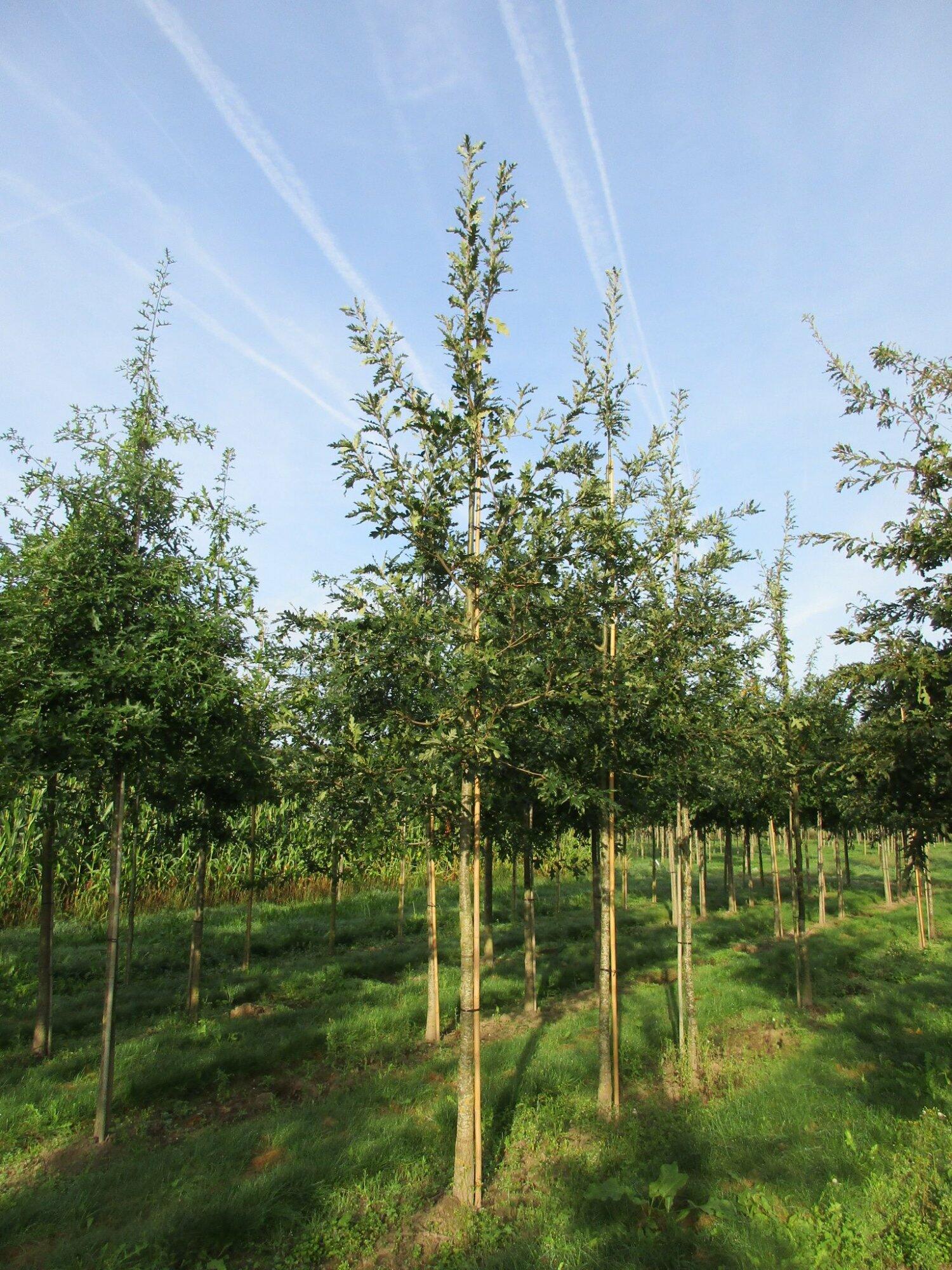
The moss oak grows somewhat erratically but eventually forms a broad, conical crown. It is a beautiful tree for use in a greenbelt or park. This tree species also thrives in wider streets. It has few soil requirements but prefers nutrient-rich, well-drained soil. Quercus cerris is certainly well-suited for coastal areas, as the species tolerates (sea) winds well.
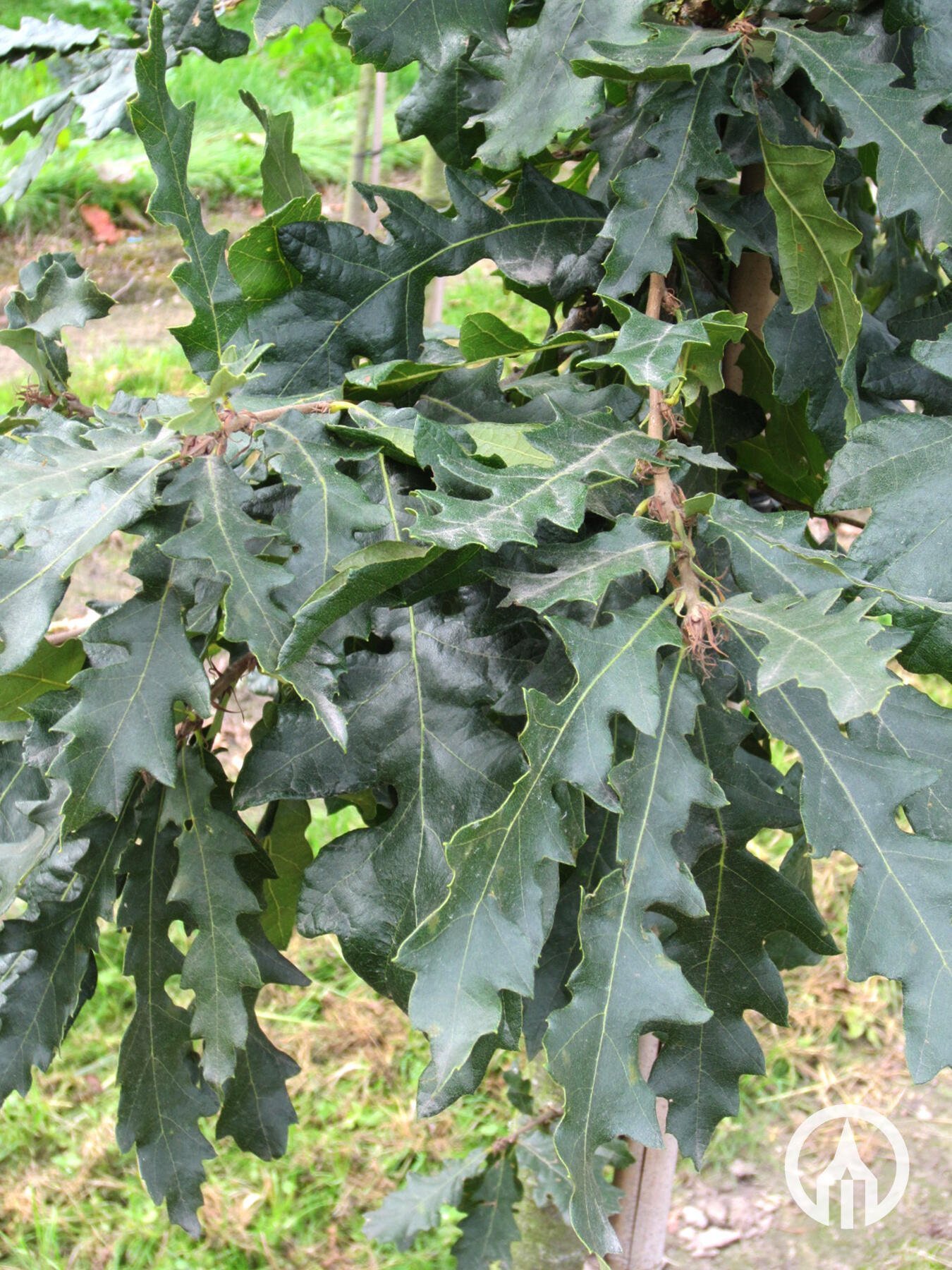
The tree bears few acorns (2.5–3 cm long), though the hairy bump on each acorn is a striking feature. The leathery leaves are ornamental and variable, sometimes deeply lobed and at other times more sharply toothed. The terminal buds, surrounded by thread-like stipules, are particularly striking. Another distinctive feature is that the withered leaves remain on the tree for a long time in winter. In short, it is a reliable tree for landscaping.
The tree is native to Southwest Asia and southern and central Europe.
Photos taken in: Boskoop, Floriade in Almere, Vught, Antwerp, Orléans (France), and our nursery