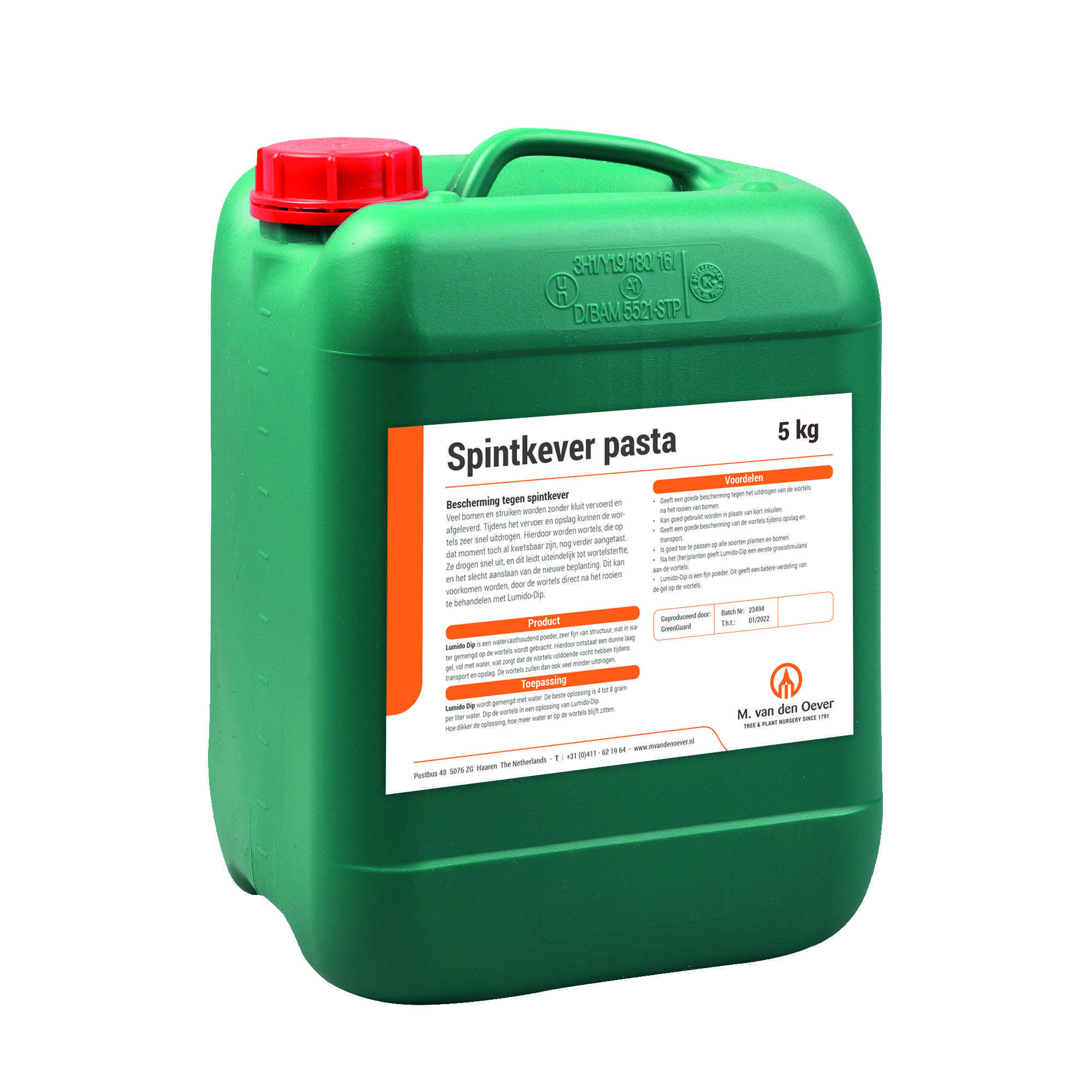
Product
This paste has a preventive effect and releases a
an odor barrier that makes the tree unappealing
for the weevil. It can be easily applied
by applying it to the trunk and the lower part of the crown
with the paste. This treatment must be carried out over the course of the
Repeat this process every summer to keep the scent barrier intact
to ensure optimal results.
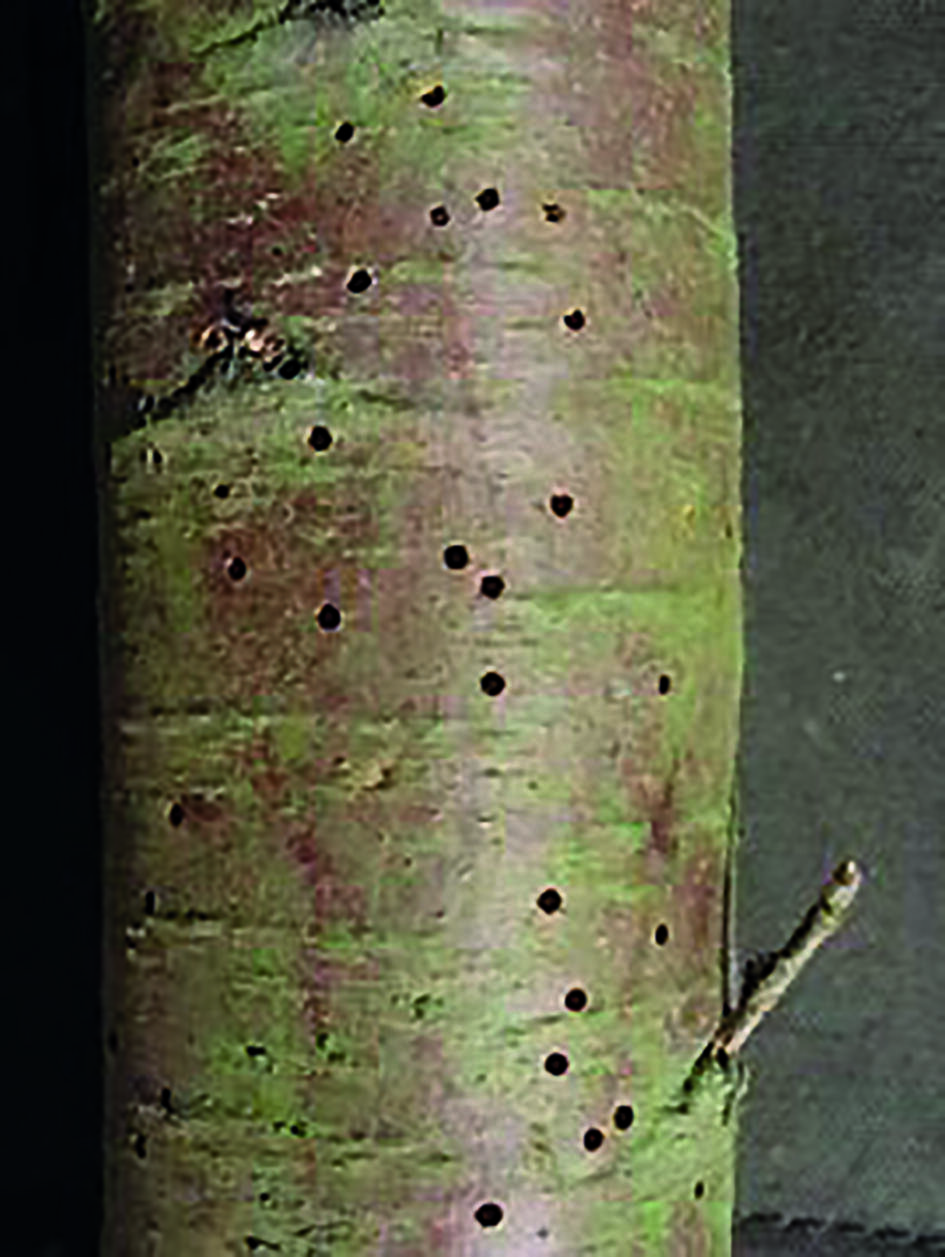
Pattern of Damage
A large number of bark beetles, jewel beetles, longhorn beetles, and
Wood wasps live in weak and dead trees and shrubs.
The main group of pests immediately after planting
is the group of bark beetles, and specifically the subgroup of web-spinning beetles.
The female beetle bores small holes in the trunk (especially on
(the warm southwest side), mates, builds a tunnel, and lays
eggs. The larvae burrow tunnels through the cambium and the
young wood tissue. The tree loses wood at the feeding sites
the entire sap flow. A planted tree comes
in the spring, on the leaves, and after infestation, the leaves begin to
to turn yellow and shrink, which closely resembles
symptoms of desiccation. The beetle is commonly found
throughout Europe and is primarily active in the heating sector.
Some examples include the elm bark beetle (Scolytus scolytus),
birch bark beetle (Scolytus ratzeburgi), pine weevil
(Tomicus piniperda) and the oak bark beetle (Scolytus intricatus).
Host plants that are frequently infested include Quercus, Castanea,
Ulmus, Fagus, and Populus, and to a lesser extent Carpinus,
Corylus, Ostrya, Sorbus, and Betula. In particular, the oak gall beetle
is a threat to the newly planted trees.
Dosage
The recommended dosage for ESK is 1 kg per 8 m²
bark surface area. The dosage depends heavily on whether the
whether the bark is rough or smooth. Repeat the treatment 2–3 times after 1–1.5
monthly administration, especially under stressful conditions
(dry, warm periods).