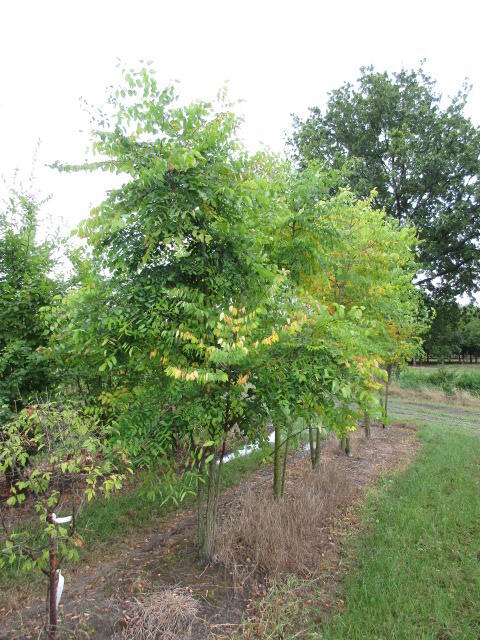
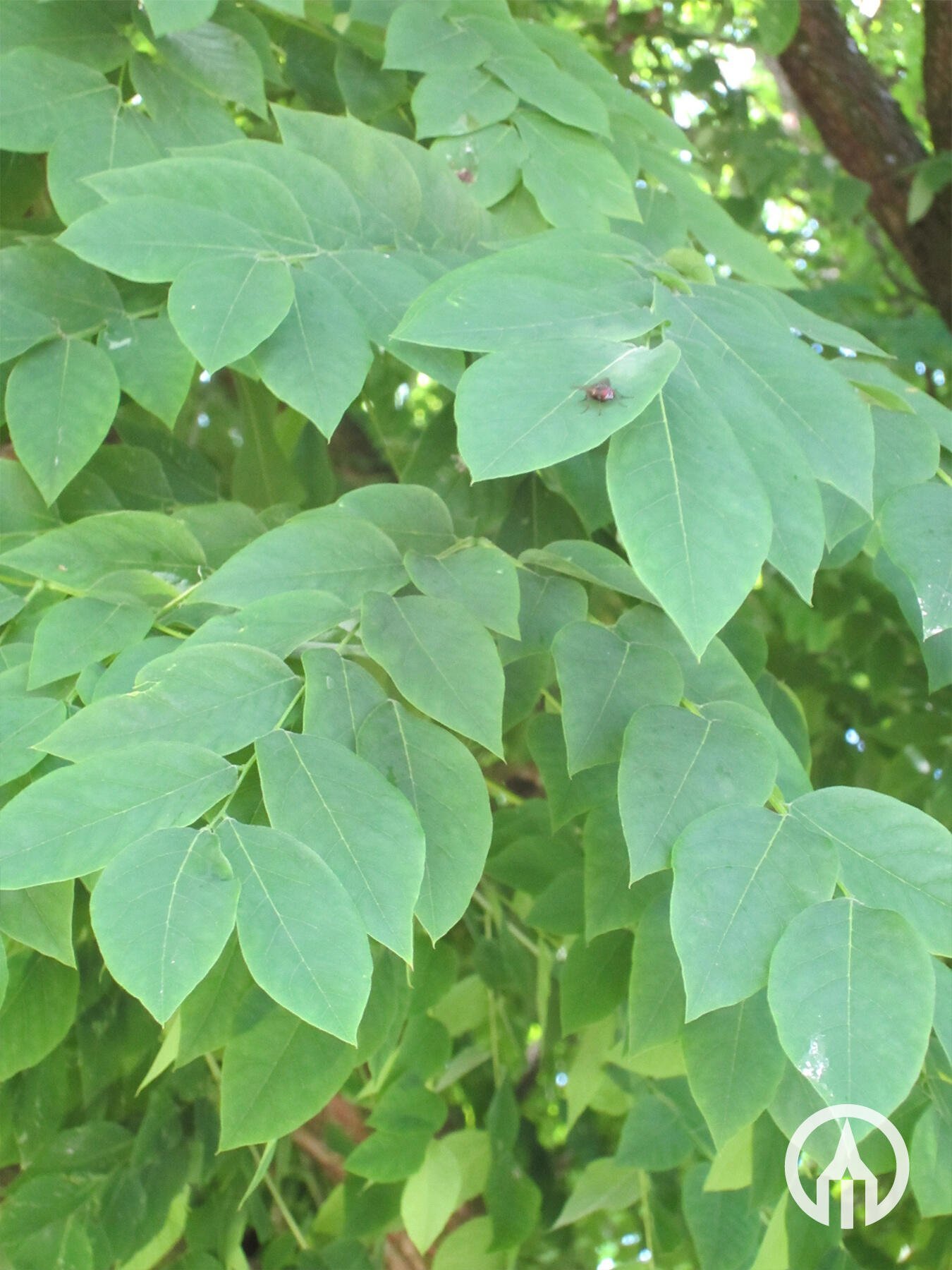
Below, we’ll take a closer look at a botanical cultivar, Gymnocladus dioica. The bright green, bipinnate leaves are likely the species’ greatest ornamental feature; they can grow up to 90 cm long and 60 cm wide. In the fall, the plant develops a beautiful yellow autumn color.
The grooves in the trunk and large branches are characteristic of this species. The somewhat irregular and open crown is typical of this tree species. It is therefore a tree that looks its best in green spaces, botanical gardens, or parks.
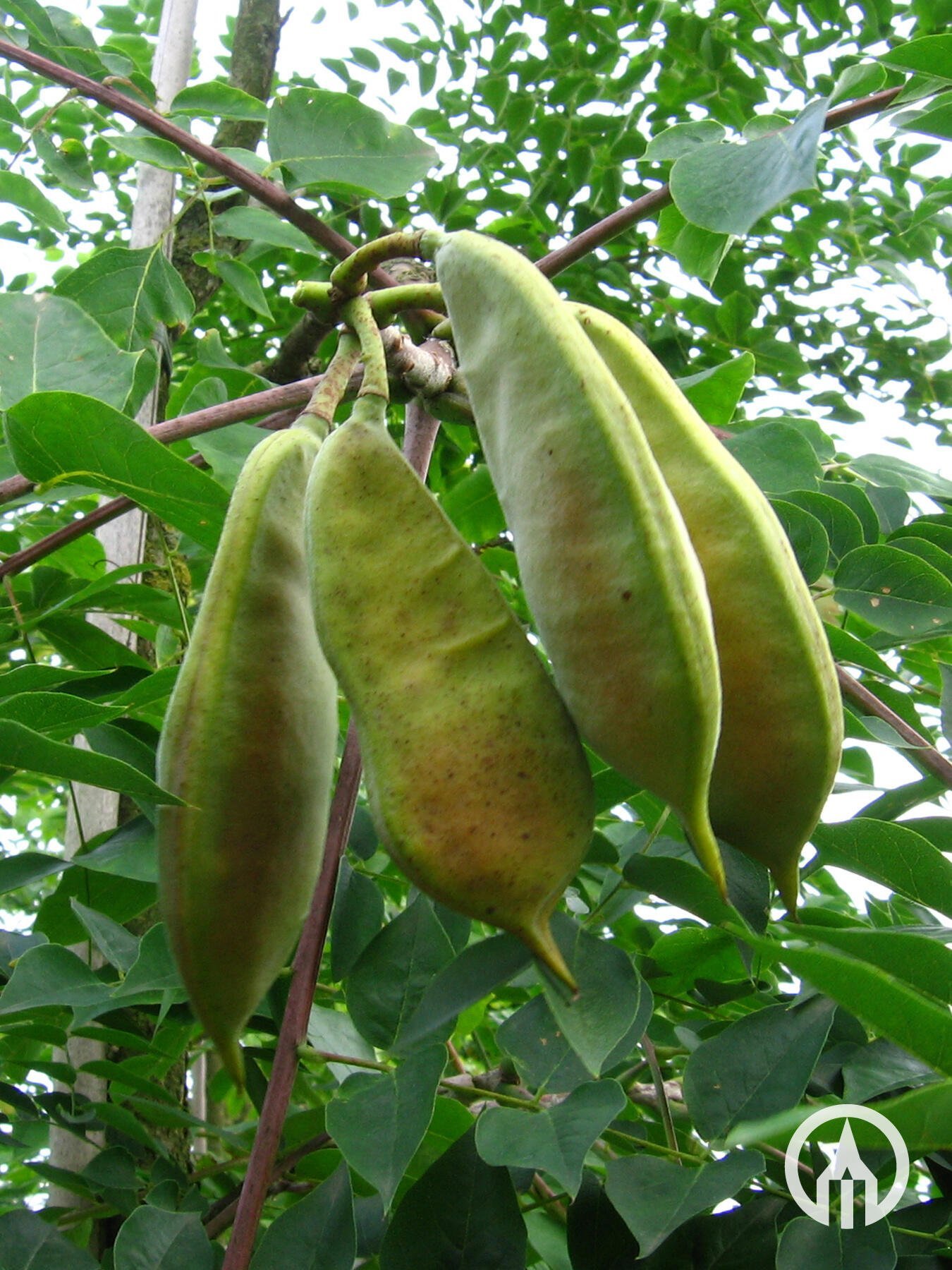
In the Netherlands, it’s quite unusual to see the tree bearing its pod-like fruit starting in August or September; this doesn’t happen every year. The pods contain hard seeds that are the same color as coffee beans. In ancient times, Native Americans roasted the seeds to make a brew—a kind of coffee substitute. In the United States and England, the tree is therefore sometimes called the ‘Kentucky coffee tree.’ This tree species is native to the Midwestern United States.
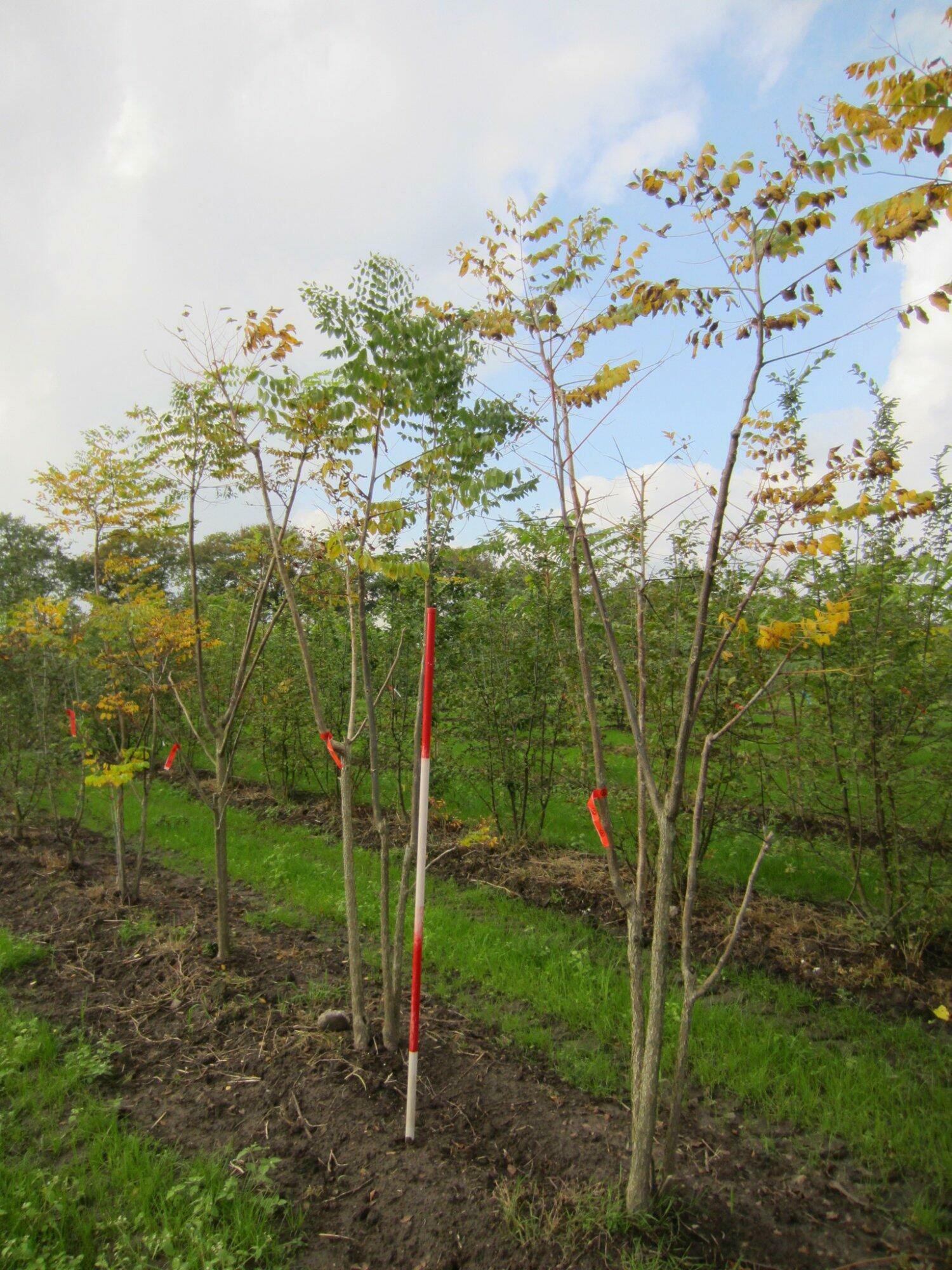
This botanical species is usually grown as a tree, but sometimes also as a multi-stemmed shrub.