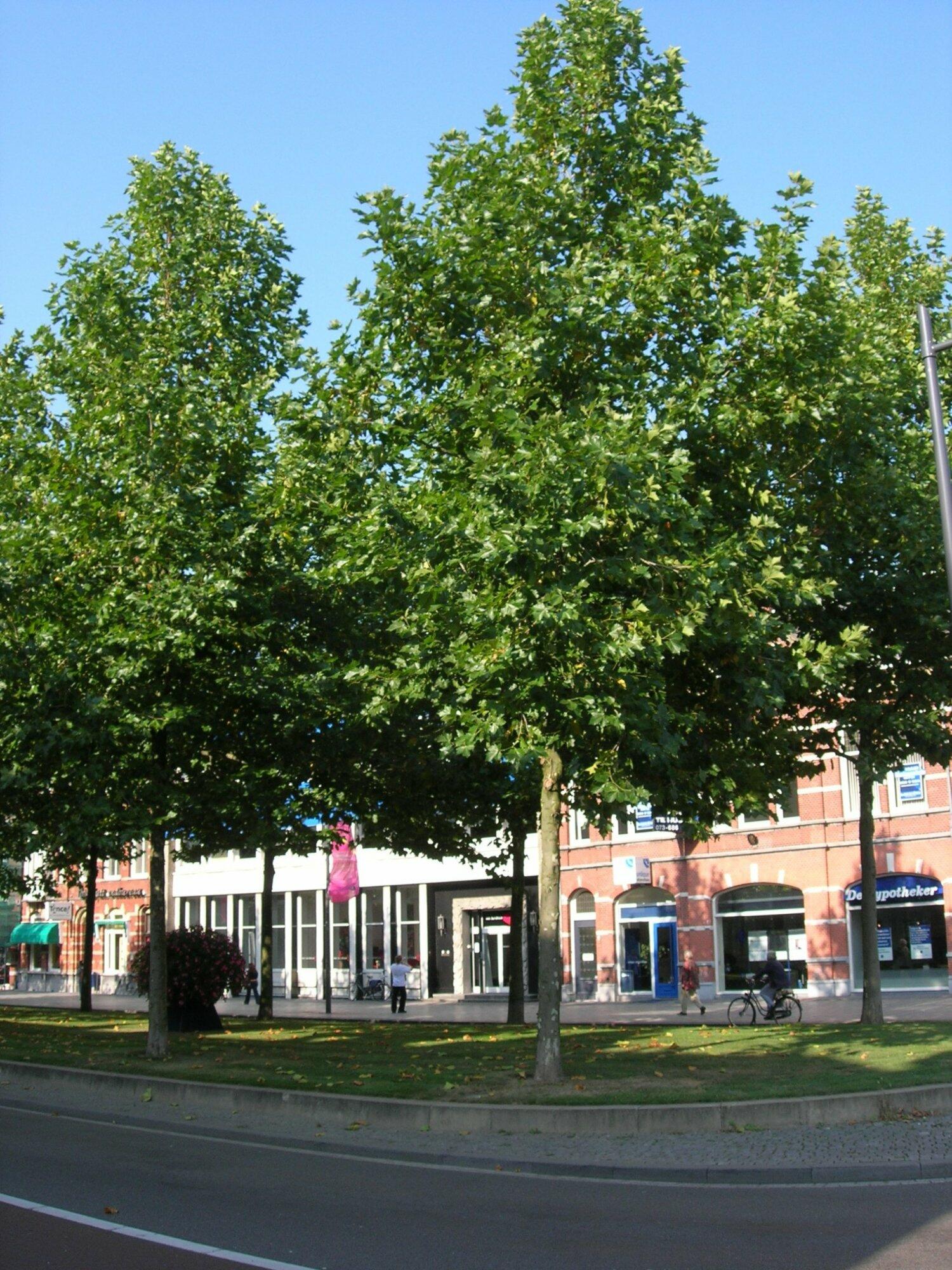
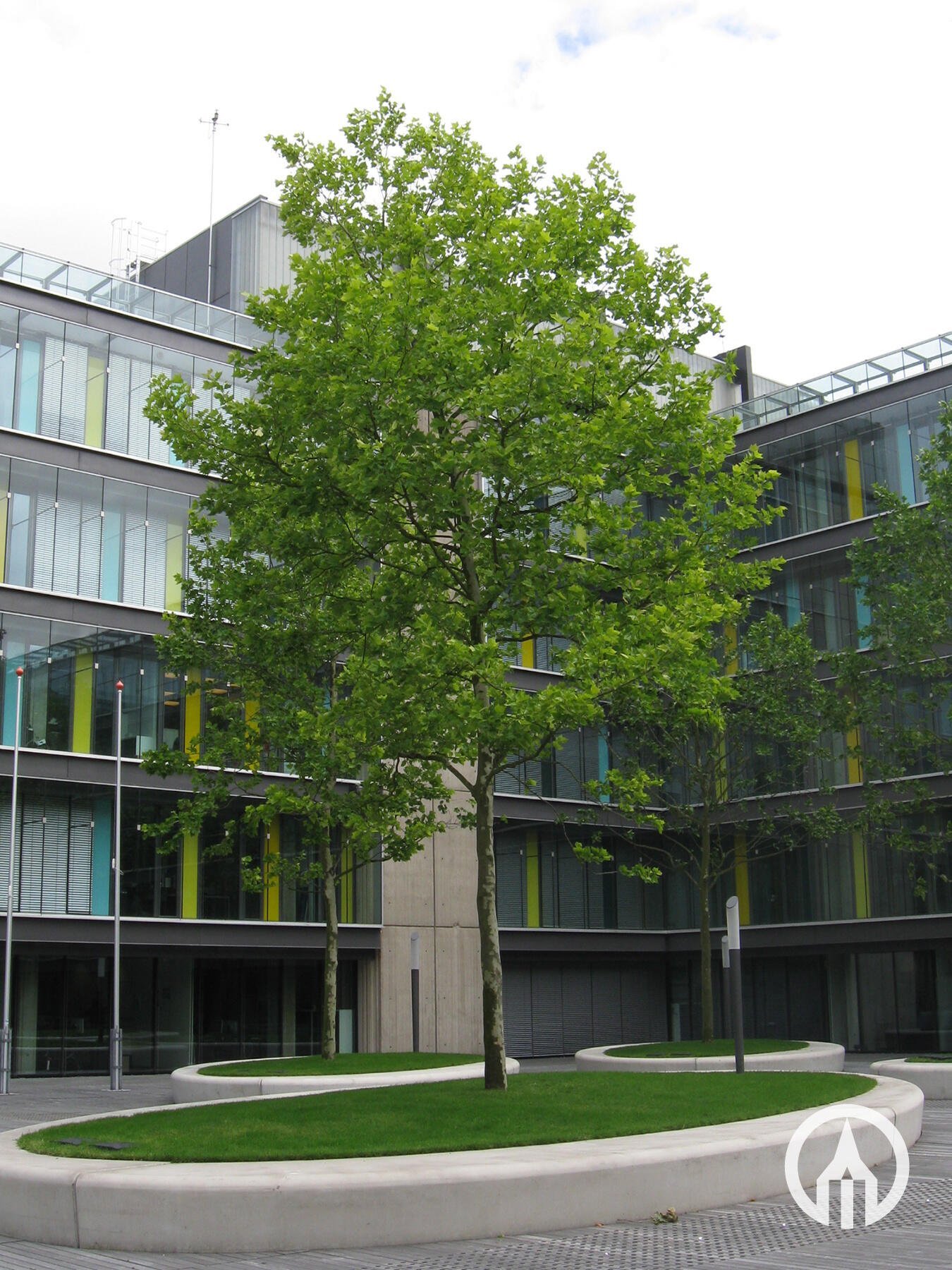
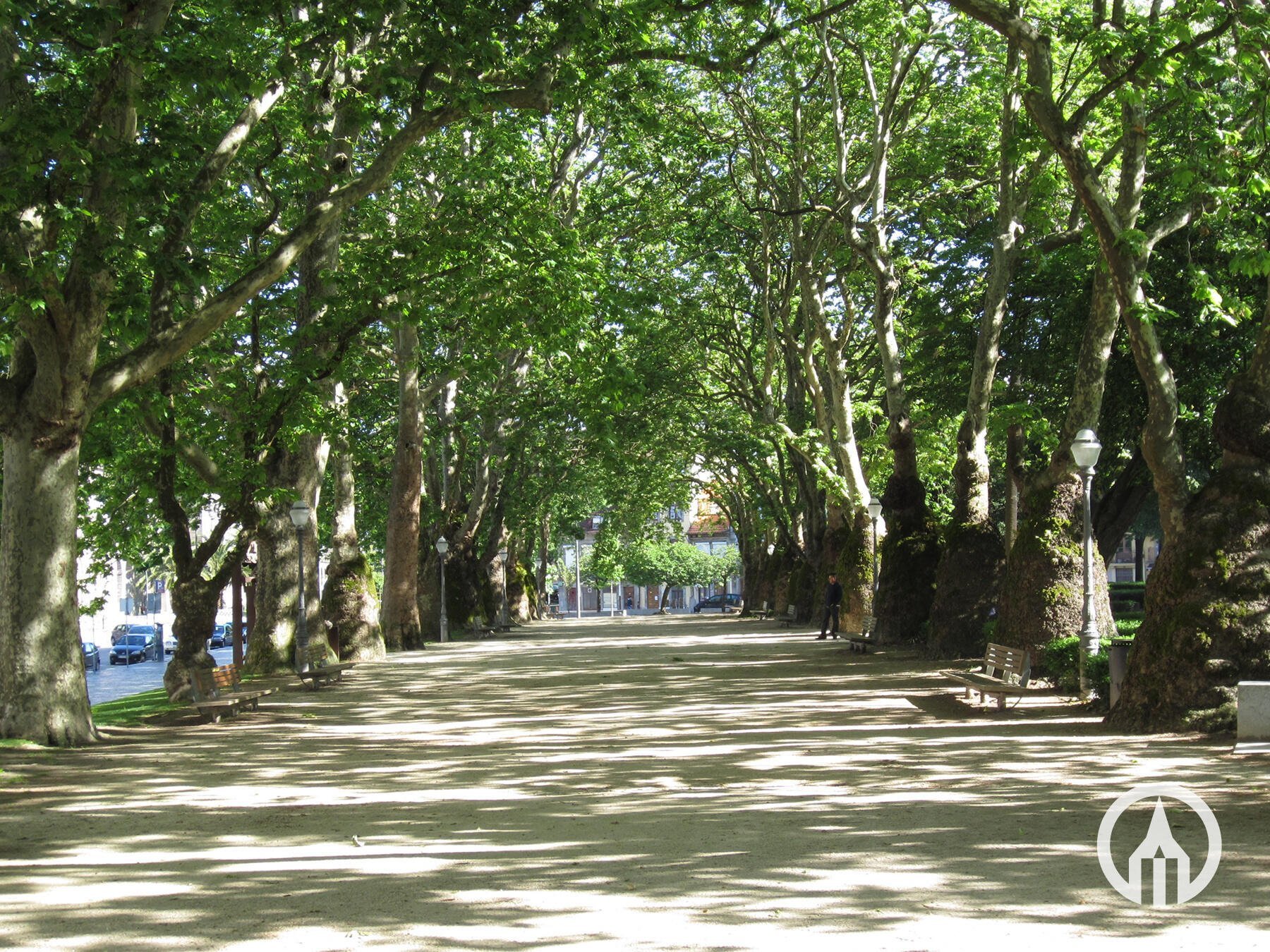
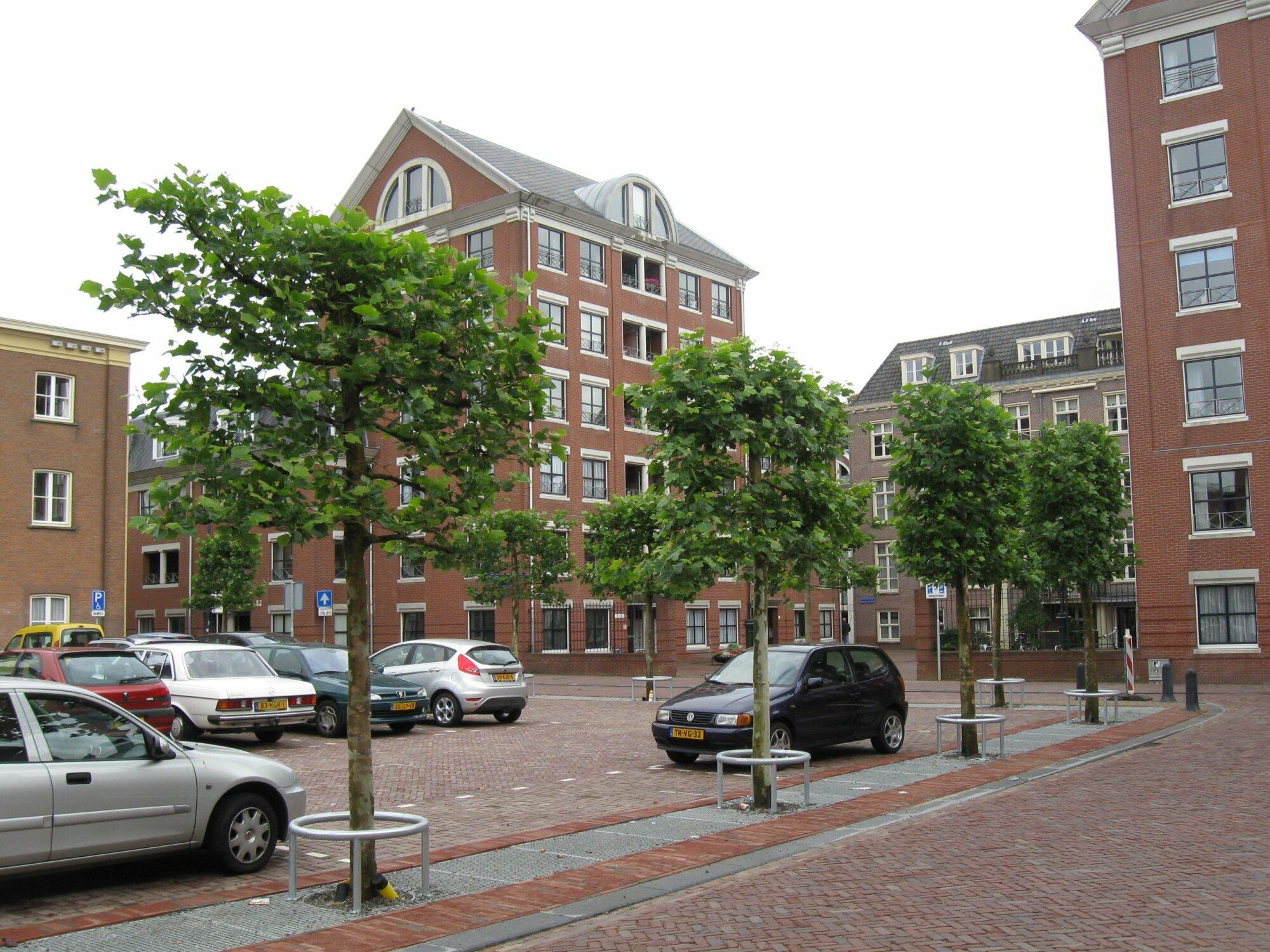
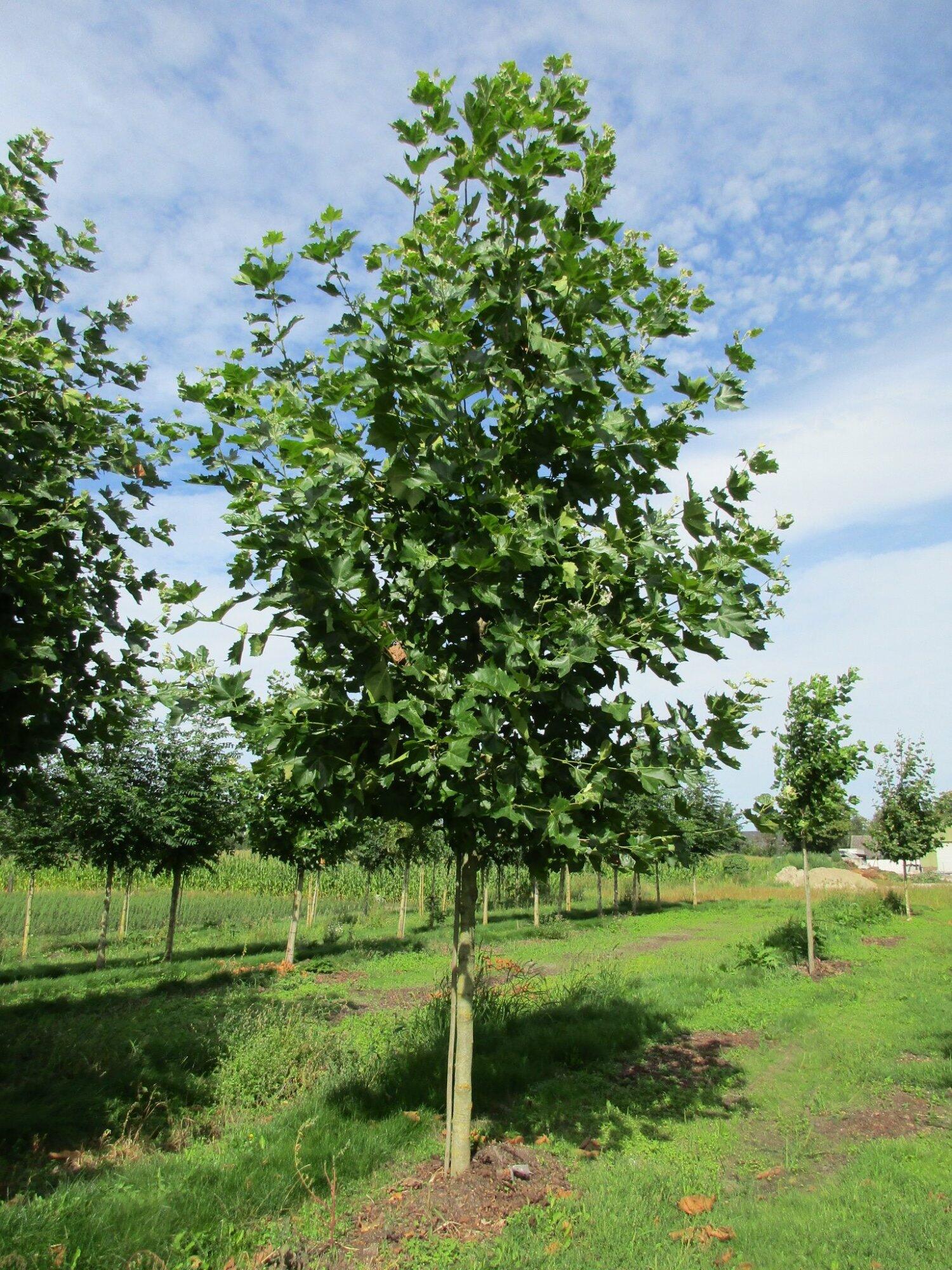
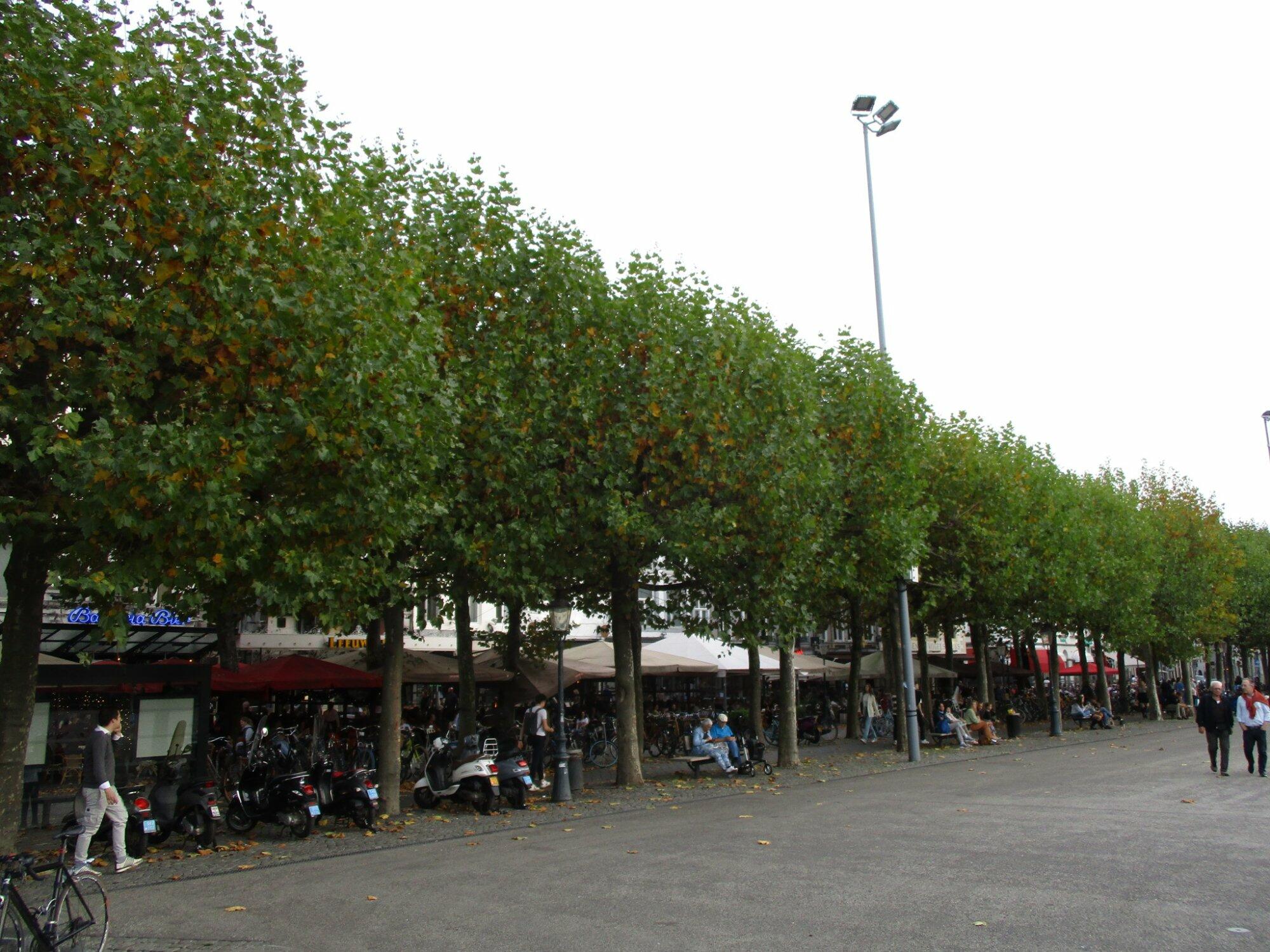
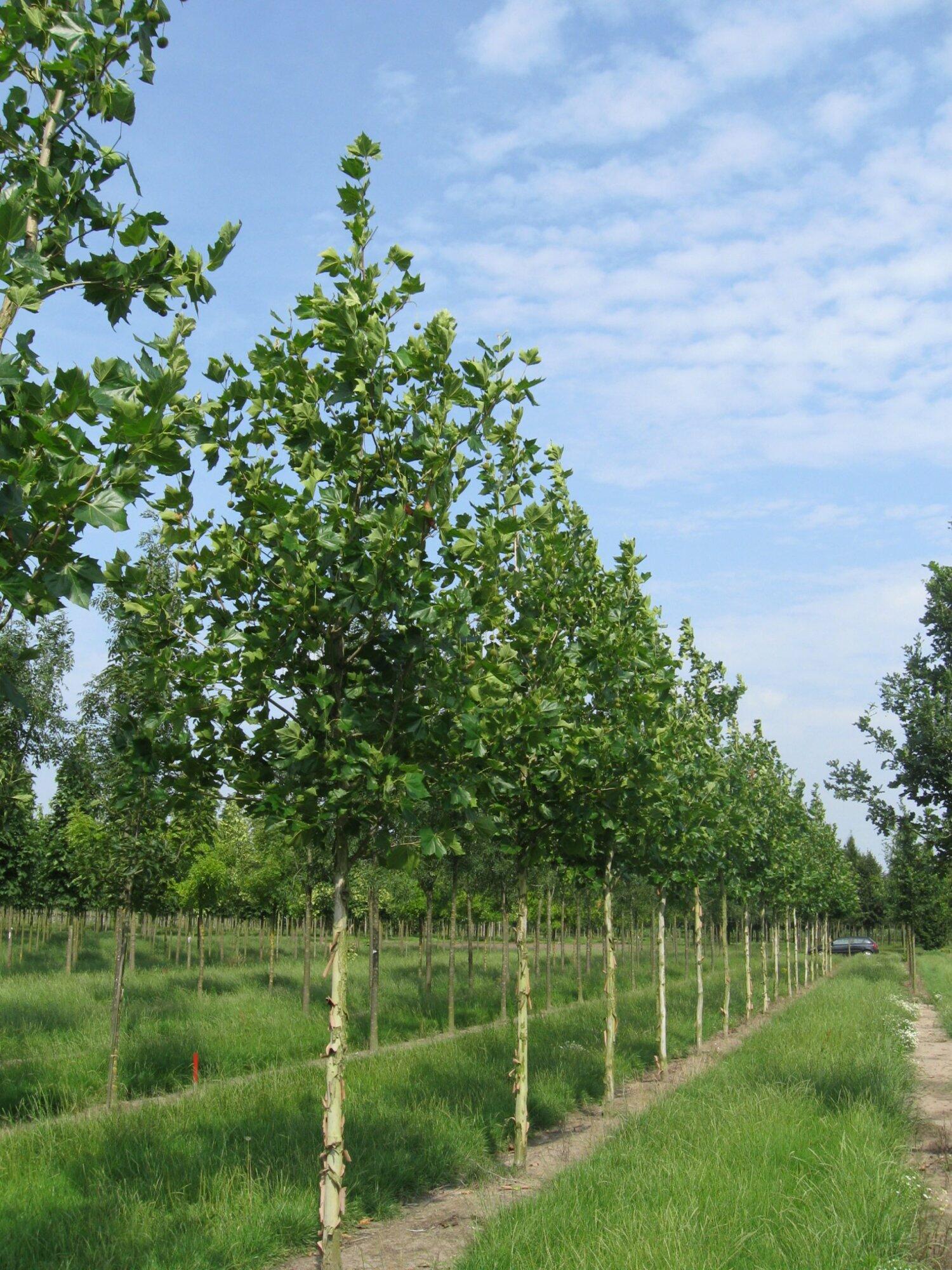
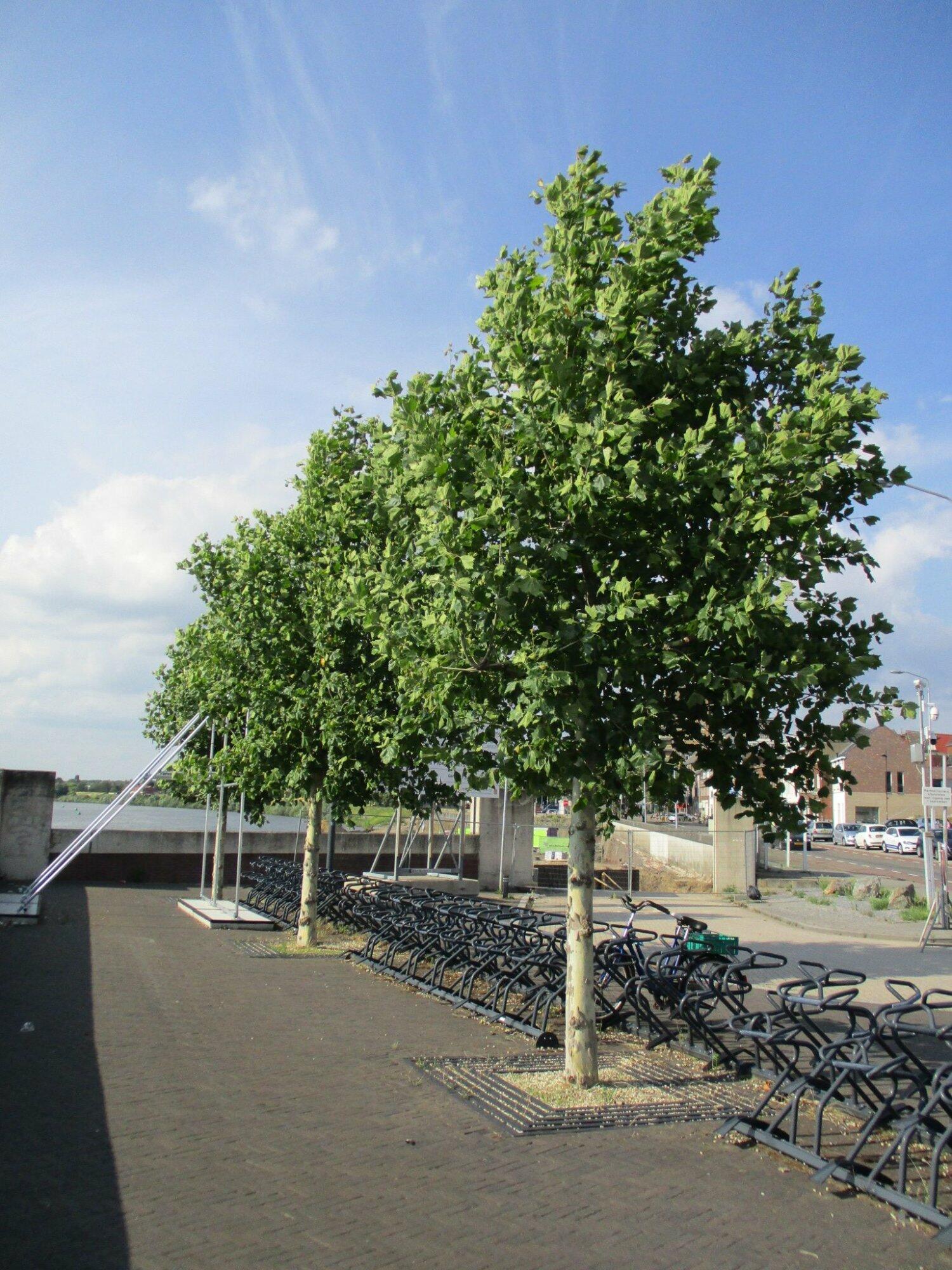
Platanus hispanica is a tree that is often planted along wider access roads and city streets. The tree also looks great in green belts and parks. In Germany, and especially in France, you often see (pollarded) plane trees when you visit a village or city.
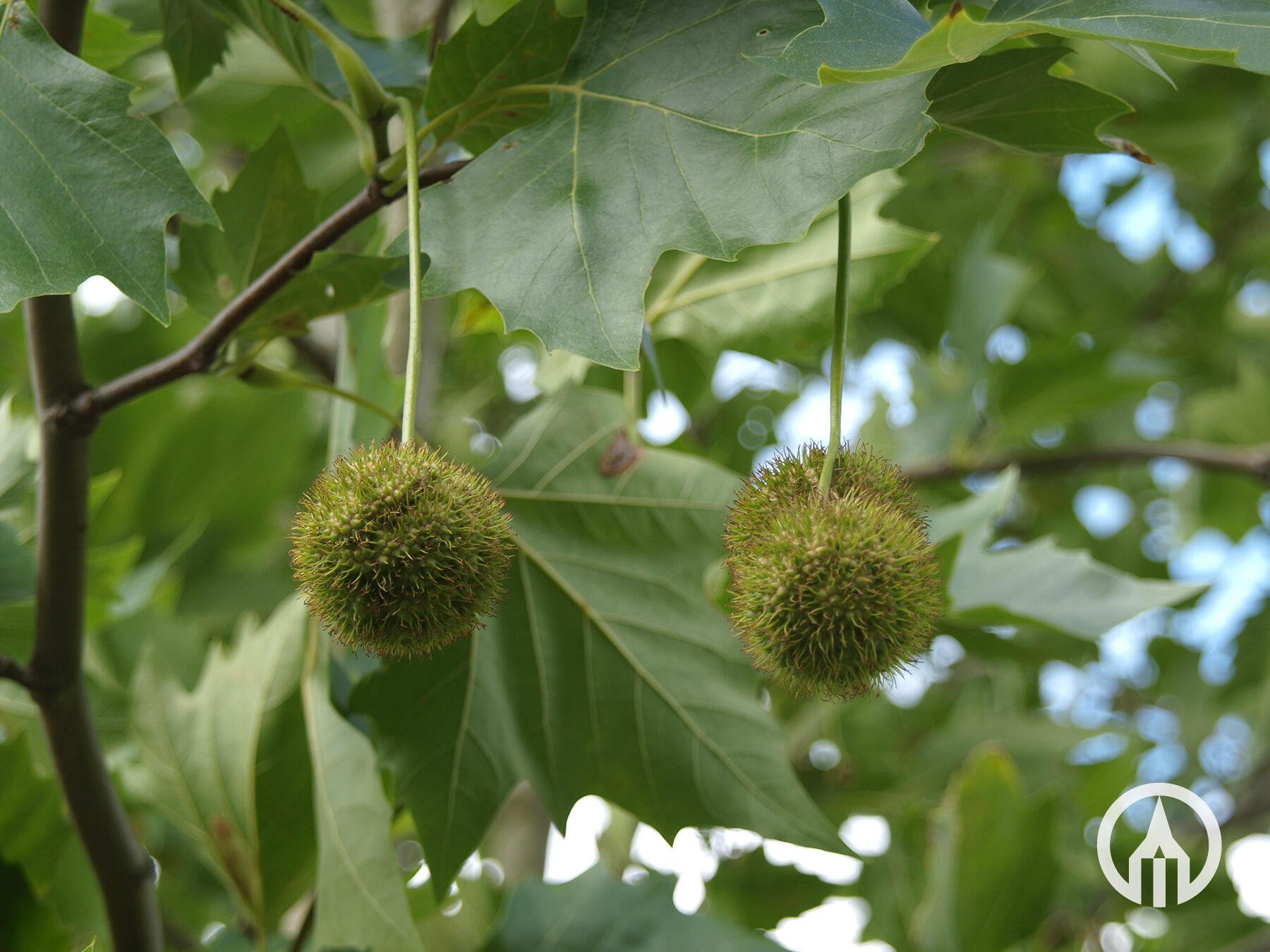
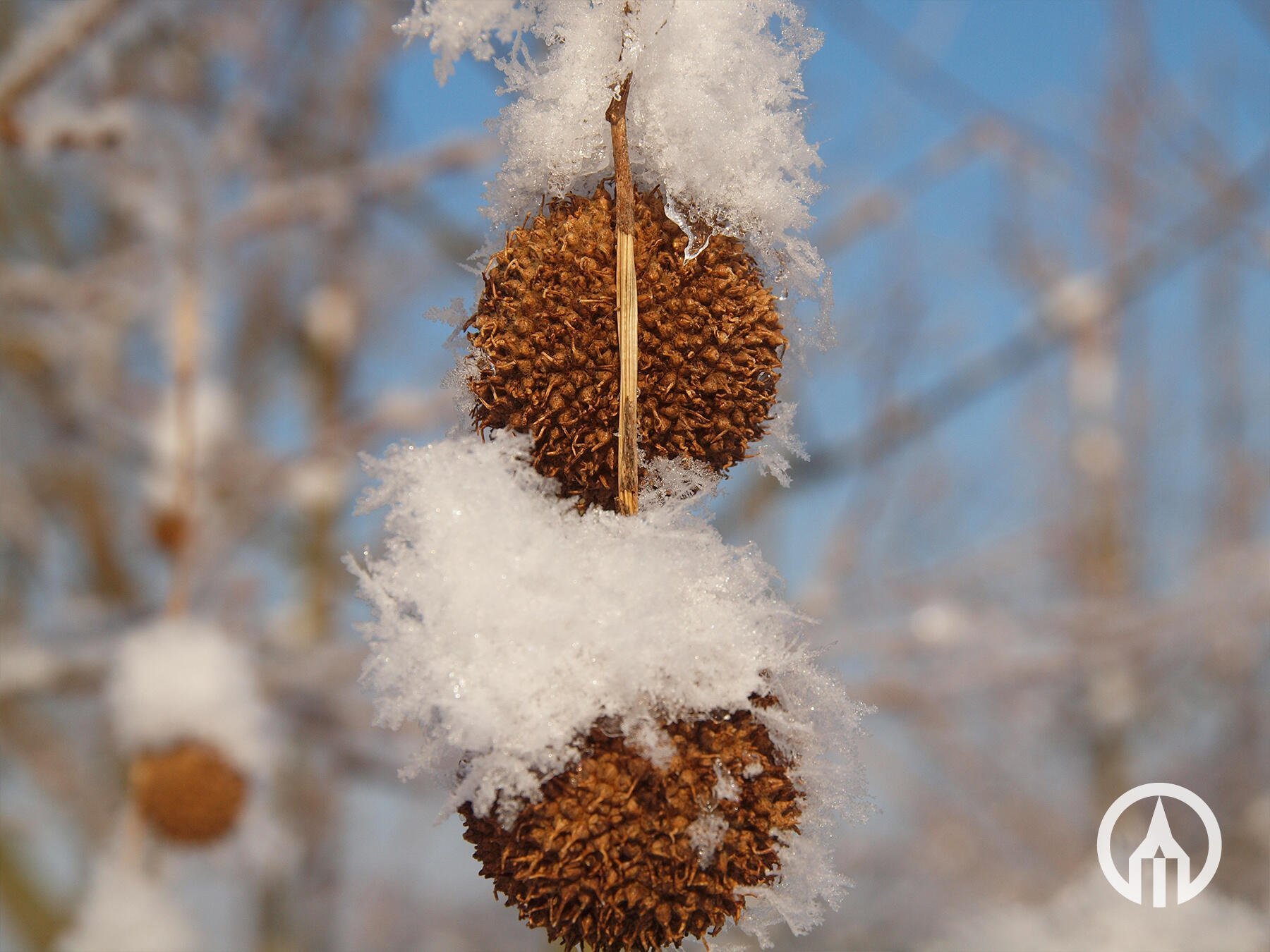
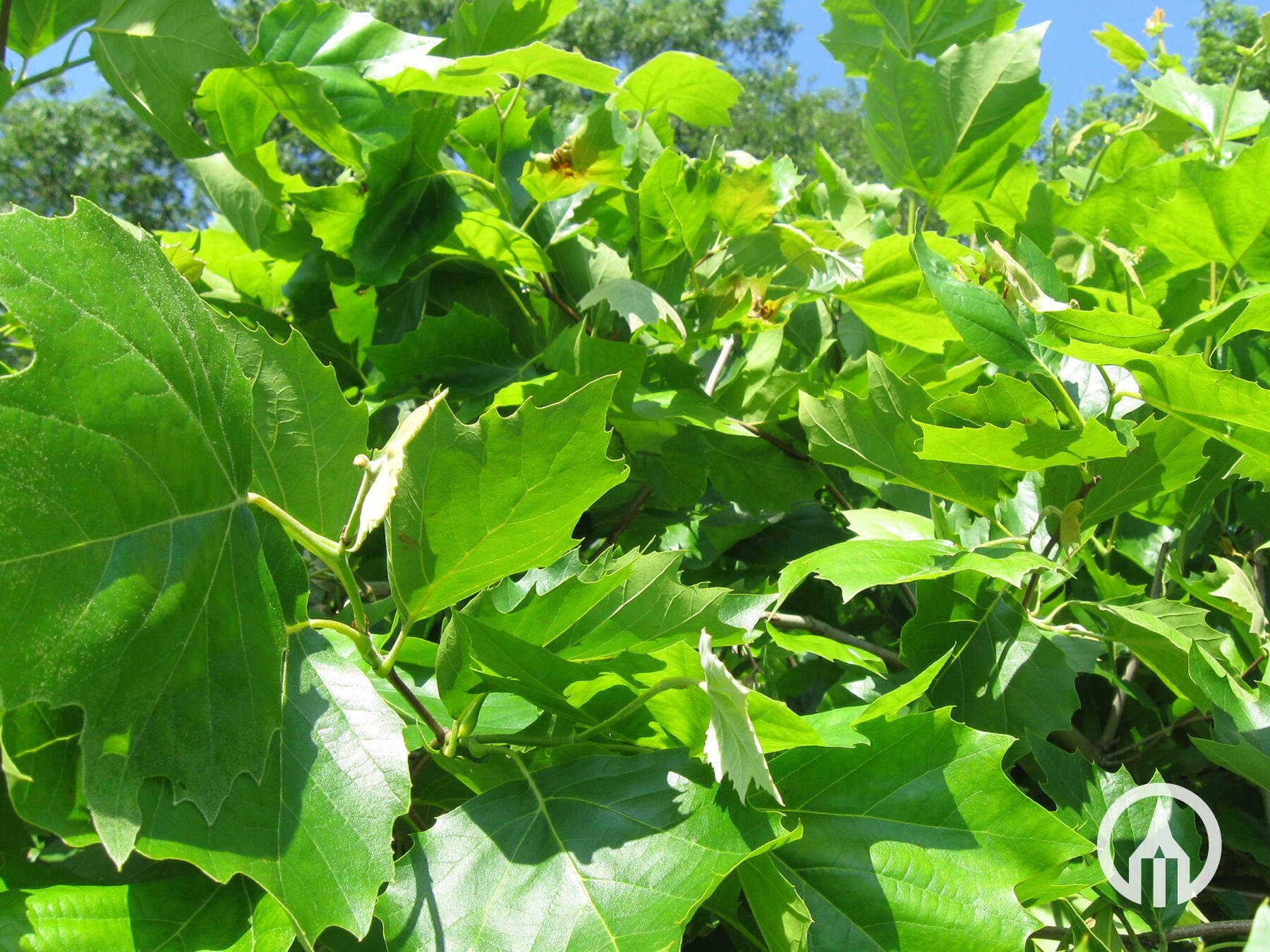
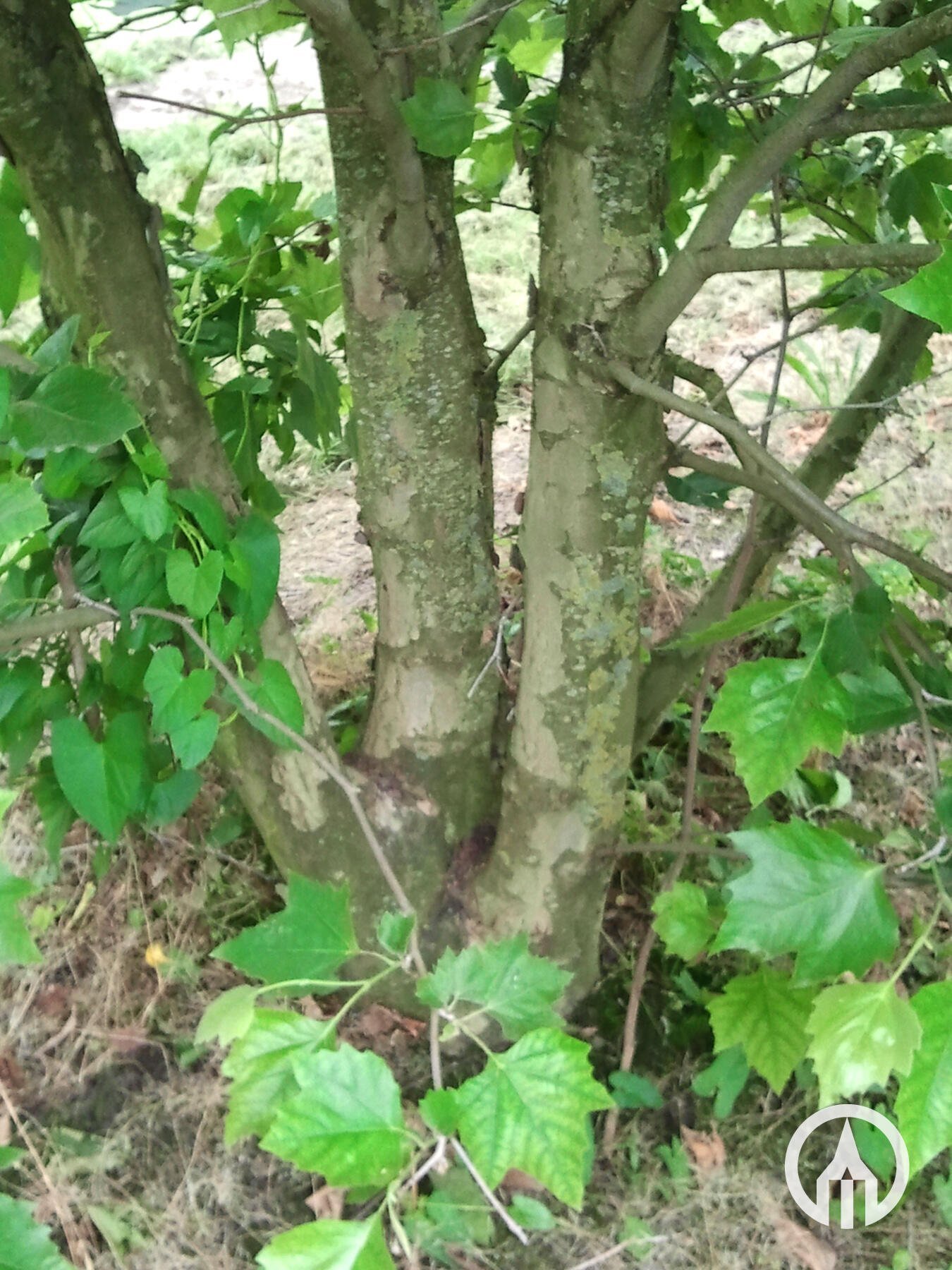
A distinctive feature is the peeling bark, which often displays beautiful gray-green patches on the trunk. Another ornamental feature is the relatively large, fresh-green, palmately lobed leaves with pointed, serrated lobes. In the fall, the leaves turn a brownish-yellow color. In the spring, a spherical inflorescence appears, which develops into spherical or spiny fruits on a stalk, with the seeds arranged inside. The round fruit is surrounded by a ring of hairs, which aid in the wind-dispersal of the seeds. These fruits often remain on the tree through fall and winter. Older trees are highly ornamental due to their beautiful crown shape with lovely, sturdy structural branches.
The relatively large leaf is covered on the underside with star-shaped hairs. It is therefore best to prune the trees when it is raining and/or while wearing a dust mask, as the hairs are easily released. The ‘dust’ can cause an allergic or hay fever-like reaction.
You often see plane trees pruned into specific shapes in public spaces. These include candelabra, pollarded, espalier, or roof-shaped trees. With topiary trees, you need to keep in mind that they become much more vigorous as they age. It will take more and more time to keep them in shape.
Location of photos:’s-Hertogenbosch, Leidsche Rijn (Utrecht), Venlo, Maastricht, Wageningen, and Berlin