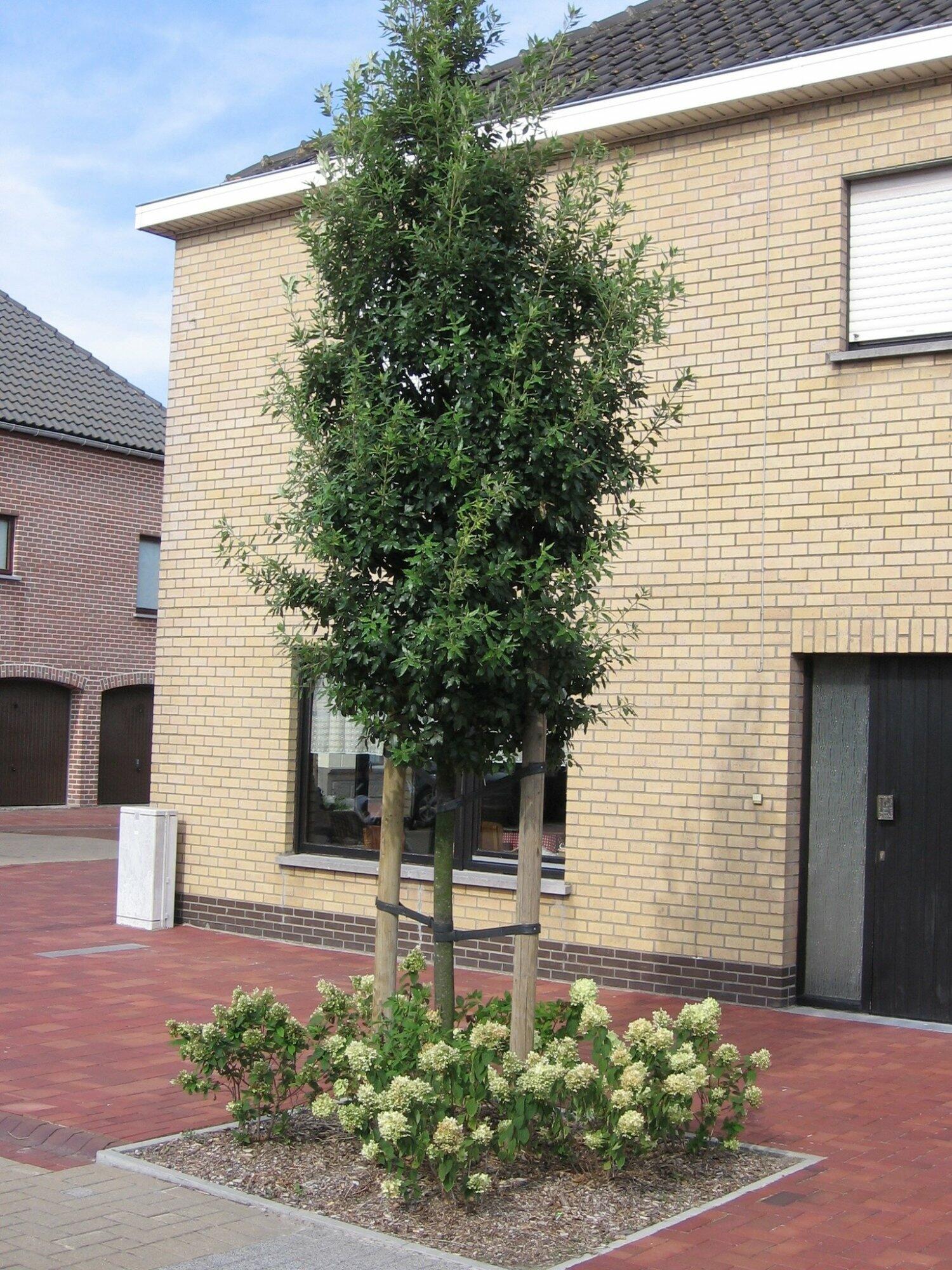
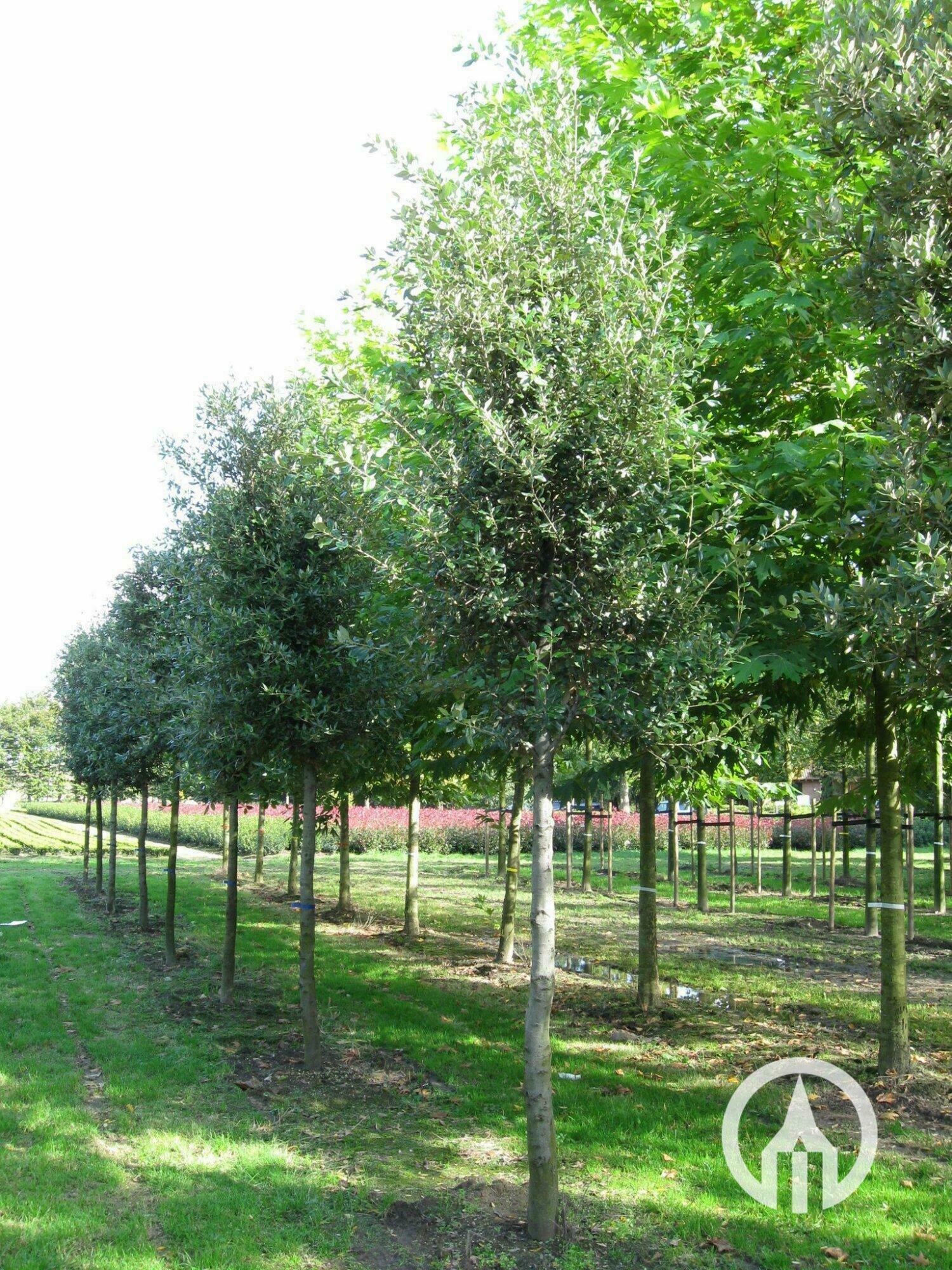
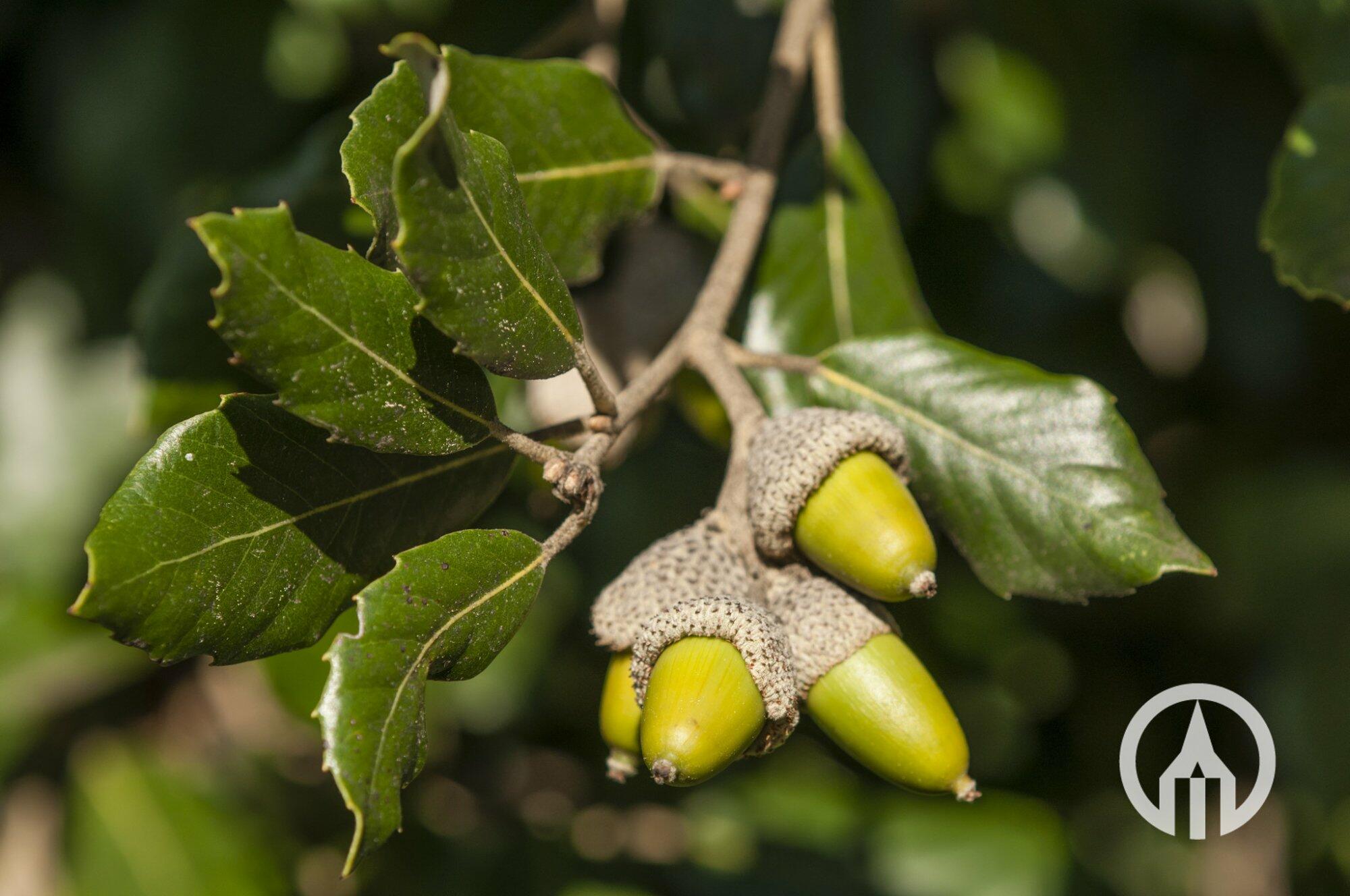
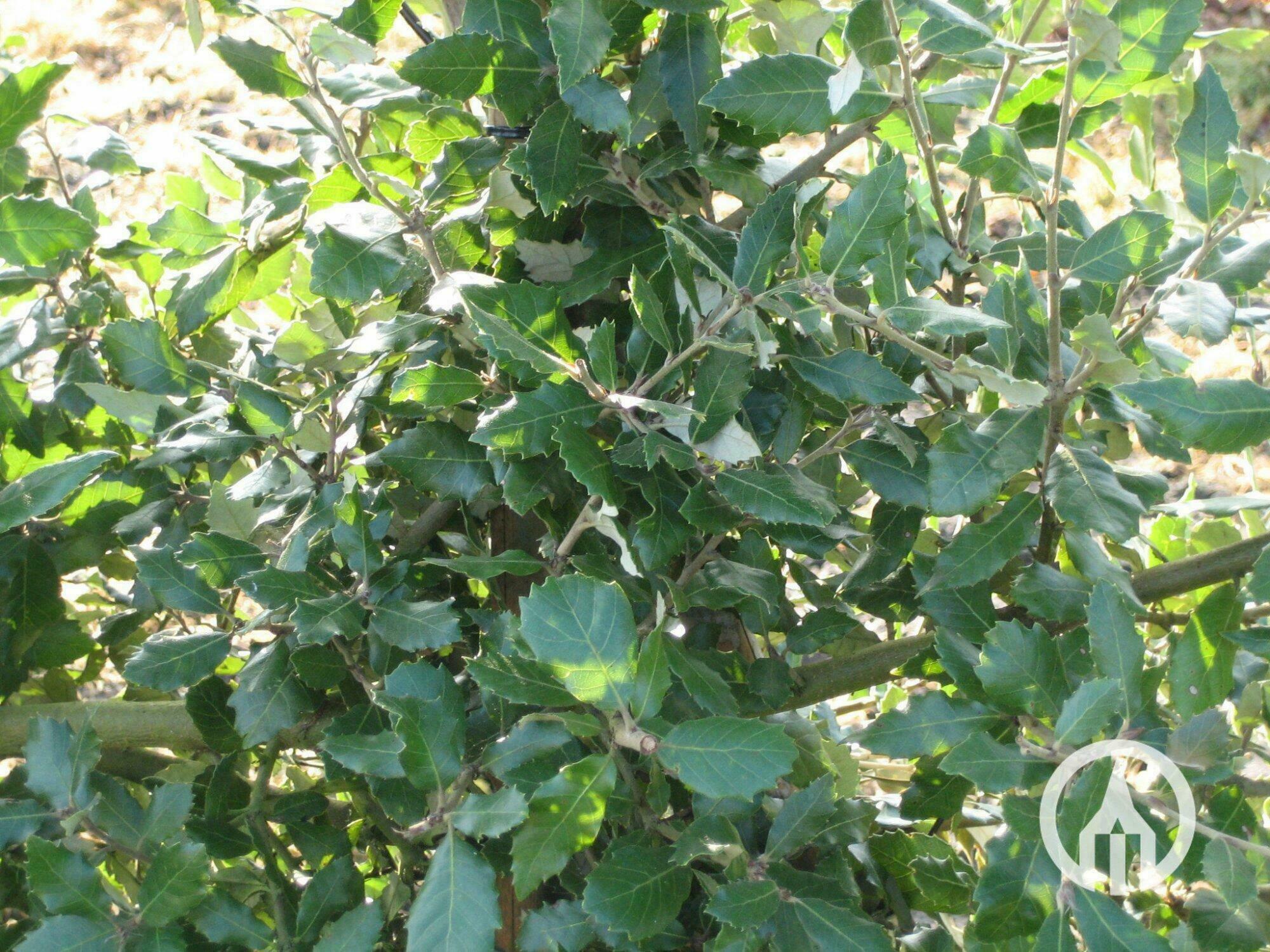
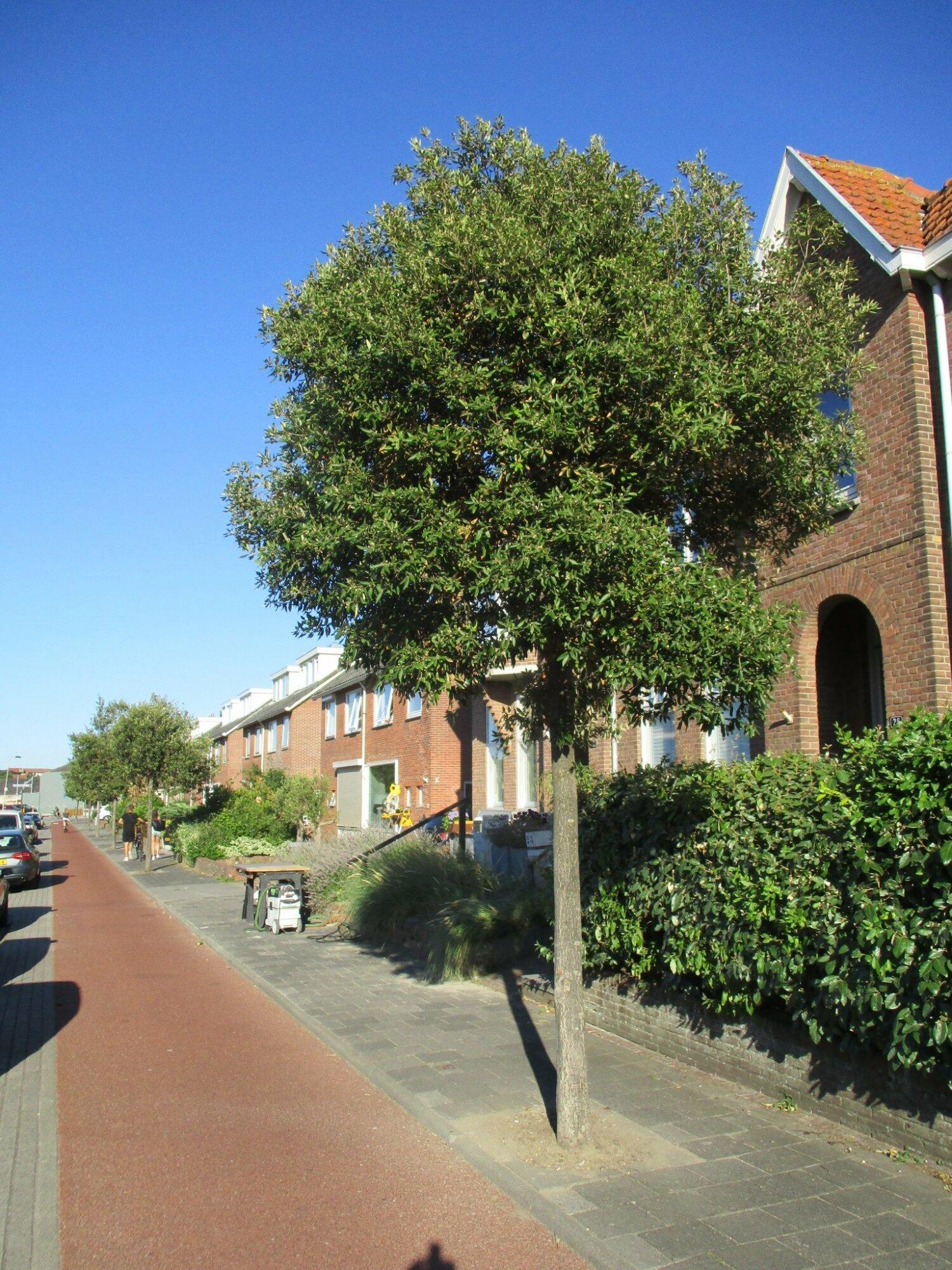
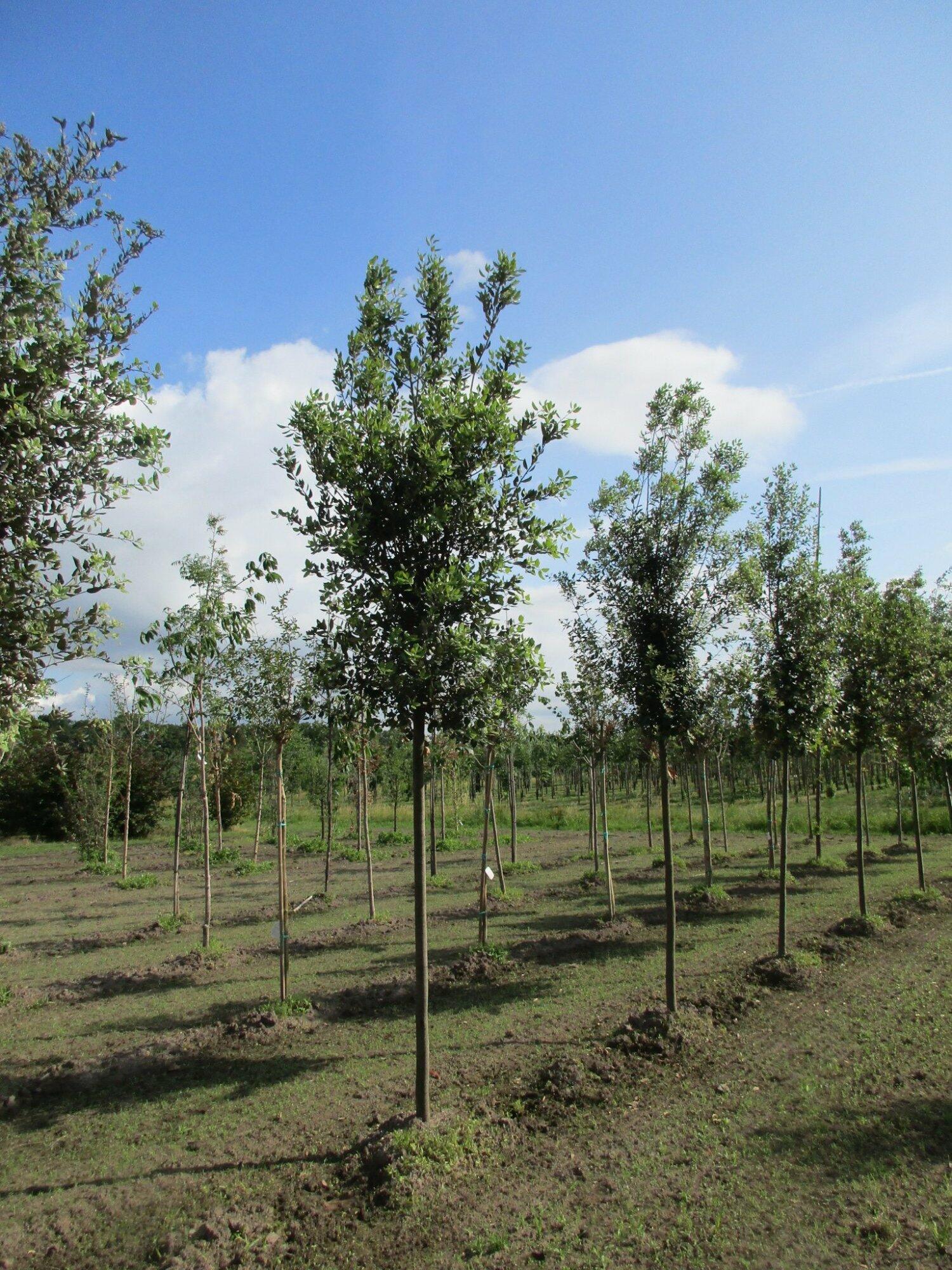
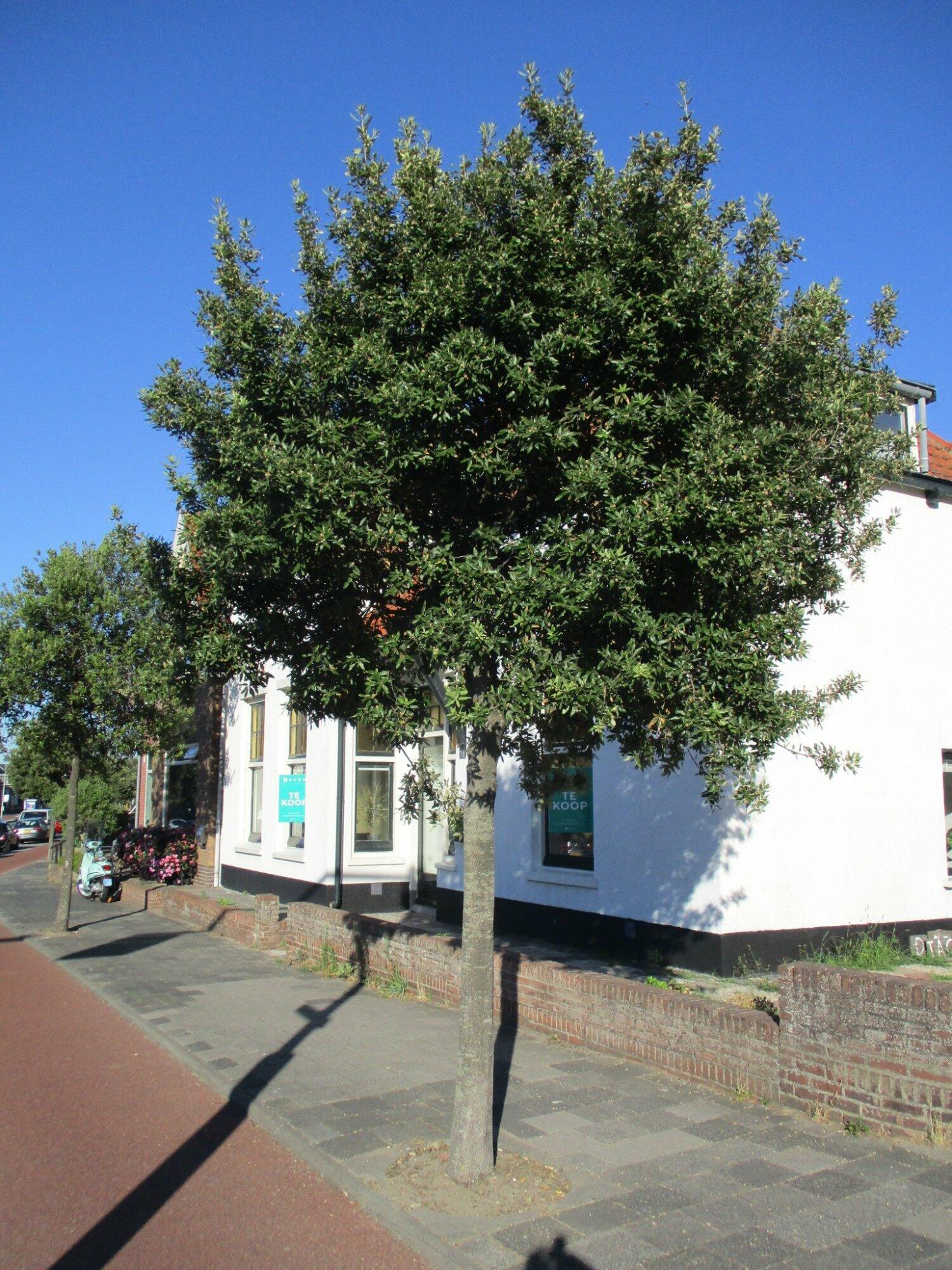
Quercus ilex is native to the Mediterranean region. Inland, the tree can be susceptible to frost, which can more easily cause damage to the trunk. The tree is evergreen; its small leaves are serrated and somewhat resemble holly leaves. As the tree ages, the leaves often develop smoother edges.
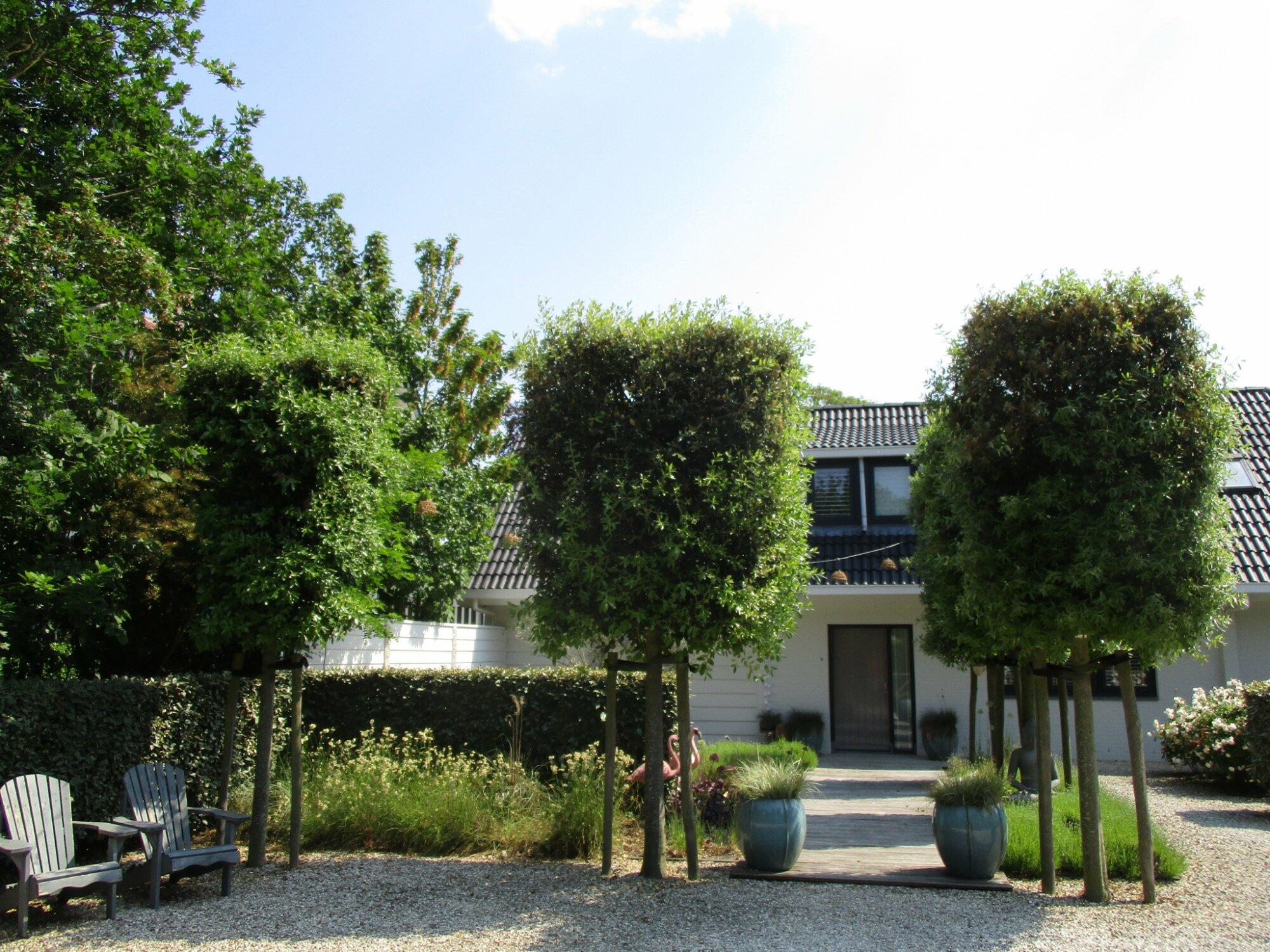
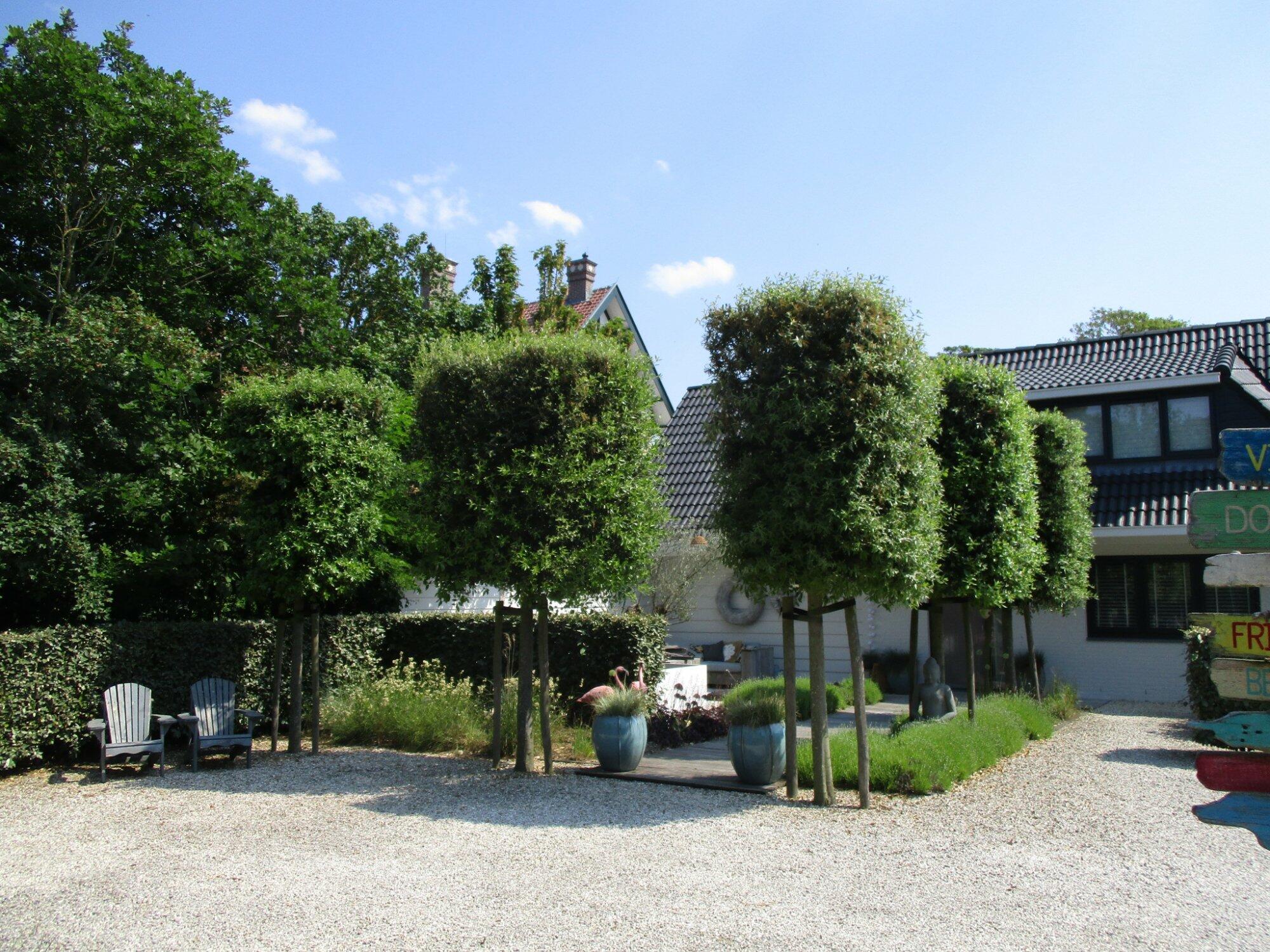
In a mild climate, the tree blooms profusely with pale golden-yellow catkins that stand out beautifully against the dark green foliage. The tree often produces somewhat smaller acorns, though the crop is not very abundant. In a garden, you can prune Quercus ilex into a beautiful beehive shape; the tree tolerates topiary pruning well. Specimens of Quercus ilex from Italy often grow just a bit more attractively than Spanish specimens. The leaves appear to have slightly smoother edges, and the trunk is straighter. It is not entirely clear where these differences originate.
Location of photos: Noordwijk aan Zee, Domburg, De Panne, and our nursery